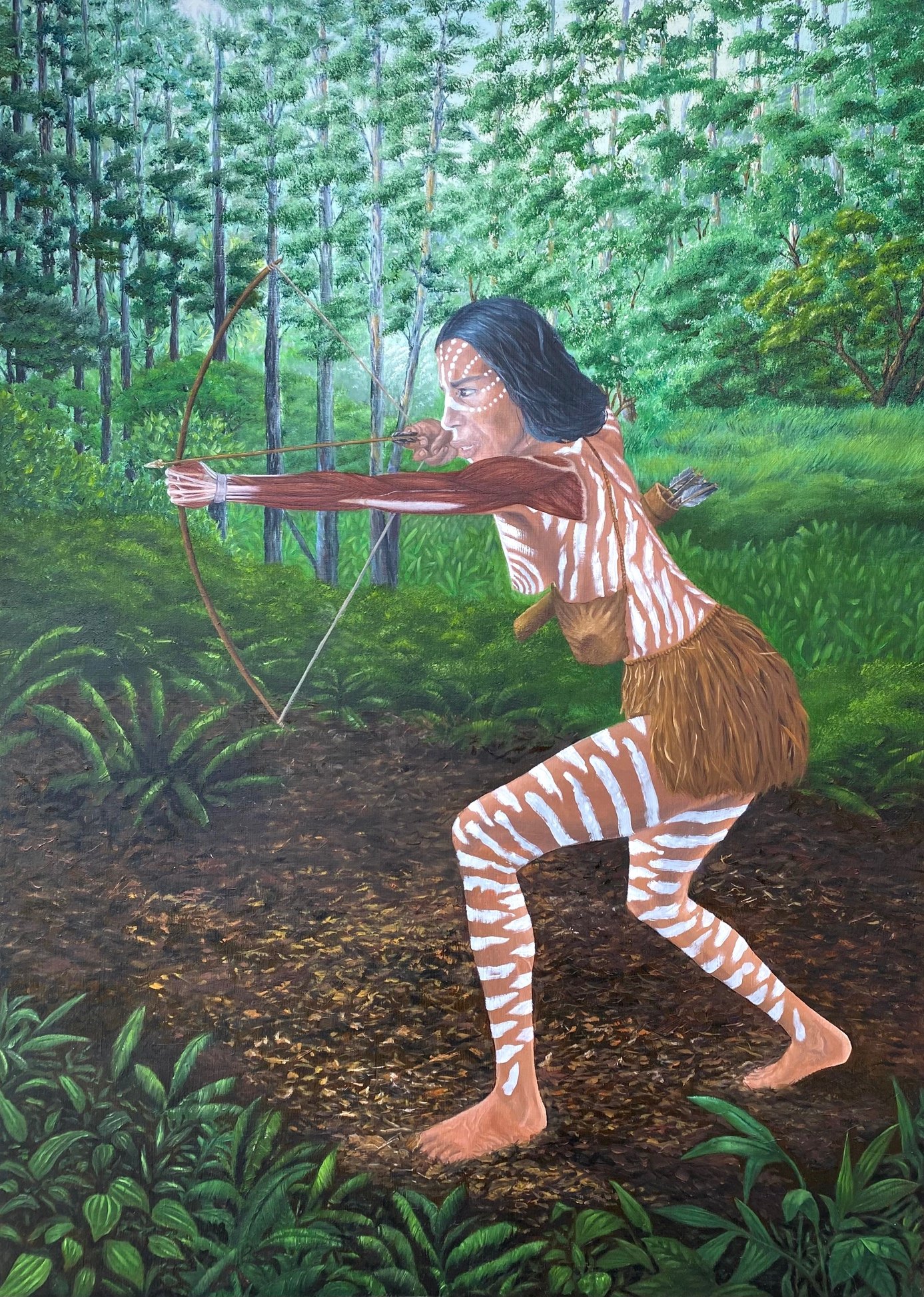
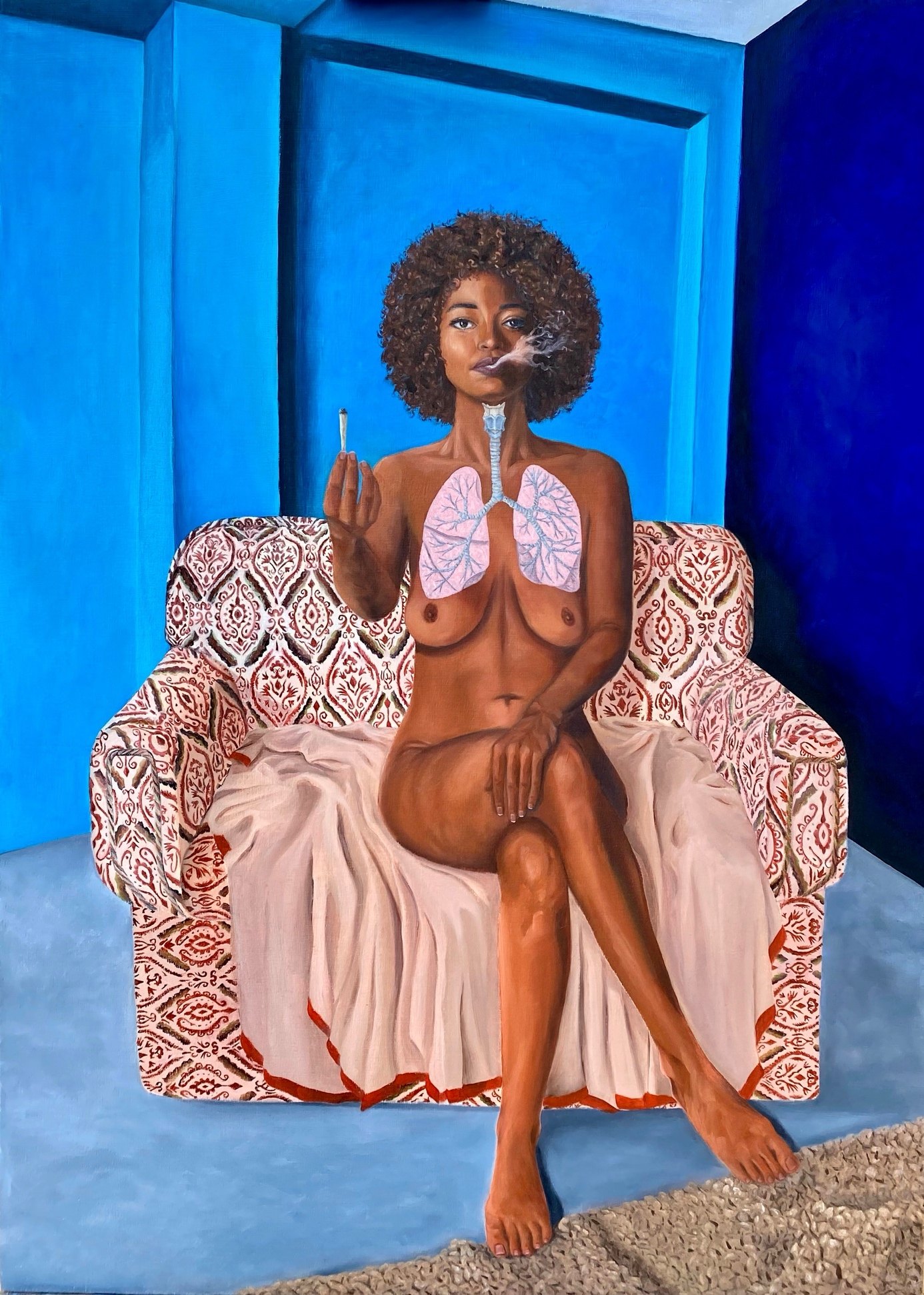
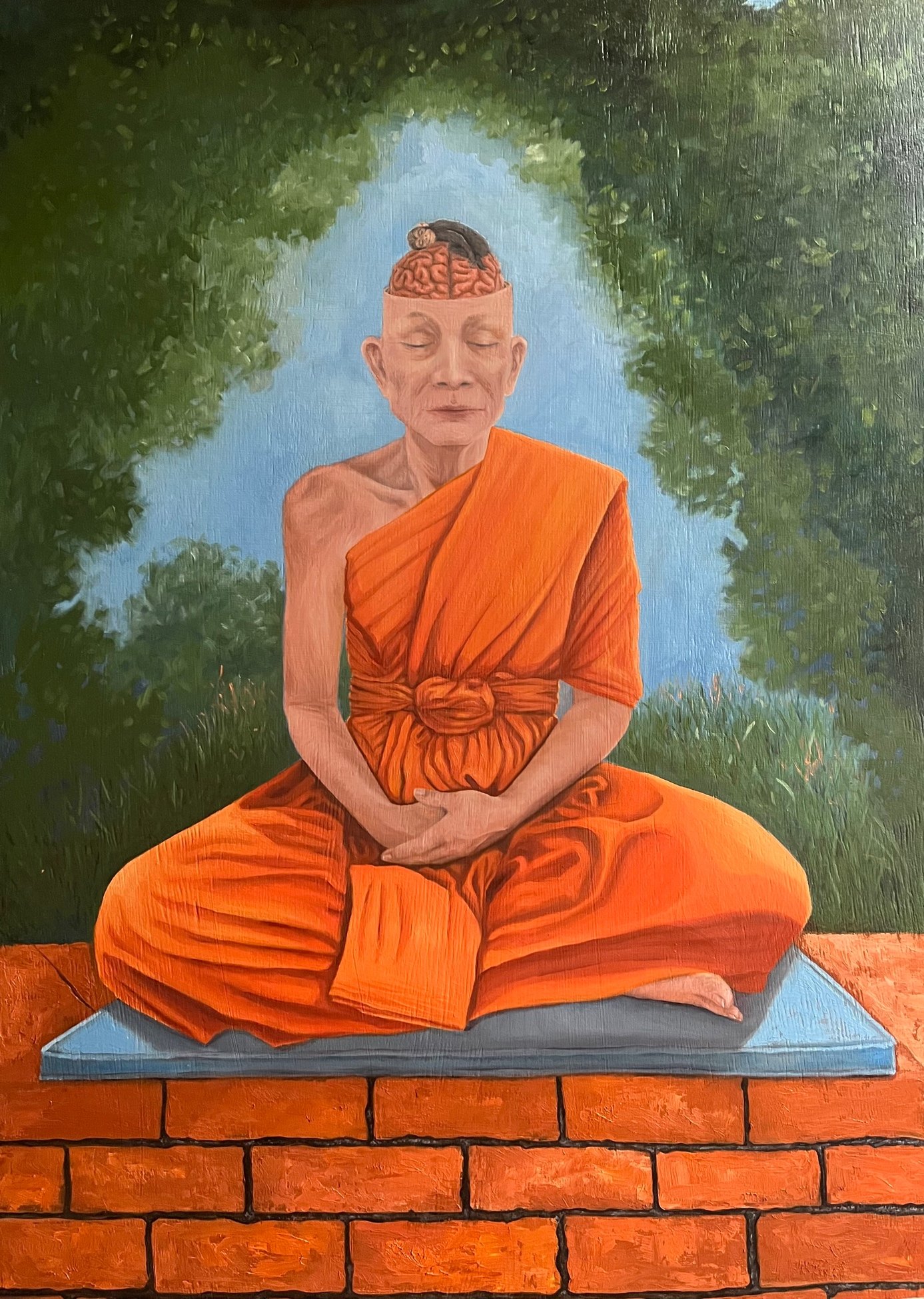
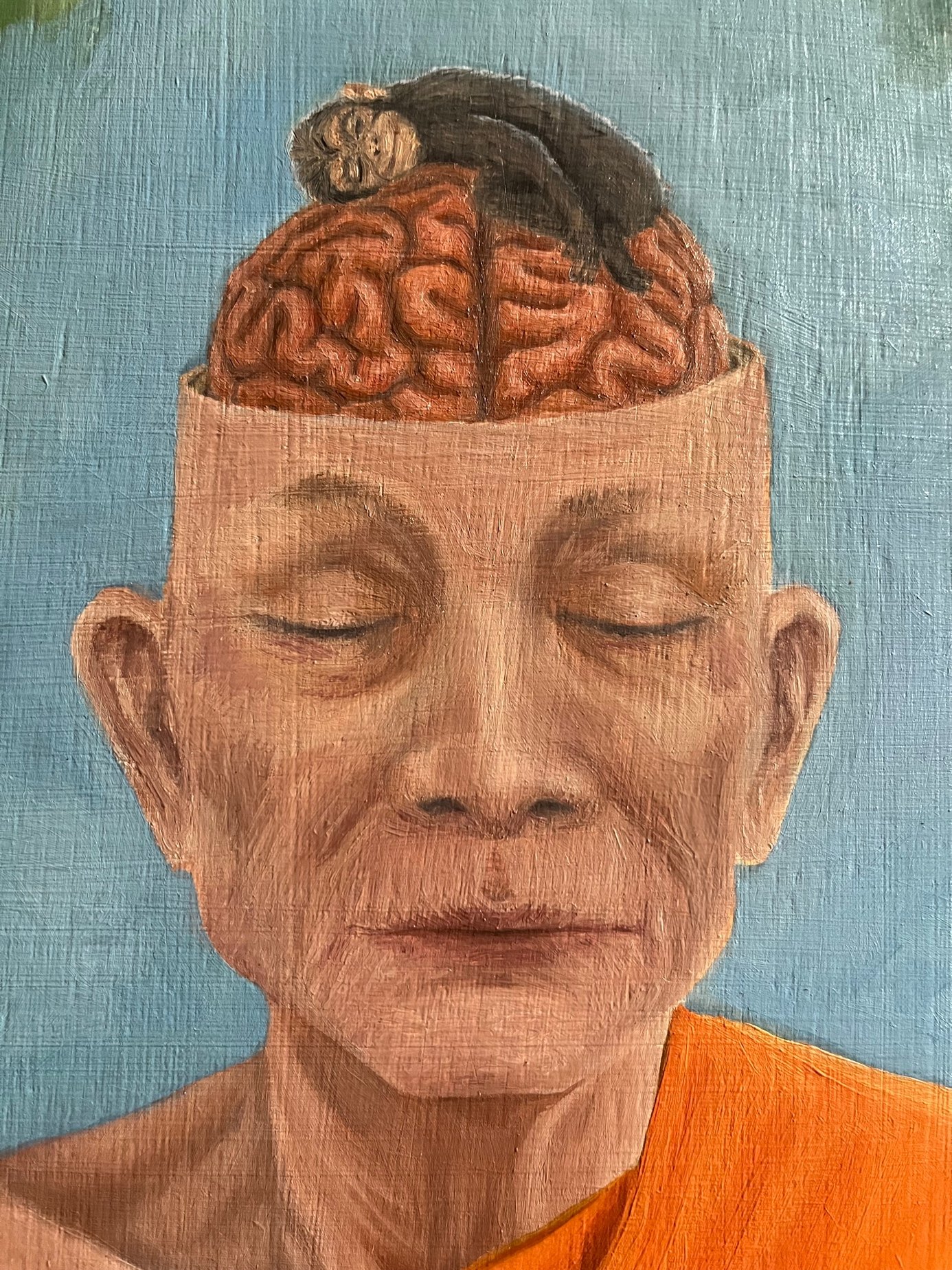
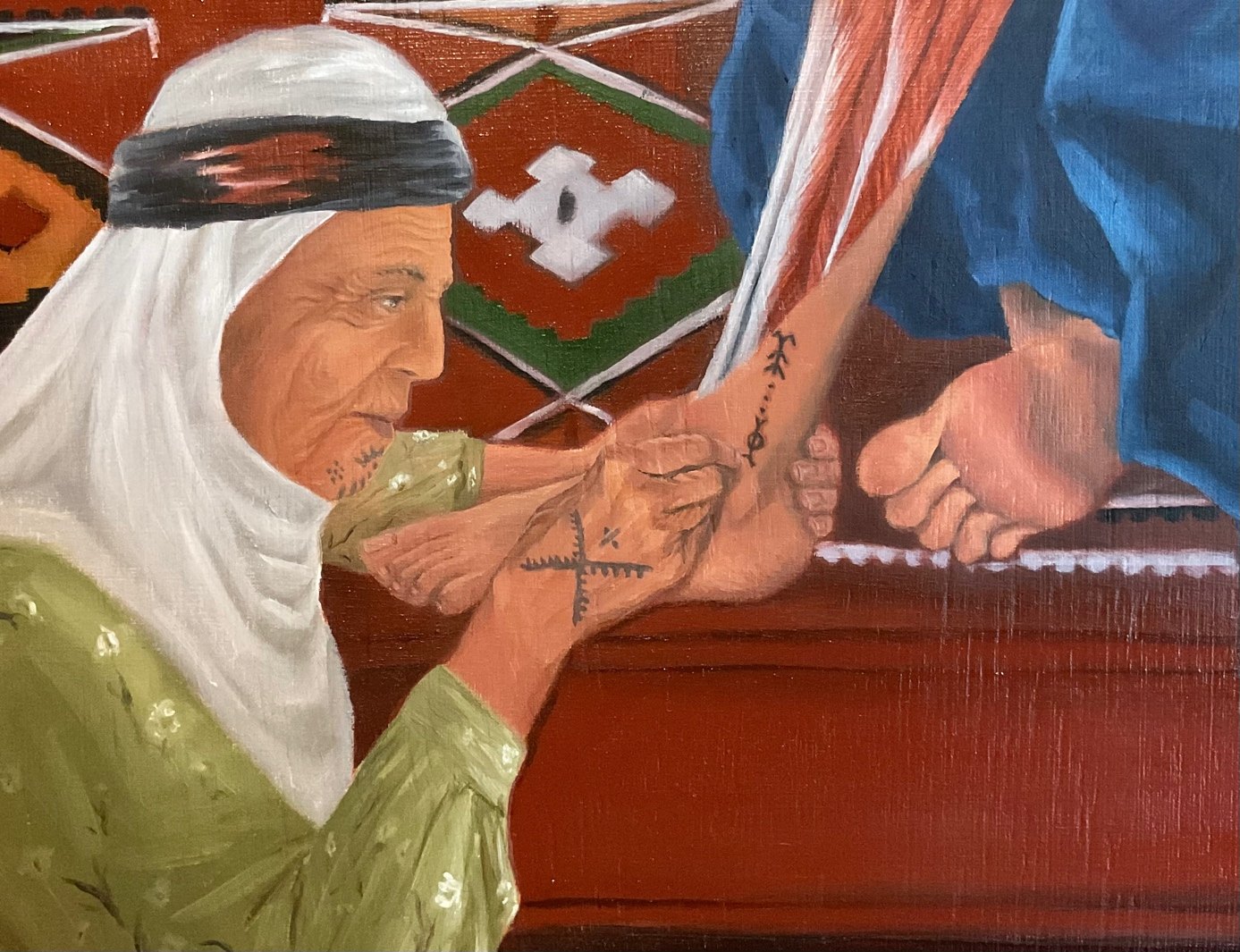
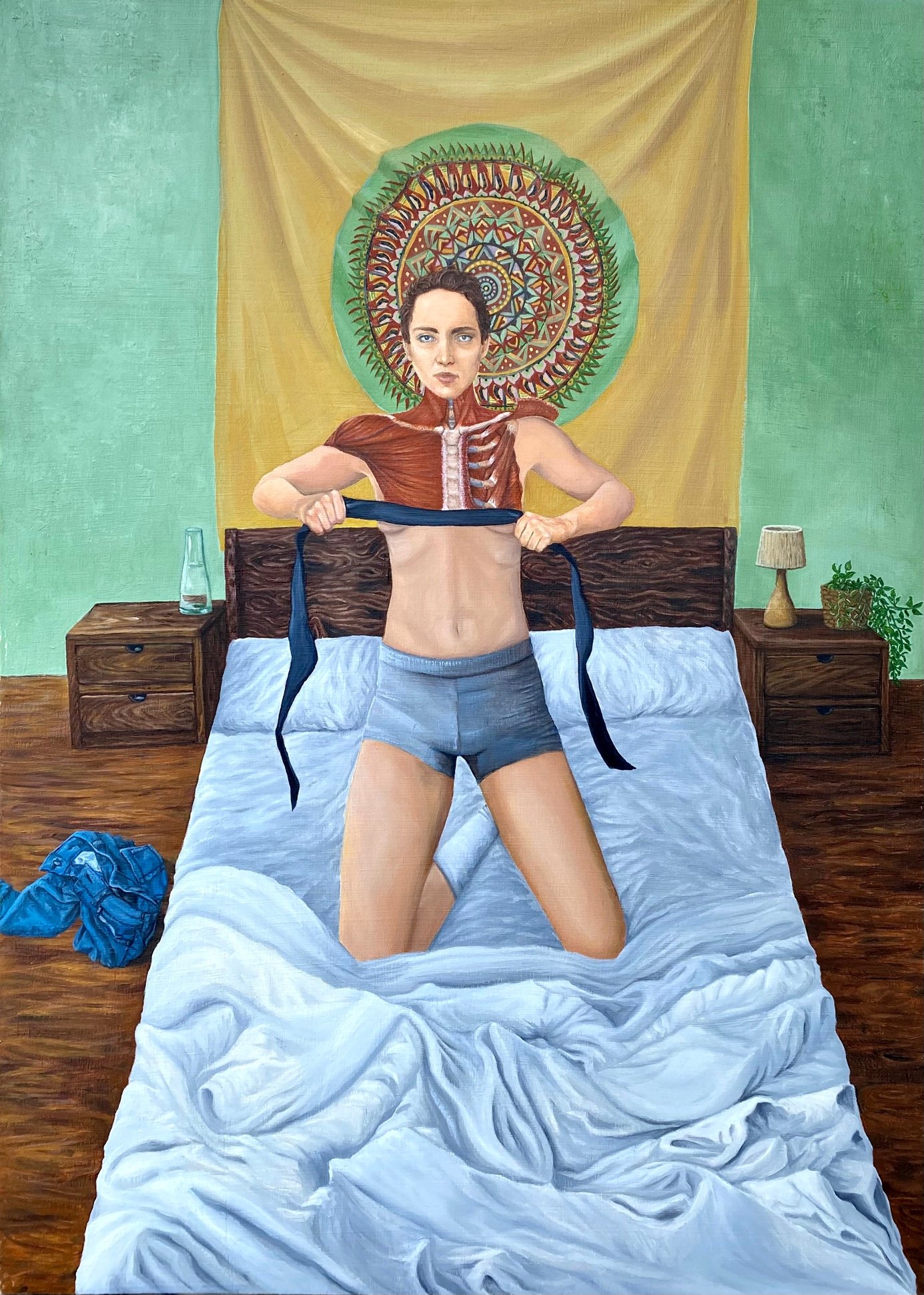
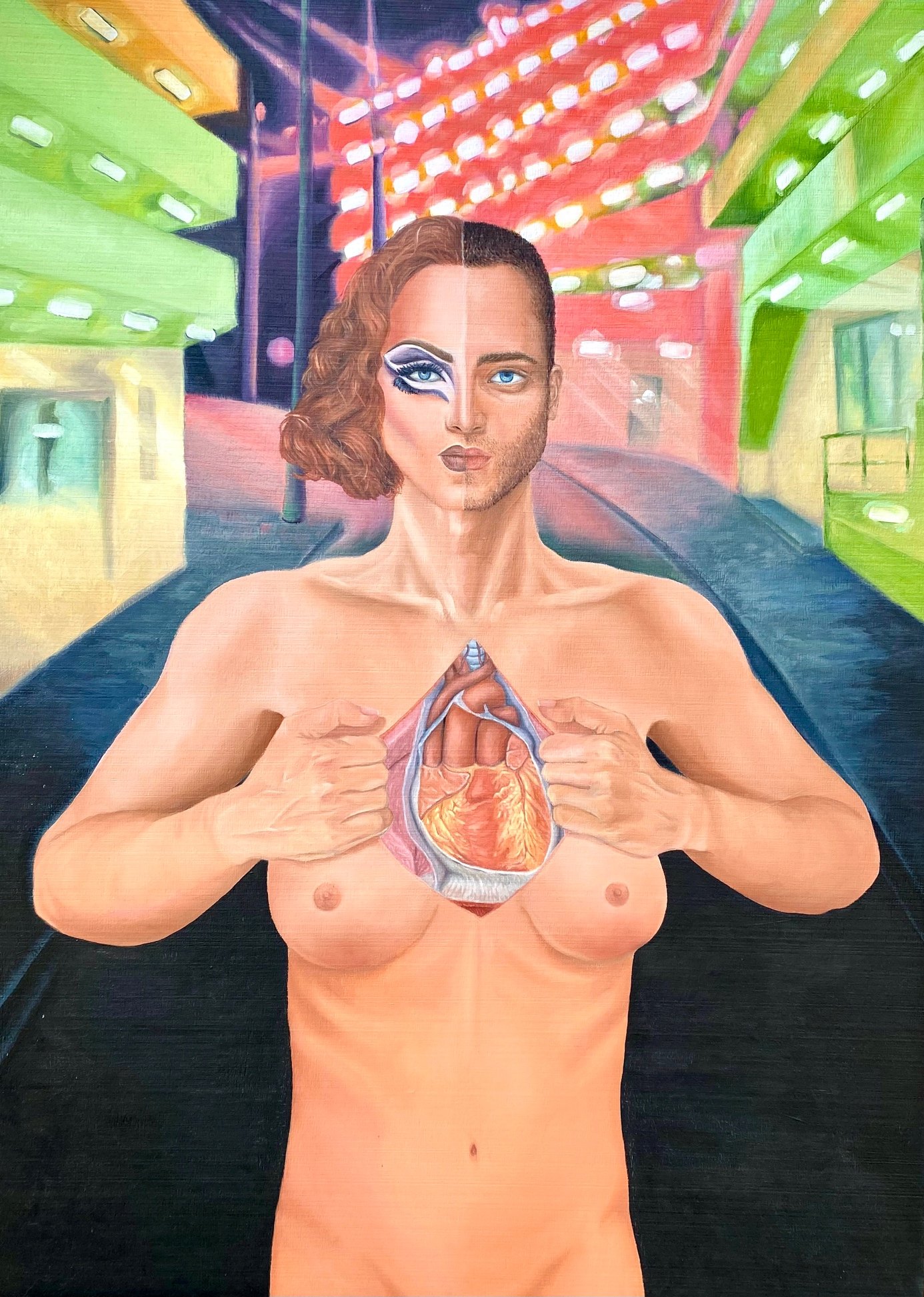
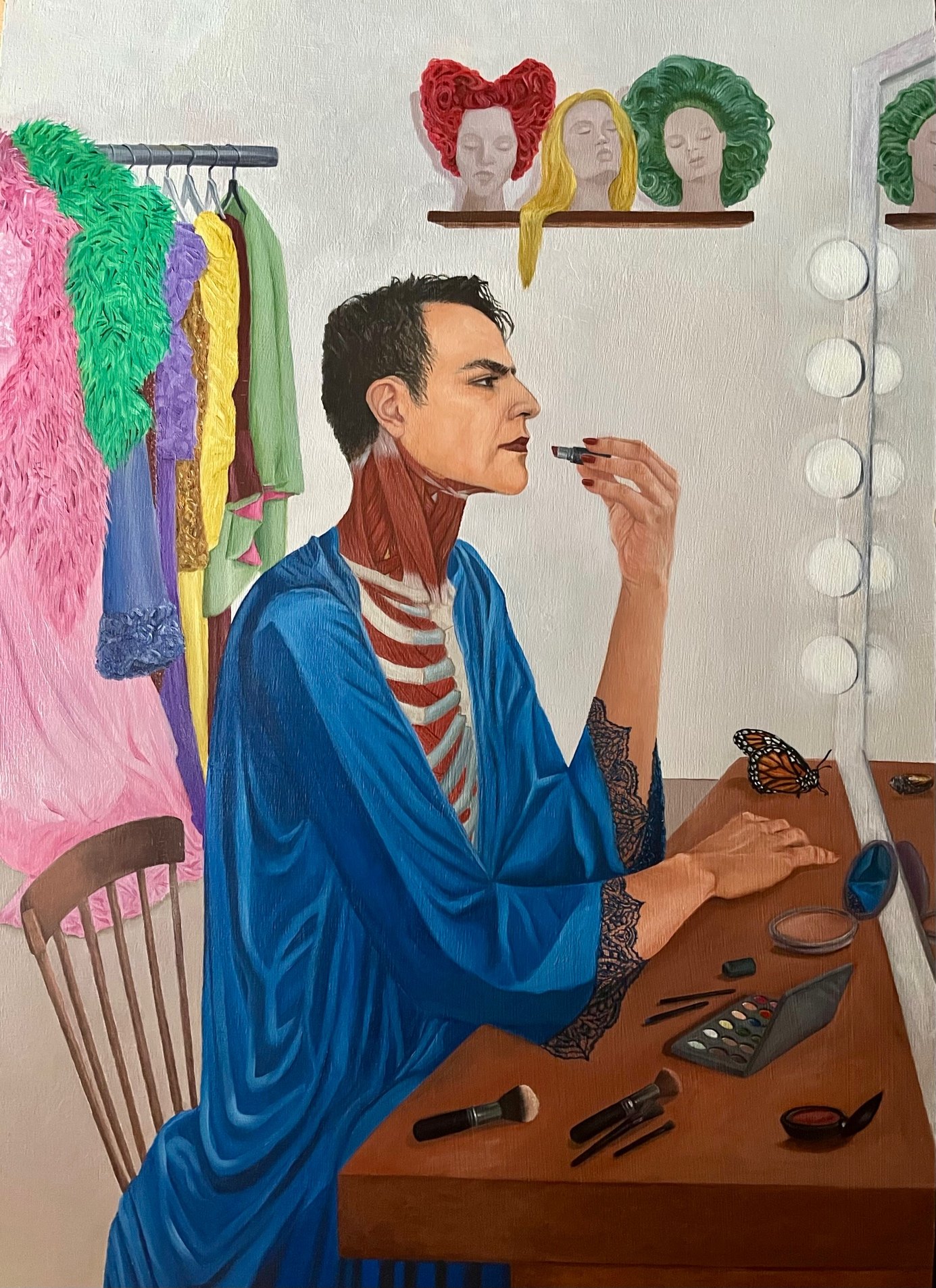
Produced between 2022 and 2024, the series “Anatomy in a Different Way” treats the white, heteronormative representation of the body in classical anatomy atlases as a reflection of the current world order. By making visible bodies of different ethnic origins and gender identities, Serindağ sets plurality and diversity against uniform norms; through an anatomy atlas of a different kind, she paints the possibility of a different world.
After graduating from medical school in 2015 and working for four years as a neurology resident, Helin Serindağ left medicine and decided to paint. Settling in a mountain village near Assos, far from the city, she farms, enjoys growing tomatoes and making wine, and finds happiness in painting.
Looking at Helin’s anatomically precise figures and the internal organs pasted onto their bodies, you may slip into a surrealist, even hyperrealist reading. Yet when the paintings are examined ontologically, you notice the artist’s search that descends into the existence of the human being, into the self and its origins.
Just as thinkers such as Aristotle and Plato, who laid the foundations of ancient Greek philosophy, investigated “physics and inner nature”, Helin, as a physician, seems to explore the relationship between the physical appearance of the human being and its inner nature. Examining her paintings, you also see her questioning social traditions, morality and oppressive politics. She does not stop at questioning; she protests oppression. Helin is in pursuit of being a “protest” artist!
First, phenomenologically, as the existentialists did, while depicting the human body she studies the relationship of human physique to inner nature and to the psyche; she explores the visible and the invisible, the physical and the inner existence of the human being. She does this both as a physician and as a woman, and in doing so she defends “human rights”, and especially “women’s rights”.
Through her realistic figures she says: “All people are equal. Black or white, Catholic or Muslim, Orthodox or Buddhist! Lesbian or gay! Everyone has the right to live as they wish in this mortal life, whatever their social or physical conditions. Because a human being is valuable as an individual.” As Jean-Paul Sartre argued in his novels, she says that “man creates his own value”.
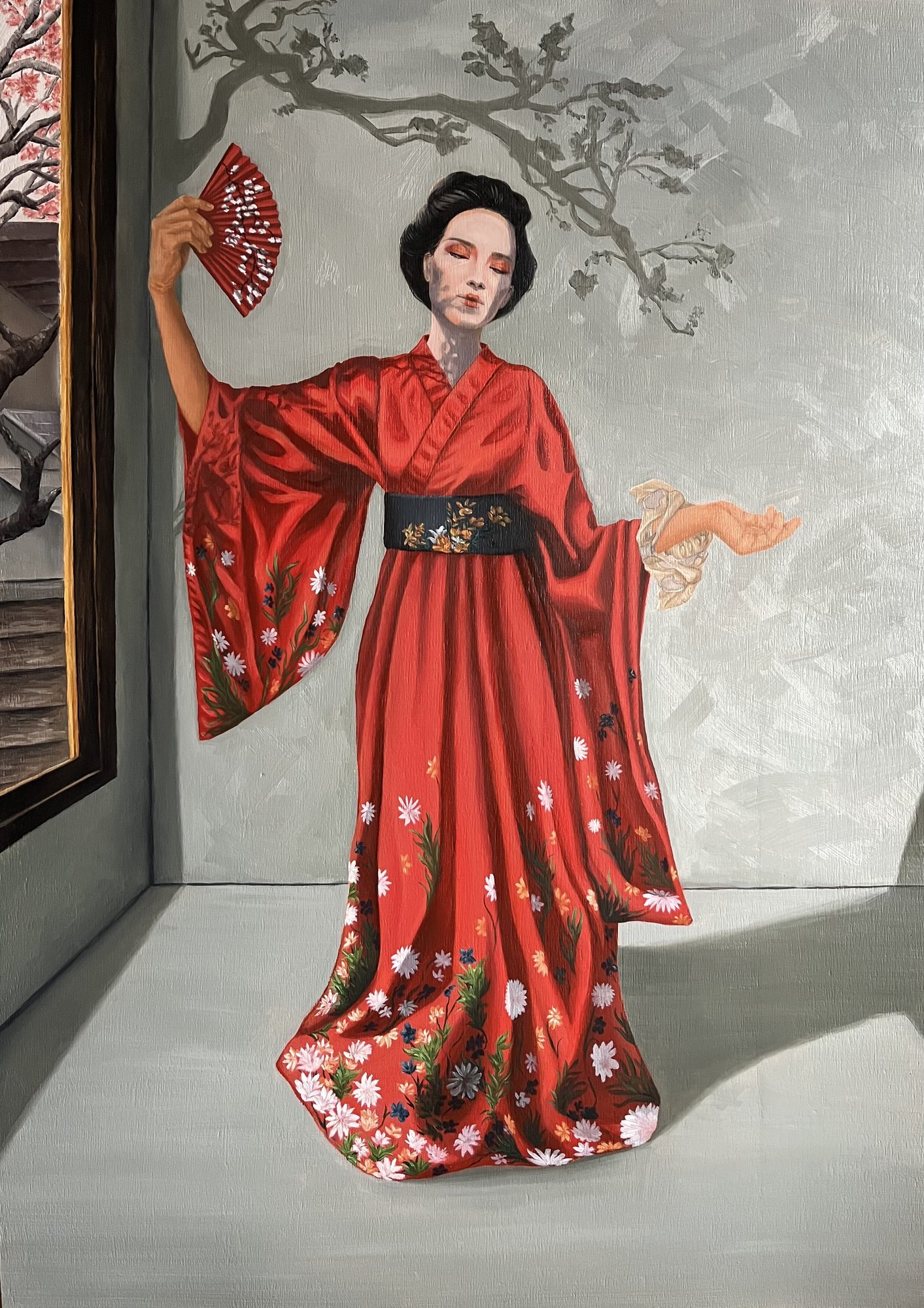
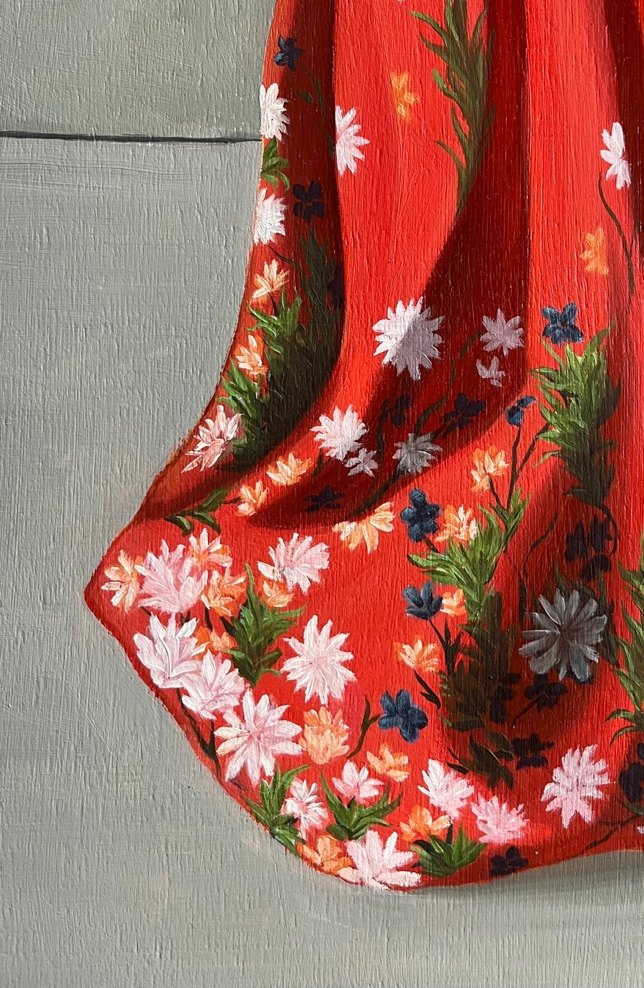
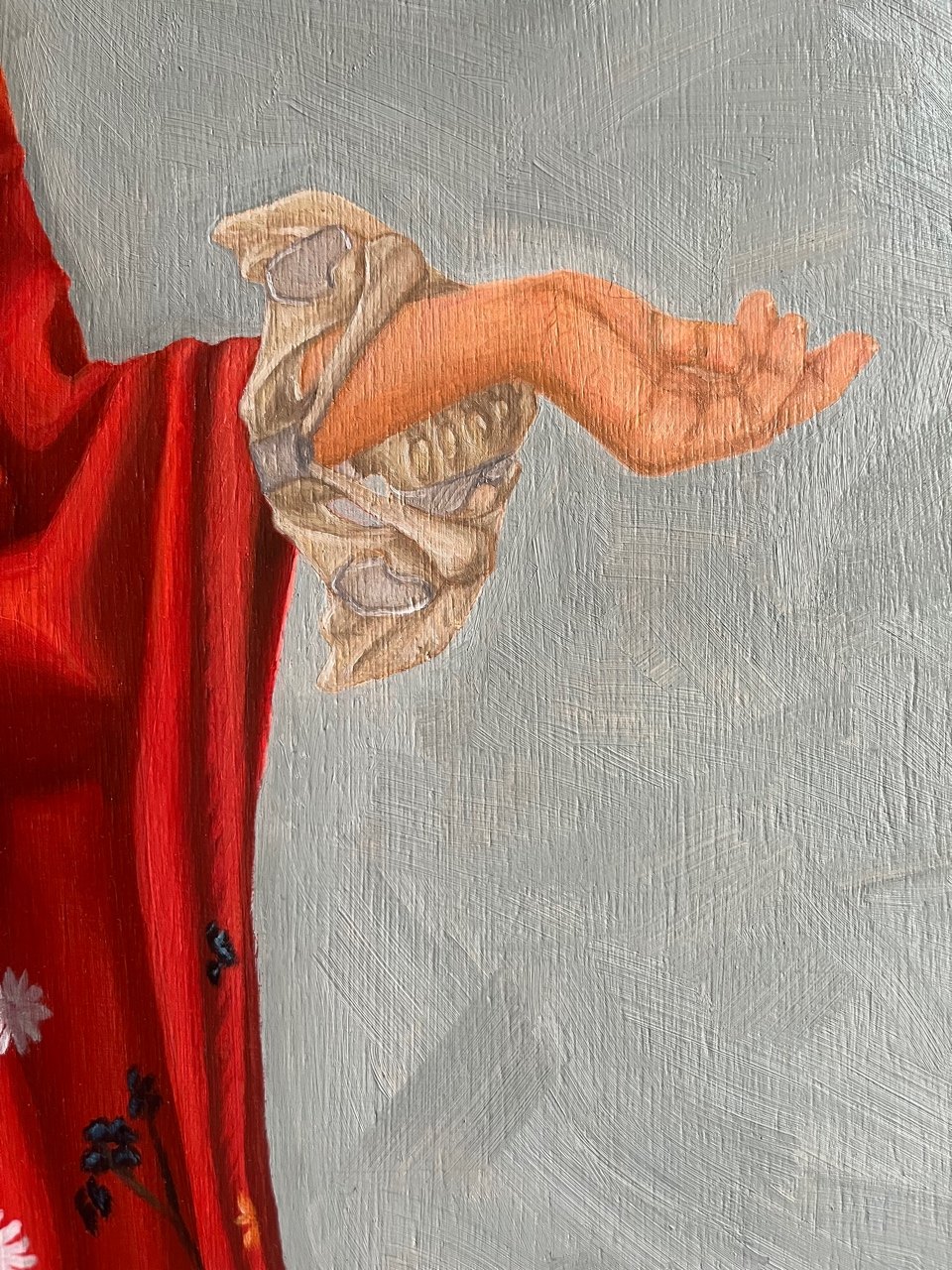
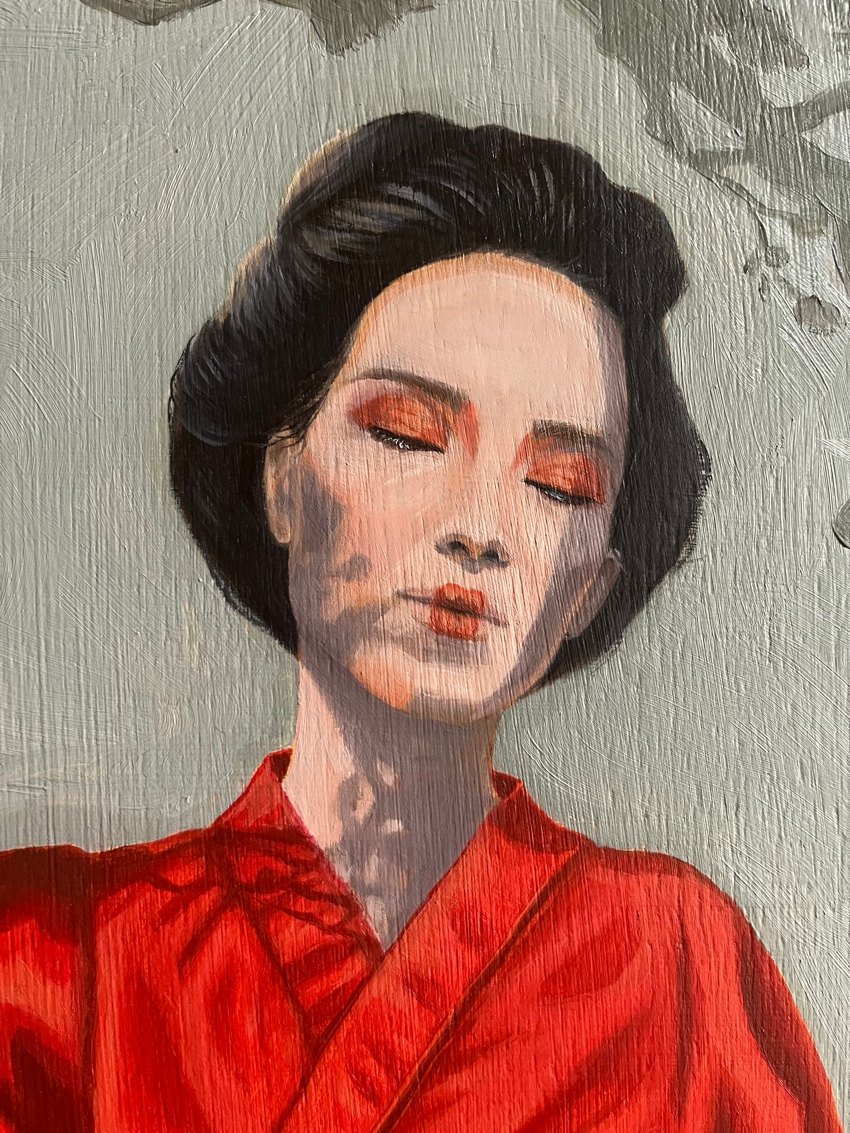
Because Helin is a physician, she knows human anatomy very well, and she also knows how to observe her surroundings carefully. When depicting the geisha, she pays attention to the figure’s aesthetic appearance, showing the folds of her flowered red kimono and her fan. Most importantly, raising her hand in an elegant gesture, the geisha displays the “pelvis”, rendered accurately down to every detail and worn on her wrist like a diamond bracelet. In other words, she declares her “freedom”: “I am a woman”, “I am free”, “I live as I wish”.
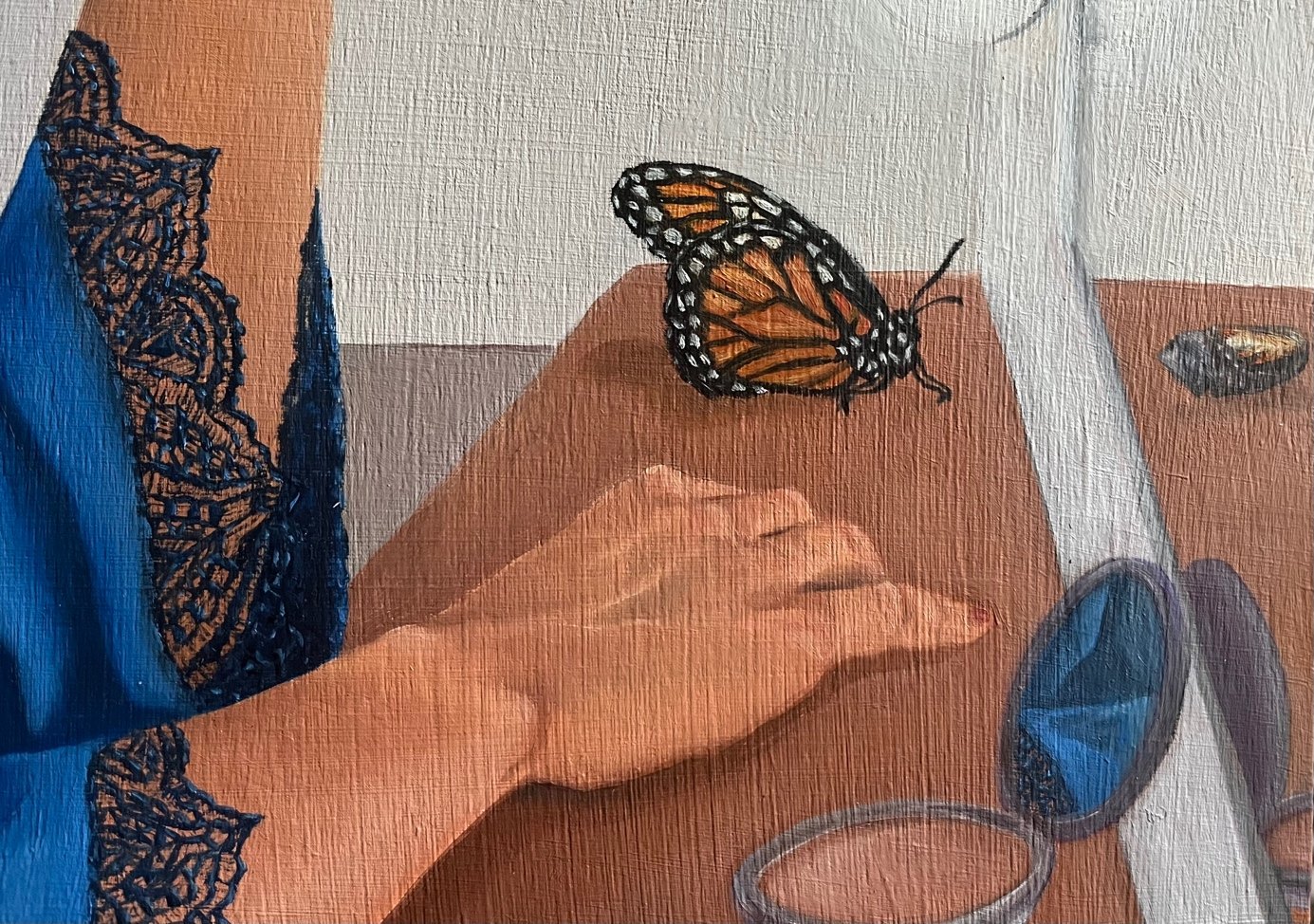
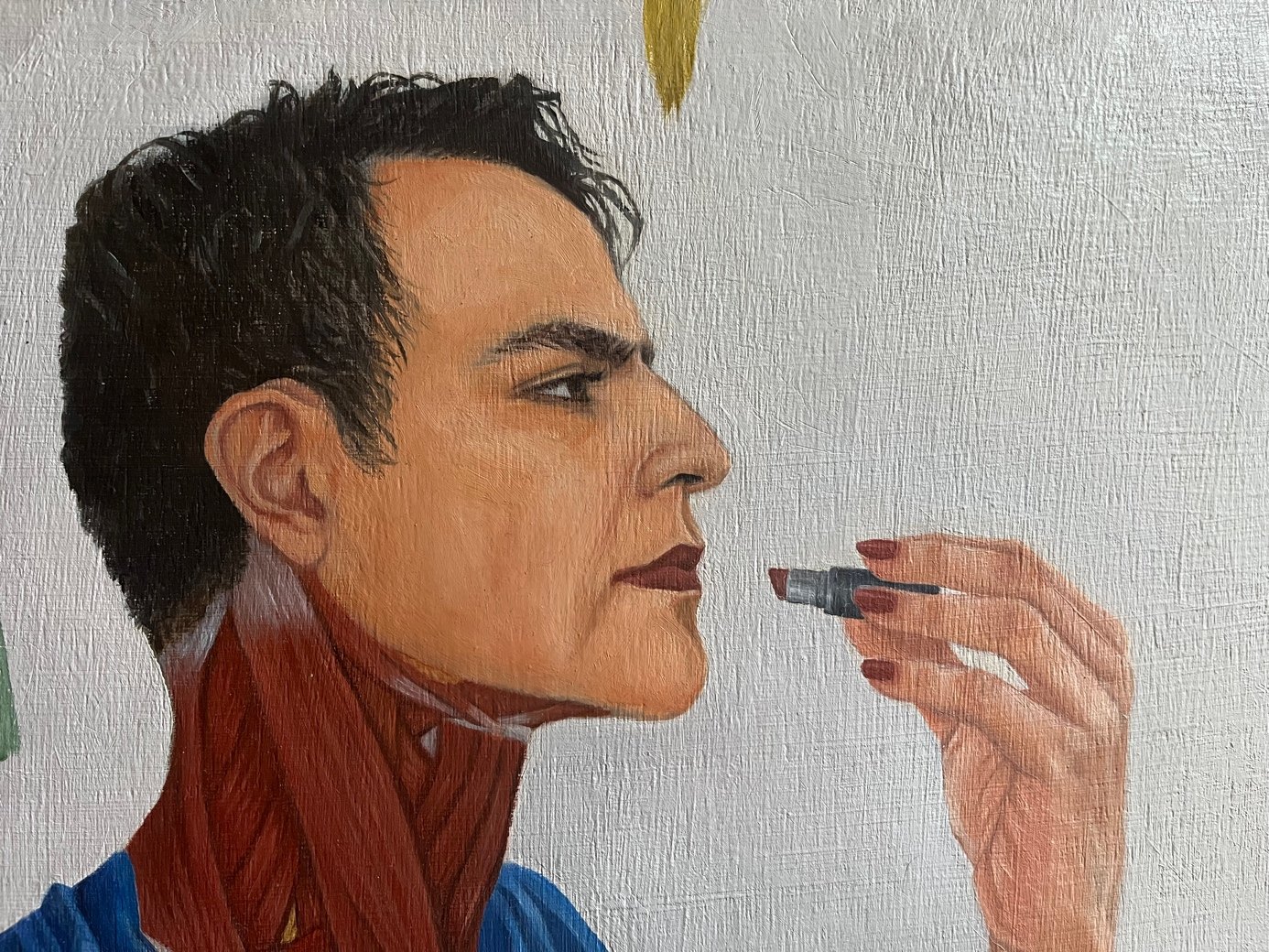
Painting a drag queen, she shows one by one the lace of the dressing gown, the grace of the polished fingers holding the lipstick, the odds and ends on the dressing table.
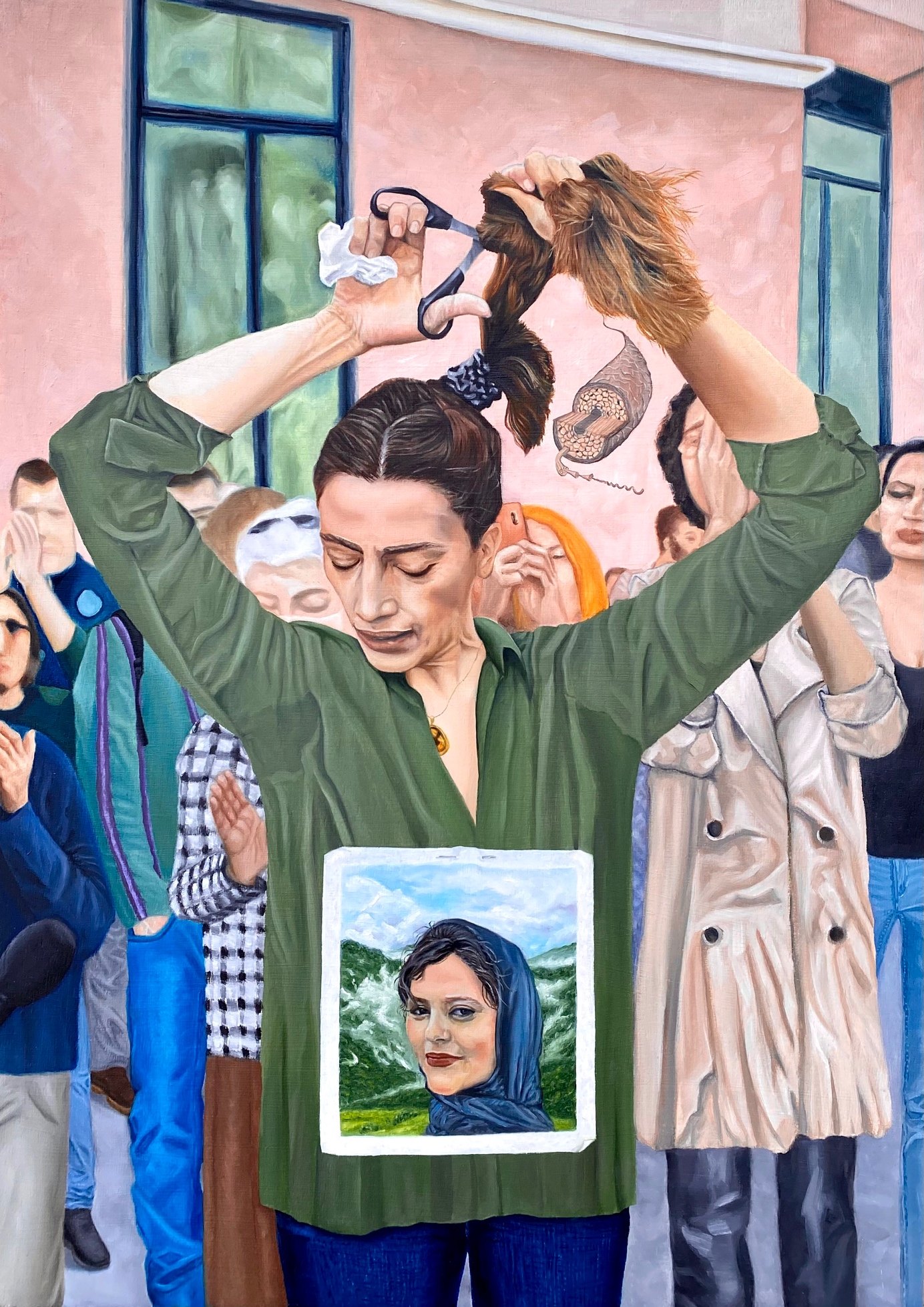
She draws the anatomy of a strand of hair of activist Nasibe Shamsaei, who protested the killing of the Iranian woman Mahsa Amini. While every person has only one life to live, she condemns and protests the “power” that denied Mahsa Amini the right to show her hair and killed her.
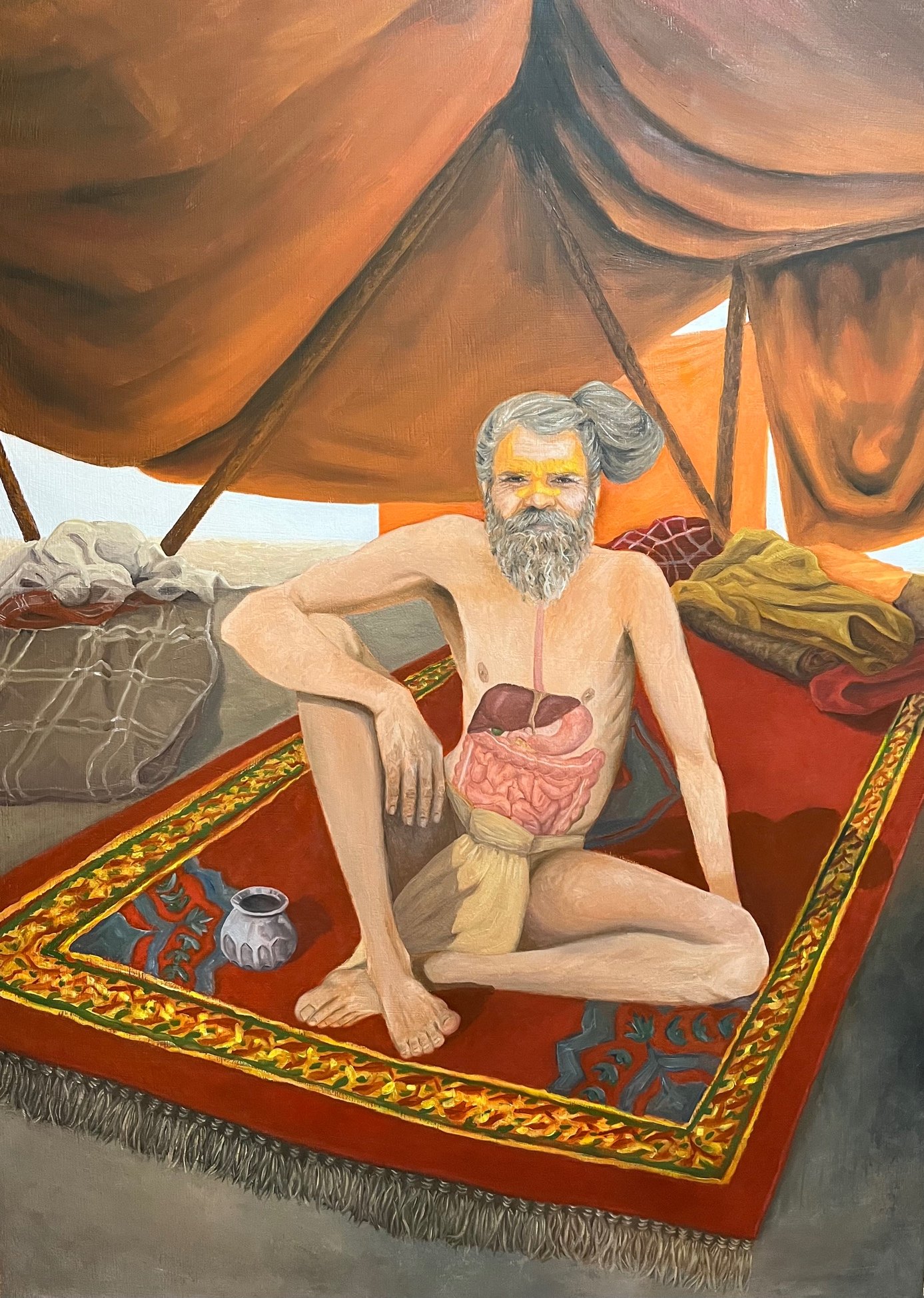
In all these depictions Helin returns to her own profession: like a physician at the dissection table, she tears open the figure’s body, removes the organ she wants, draws and paints it true to life, and pastes it in the right place on the figure in a postmodern manner. “Look, this is equality!” she cries.
Of course, Helin is at the beginning of her artistic path. But she knows what she wants. Years of work will show her how to express it with an even more artistic vision. May your path be open, Helin Serindağ!
Anatomy of an Iranian Woman’s Hair Strand
50x70 cm oil on poplar plywood, 2022
Note: Consent was obtained from activist Nasibe Shamsaei, who cut her hair in front of the Iranian Consulate in Istanbul after the killing of Mahsa Amini.
A sadhu is a holy person and ascetic in Hinduism who lives on the alms of society, and smears ash on the body as a reminder of mortality, because ash cannot be burned any further.
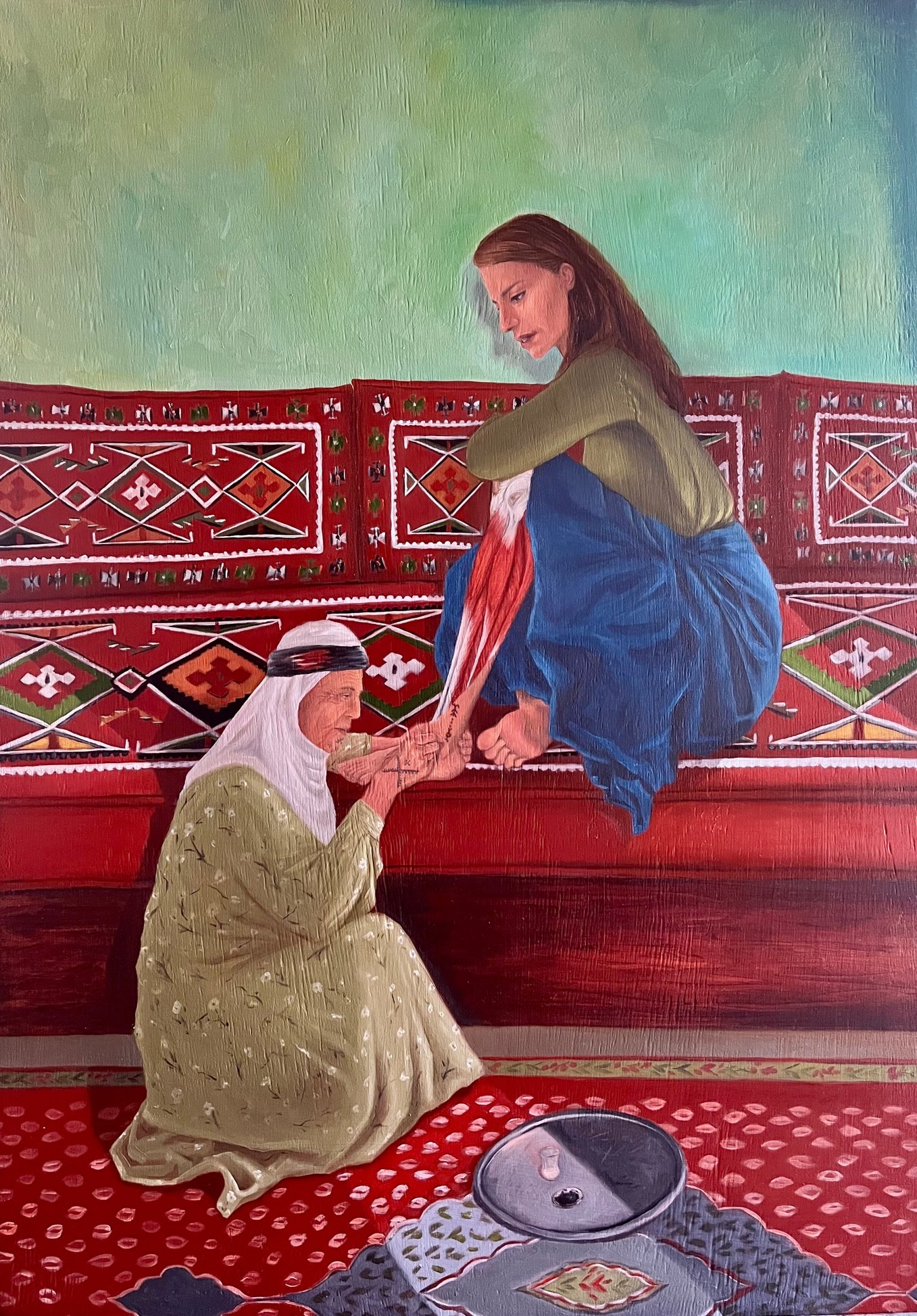
Deq/Dek: a traditional tattoo made with breast milk and lamp soot. A centuries-old tradition, now fading away. Beauty, healing, strength, abundance, fertility: whatever they wish for in life, Kurdish women inscribe its symbol on their bodies, like a prayer.
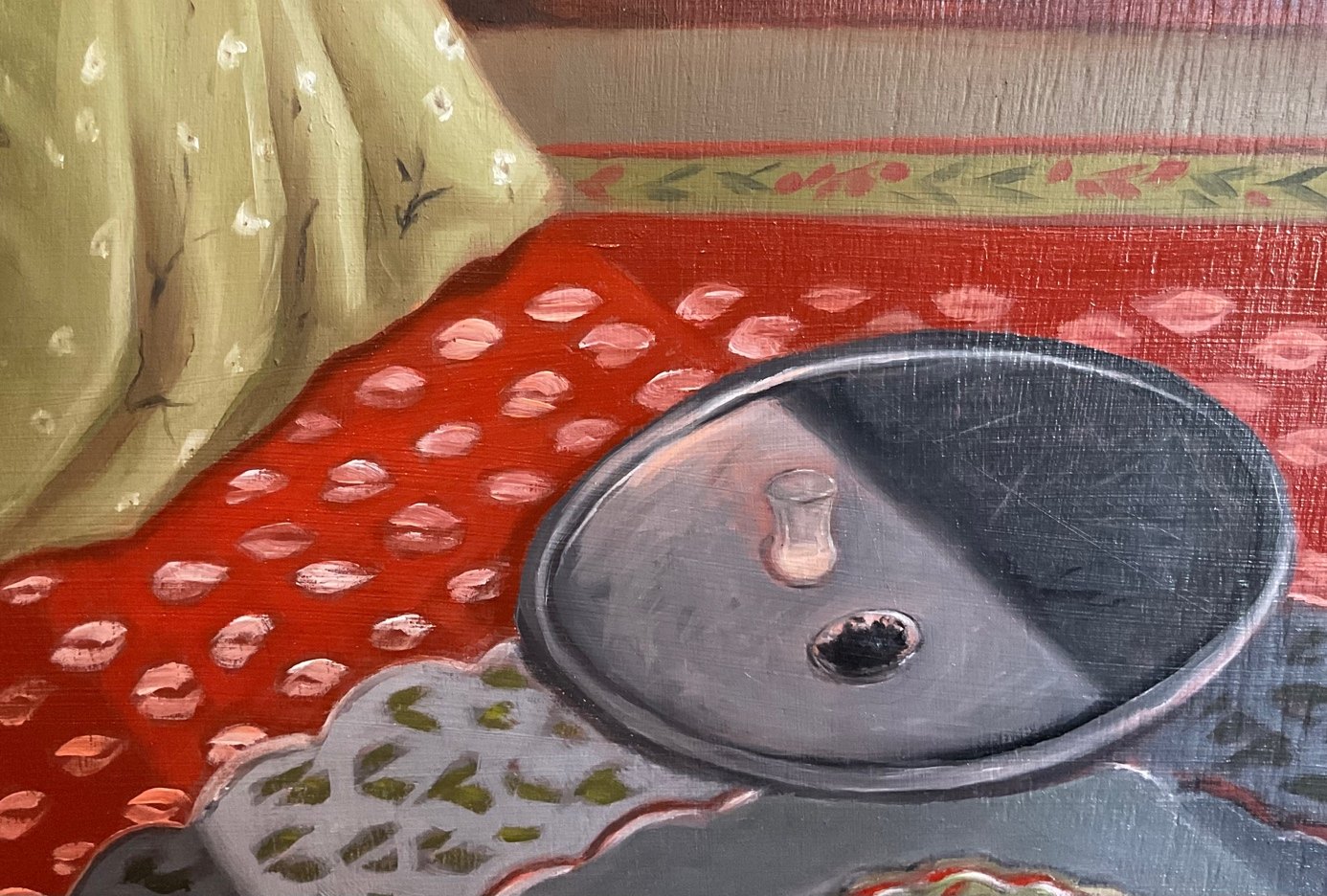
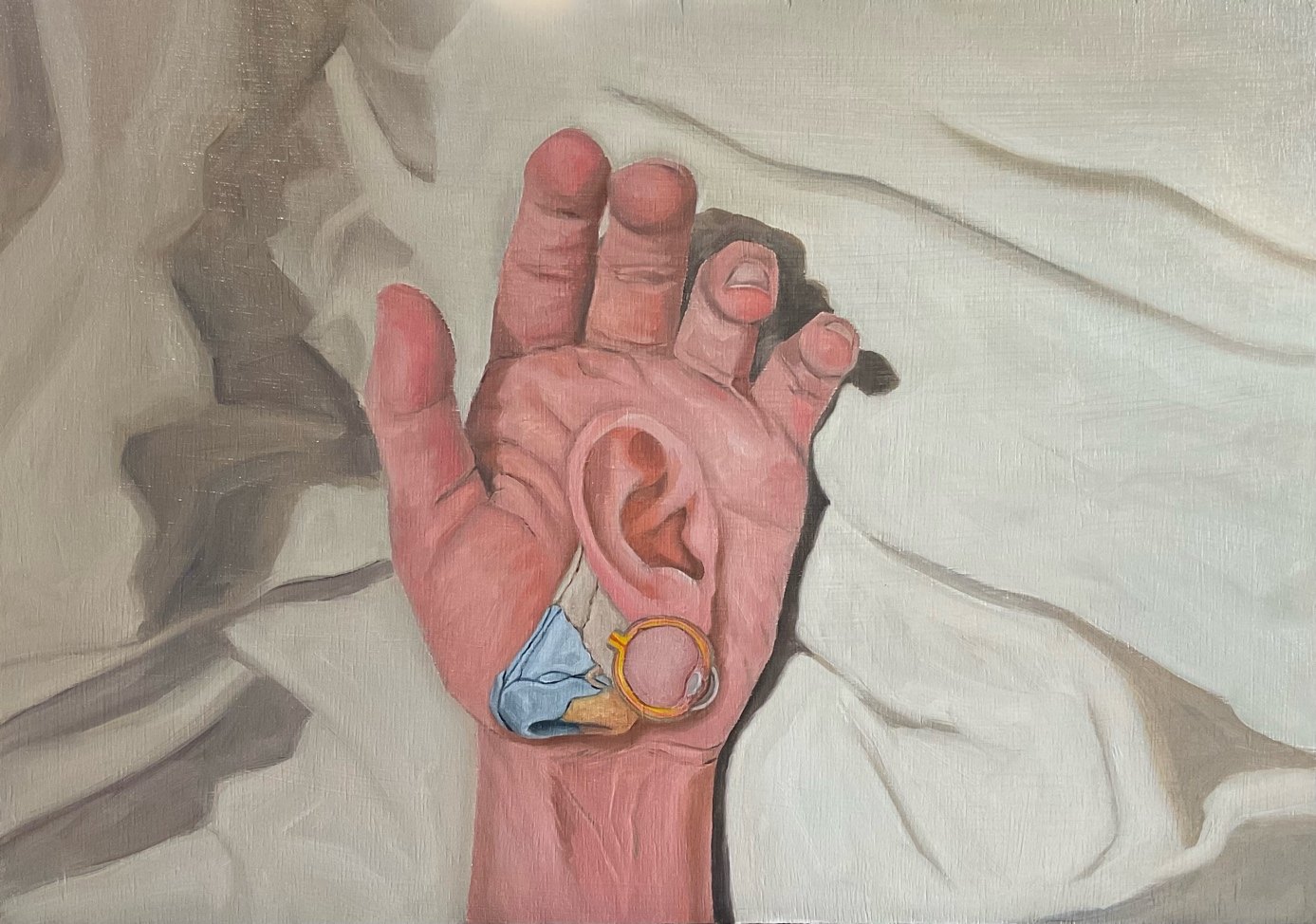
Anatomy of a Palestinian’s Sense Organs (Still Life in a Different Way)
30x42 cm oil on poplar plywood, 2023
Painted under the impact of the ongoing war, this work reminds viewers that we share the same sense organs, asks which of us could bear this witness, and invites empathy.
This is a donation work. If sold, all proceeds will be donated to MSF Doctors Without Borders to send medical supplies to Palestine.