Artworks (Anatomy in a Different Way)
About the series: Anatomy in a Different Way
Produced between 2022 and 2024, the series “Anatomy in a Different Way” treats the white, heteronormative representation of the body in classical anatomy atlases as a reflection of the current world order. By making visible bodies of different ethnic origins and gender identities, Serindağ sets plurality and diversity against uniform norms; through an anatomy atlas of a different kind, she paints the possibility of a different world.
From art historian Sevim Eti
After graduating from medical school in 2015 and working for four years as a neurology resident, Helin Serindağ left medicine and decided to paint. Settling in a mountain village near Assos, far from the city, she farms, enjoys growing tomatoes and making wine, and finds happiness in painting.
Looking at Helin’s anatomically precise figures and the internal organs pasted onto their bodies, you may slip into a surrealist, even hyperrealist reading. Yet when the paintings are examined ontologically, you notice the artist’s search that descends into the existence of the human being, into the self and its origins.
Just as thinkers such as Aristotle and Plato, who laid the foundations of ancient Greek philosophy, investigated “physics and inner nature”, Helin, as a physician, seems to explore the relationship between the physical appearance of the human being and its inner nature. Examining her paintings, you also see her questioning social traditions, morality and oppressive politics. She does not stop at questioning; she protests oppression. Helin is in pursuit of being a “protest” artist!
First, phenomenologically, as the existentialists did, while depicting the human body she studies the relationship of human physique to inner nature and to the psyche; she explores the visible and the invisible, the physical and the inner existence of the human being. She does this both as a physician and as a woman, and in doing so she defends “human rights”, and especially “women’s rights”.
Through her realistic figures she says: “All people are equal. Black or white, Catholic or Muslim, Orthodox or Buddhist! Lesbian or gay! Everyone has the right to live as they wish in this mortal life, whatever their social or physical conditions. Because a human being is valuable as an individual.” As Jean-Paul Sartre argued in his novels, she says that “man creates his own value”.
Because Helin is a physician, she knows human anatomy very well, and she also knows how to observe her surroundings carefully. When depicting the geisha, she pays attention to the figure’s aesthetic appearance, showing the folds of her flowered red kimono and her fan. Most importantly, raising her hand in an elegant gesture, the geisha displays the “pelvis”, rendered accurately down to every detail and worn on her wrist like a diamond bracelet. In other words, she declares her “freedom”: “I am a woman”, “I am free”, “I live as I wish”.
Painting a drag queen, she shows one by one the lace of the dressing gown, the grace of the polished fingers holding the lipstick, the odds and ends on the dressing table.
She draws the anatomy of a strand of hair of activist Nasibe Shamsaei, who protested the killing of the Iranian woman Mahsa Amini. While every person has only one life to live, she condemns and protests the “power” that denied Mahsa Amini the right to show her hair and killed her.
In all these depictions Helin returns to her own profession: like a physician at the dissection table, she tears open the figure’s body, removes the organ she wants, draws and paints it true to life, and pastes it in the right place on the figure in a postmodern manner. “Look, this is equality!” she cries.
Of course, Helin is at the beginning of her artistic path. But she knows what she wants. Years of work will show her how to express it with an even more artistic vision. May your path be open, Helin Serindağ!
Sevim Eti, Art Historian — 17 June 2024, Bodrum
About the series: Reconstruction
The series focuses on the process through which a neurologist-artist, diagnosed with a brain tumor located in the speech center, becomes reduced to a medical case, an object, and, through artistic creation, gradually reclaims her position as a subject. When language fell silent, art became a tool of repair. By filtering trauma through an aesthetic discipline, the passive experience of being a patient transforms into an active act of creation.
The series opens with a self-portrait begun as an act of self-care before any clinical diagnosis, depicting the artist in a hospital corridor injecting oil paint into her own IV line. With the diagnosis, the rupture of linear time is expressed through clocks without hands in a waiting room and the recurring image of a paint palette forcing time back into motion.
The experience of awake brain surgery is redefined from an object of fear into “an image to be painted,” becoming a source of aesthetic motivation. The artist documents this process from her own perspective within a consciously fragmented pictorial space, where the surgical drape above her head descends from three sides of the composition like a theatrical curtain. The post-operative state, deepened by aphasia and a sense of objectification, is interrupted by colors seeping into the shadows of bandages and by the transformation of a lettuce leaf stuck in her throat, due to swallowing difficulty, into an unexpected aesthetic focal point. Tragedy is repainted in vivid colors and thus re-signified. Trauma is gently domesticated through honoring the first smile that appeared where language had ended, and through the tender ritual of being washed by her family, who carefully protected her stitches.
Accepting destruction as fertilizer, Reconstruction stands as a distinctive practice of re-subjectification, where life is rebuilt through art.
About the series: Censor Free Zone
Her guest artist residency at Saye Collective began with an uncensored delivery of a TEDx talk that had earlier faced attempts at censorship and was cancelled; it then evolved into a space of collective memory where visitors shared their own experiences of censorship. Throughout the residency, the artist painted the visitors’ censorships and organised workshops and co-creation processes in which participants turned their censorship stories into compost, transforming them into nourishing elements of creation. The residency concluded with the collective exhibition “Censor Free Zone”, where censorship was transformed into artistic resistance and production.
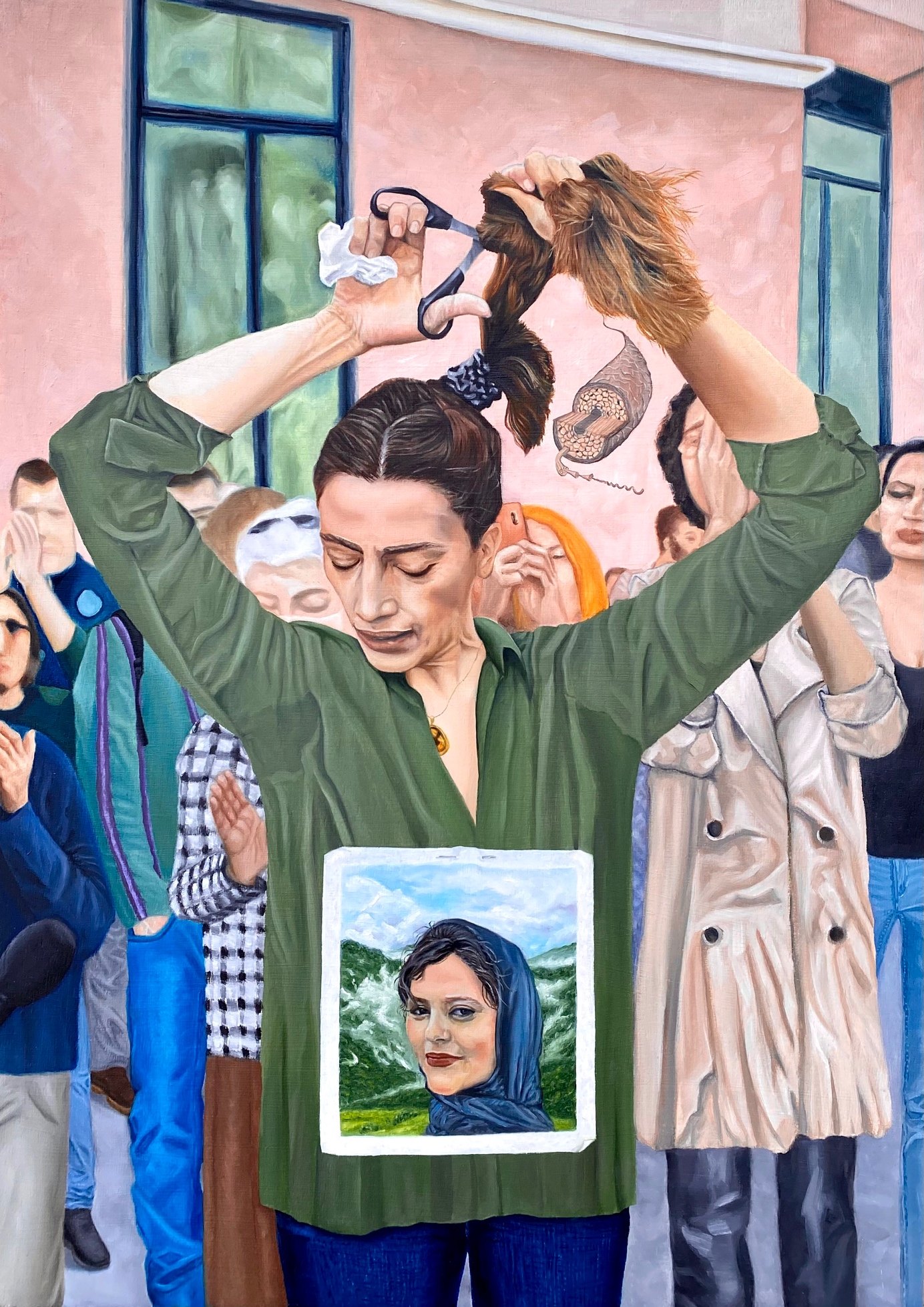
Anatomy of an Iranian Woman’s Hair Strand
50x70 cm oil on poplar plywood, 2022
AvailableEnquire about this work
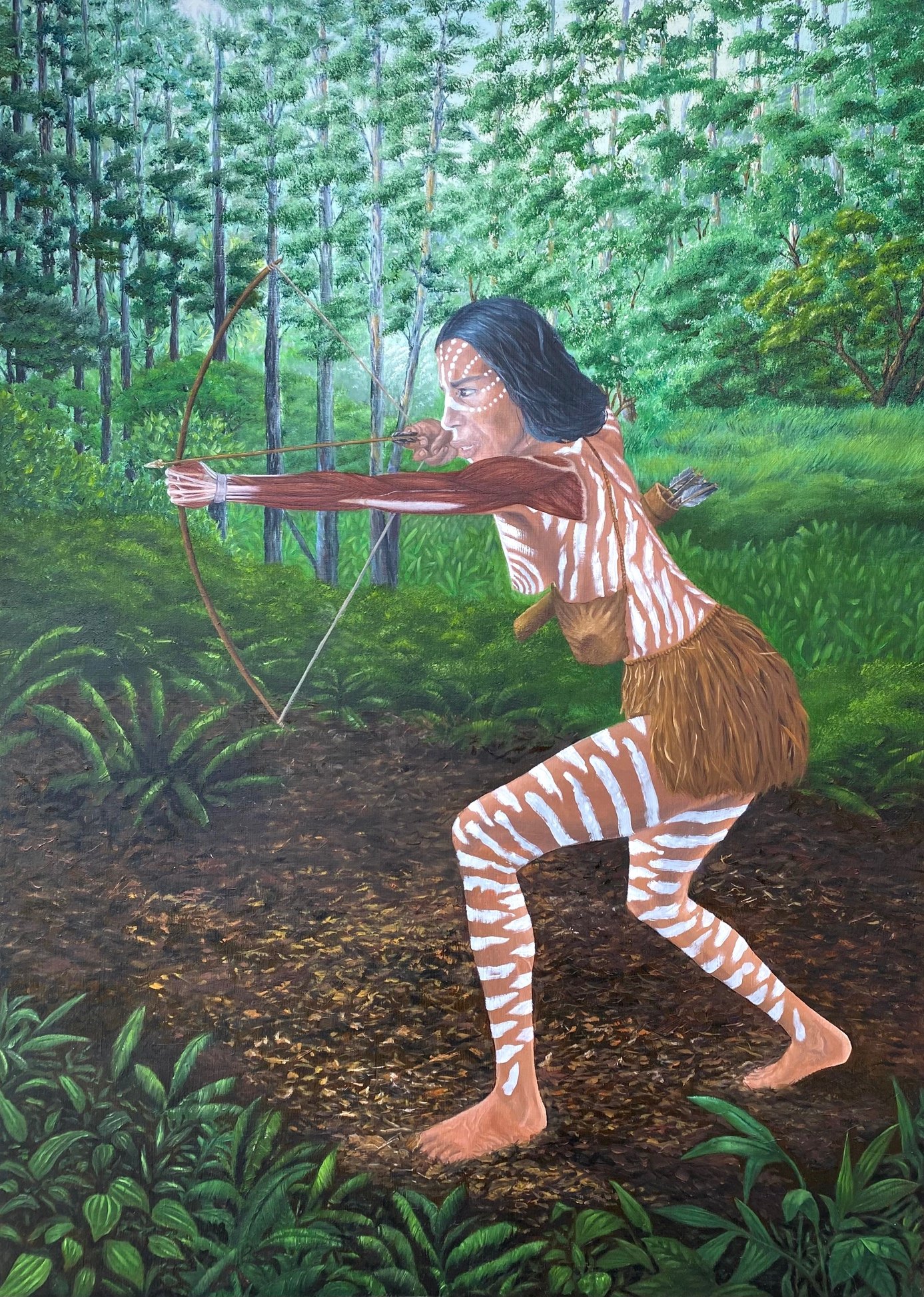
Anatomy of an Aboriginal Person’s Arm Muscles
50x70 cm oil on poplar plywood, 2023
AvailableEnquire about this work
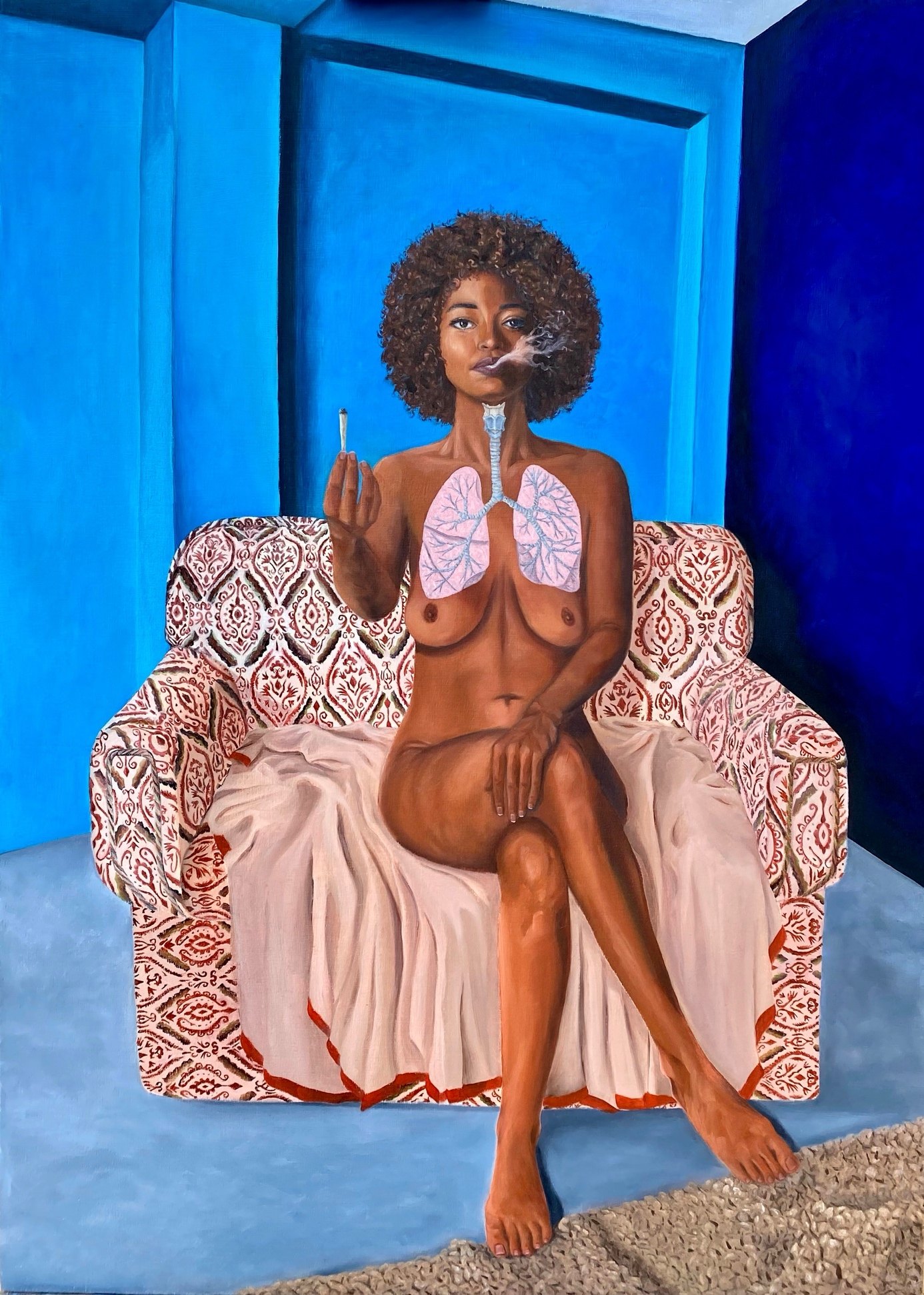
Anatomy of a Black Woman’s Respiratory System
50x70 cm oil on poplar plywood, 2023
AvailableEnquire about this work
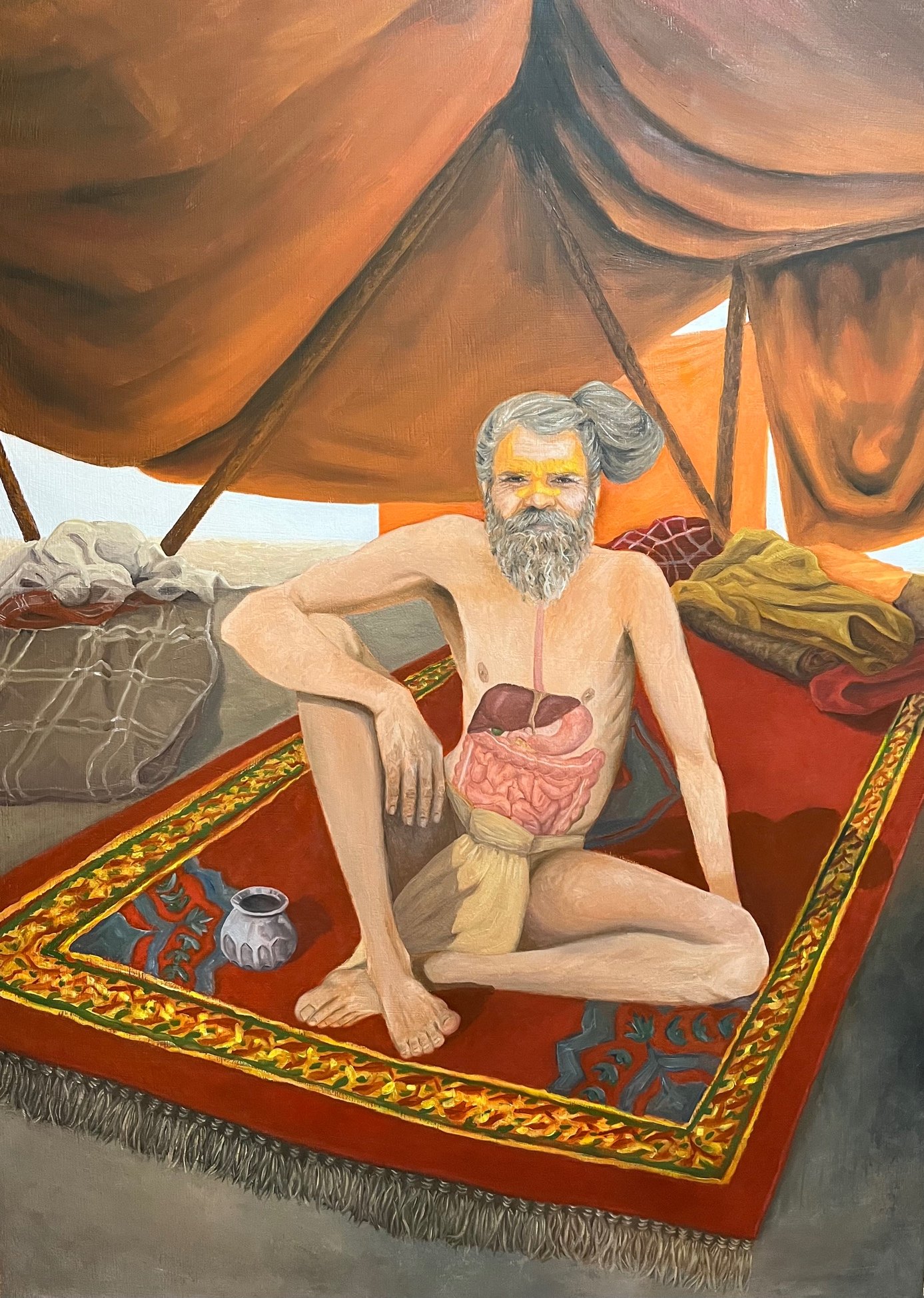
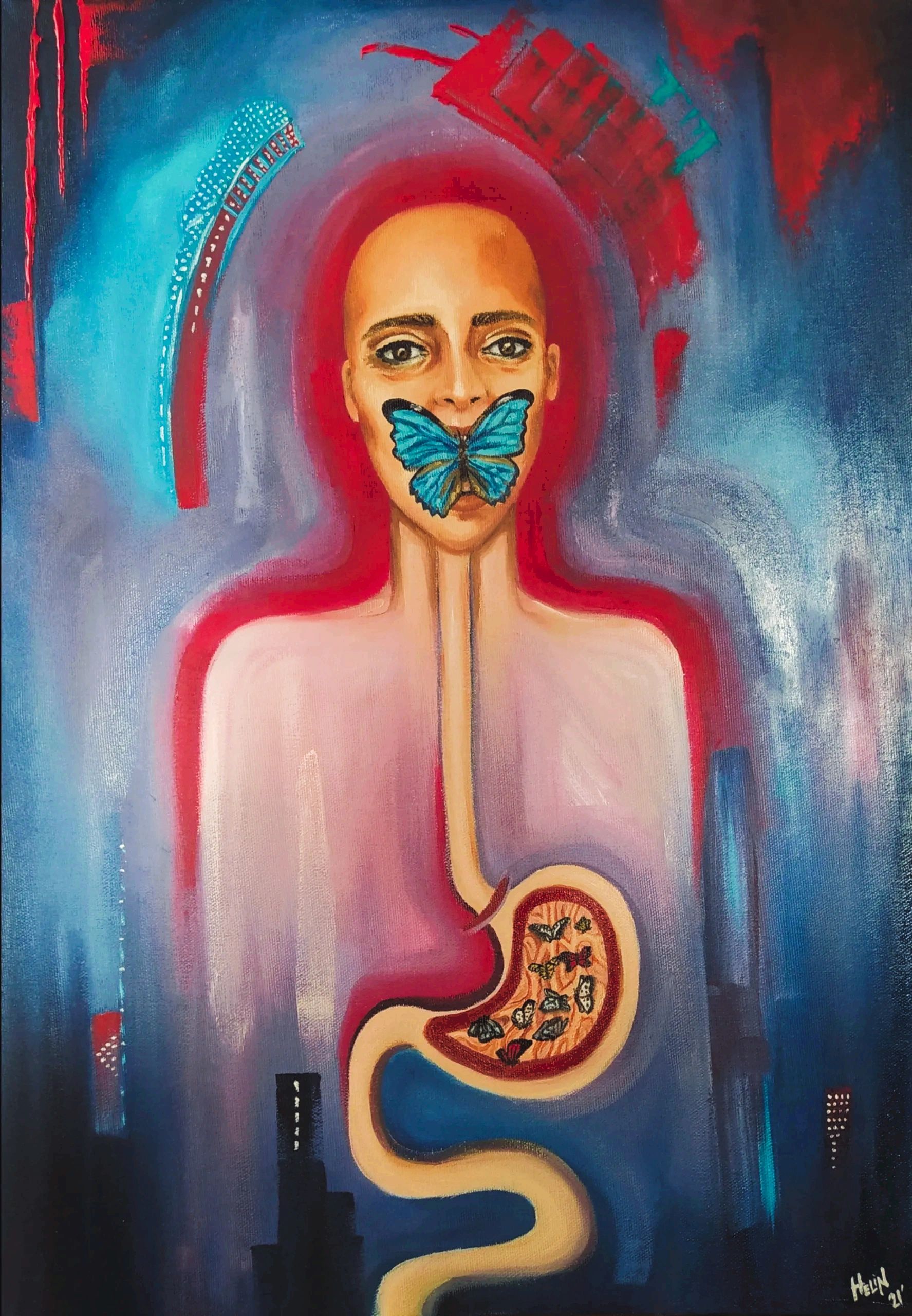
Anatomy of a Sadhu’s Digestive System
50x70 cm oil on poplar plywood, 2023
AvailableEnquire about this work
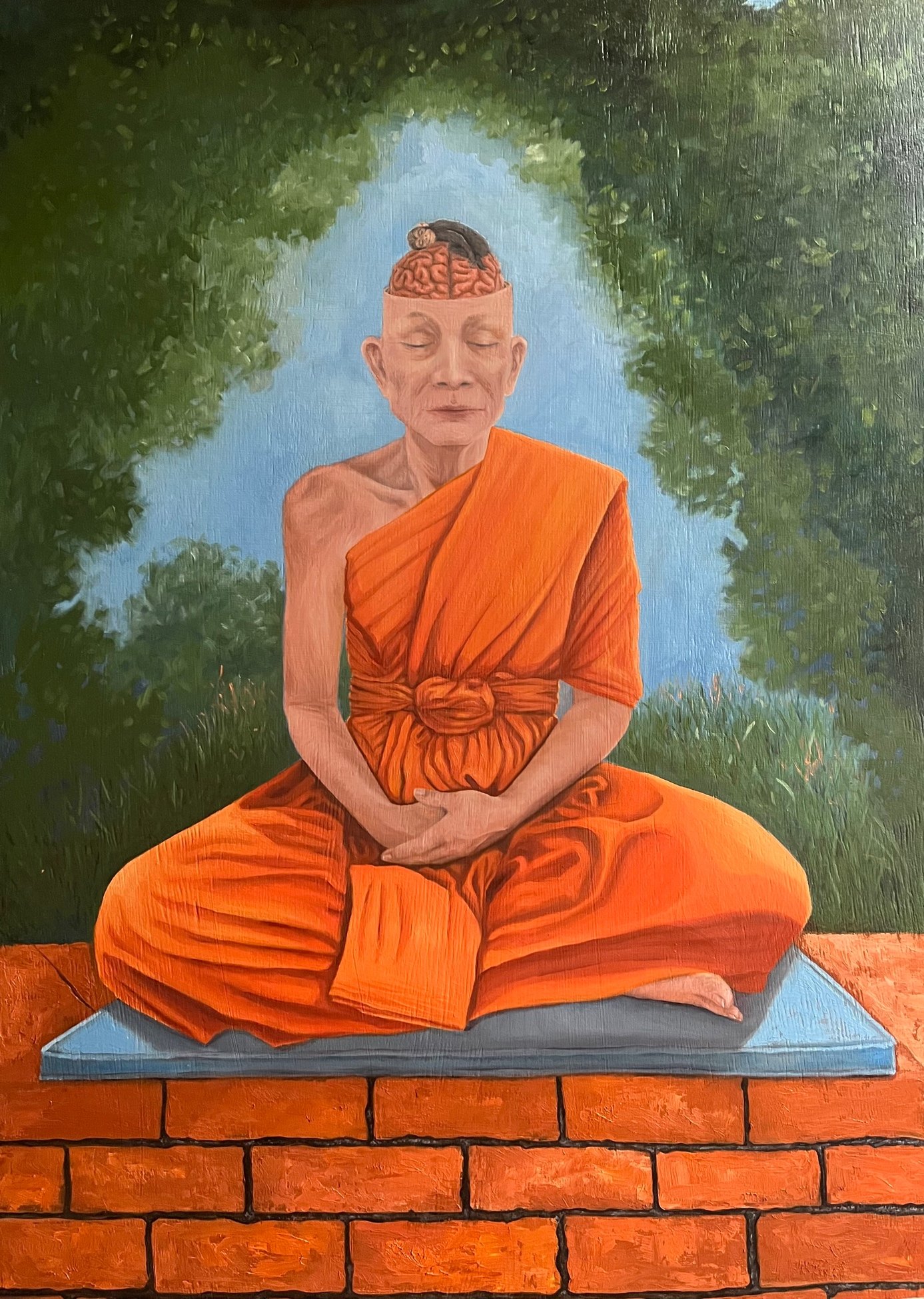
Anatomy of a Monk’s Brain
50x70 cm oil on poplar plywood, 2023
In a private collection
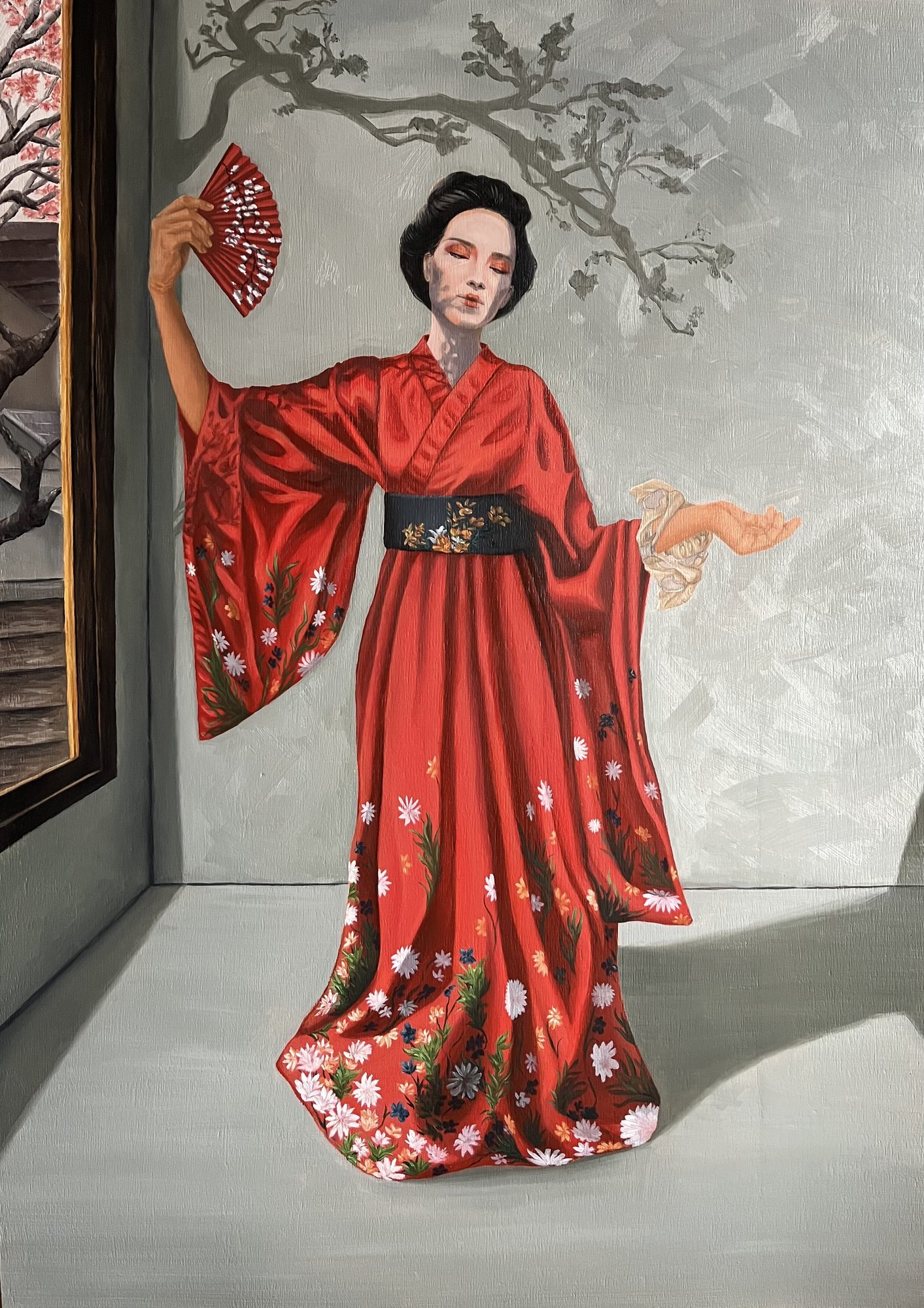
Anatomy of a Geisha’s Pelvis
50x70 cm oil on poplar plywood, 2023
AvailableEnquire about this work
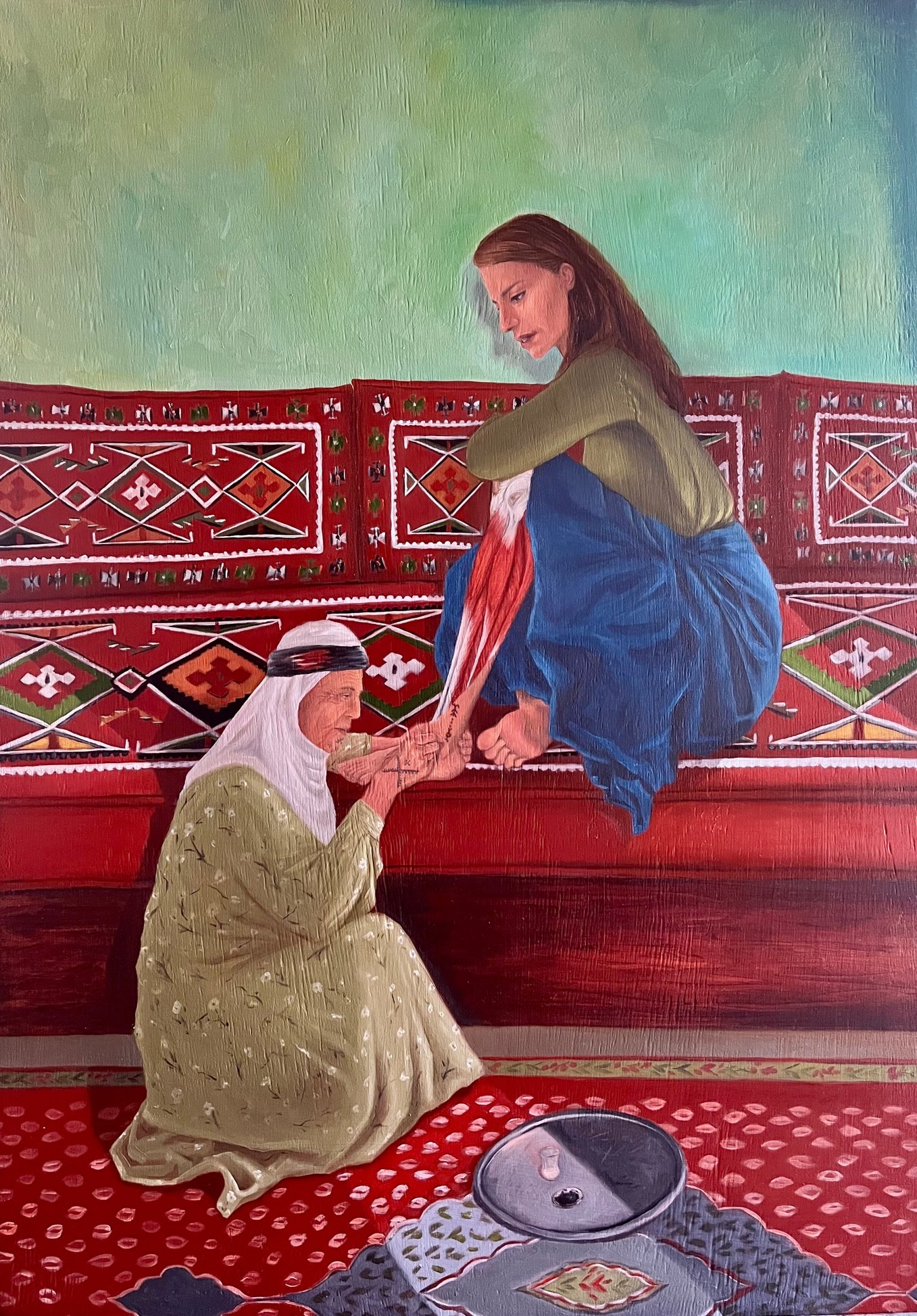
Anatomy of a Kurdish Woman’s Leg Muscles
50x70 cm oil on poplar plywood, 2023
AvailableEnquire about this work
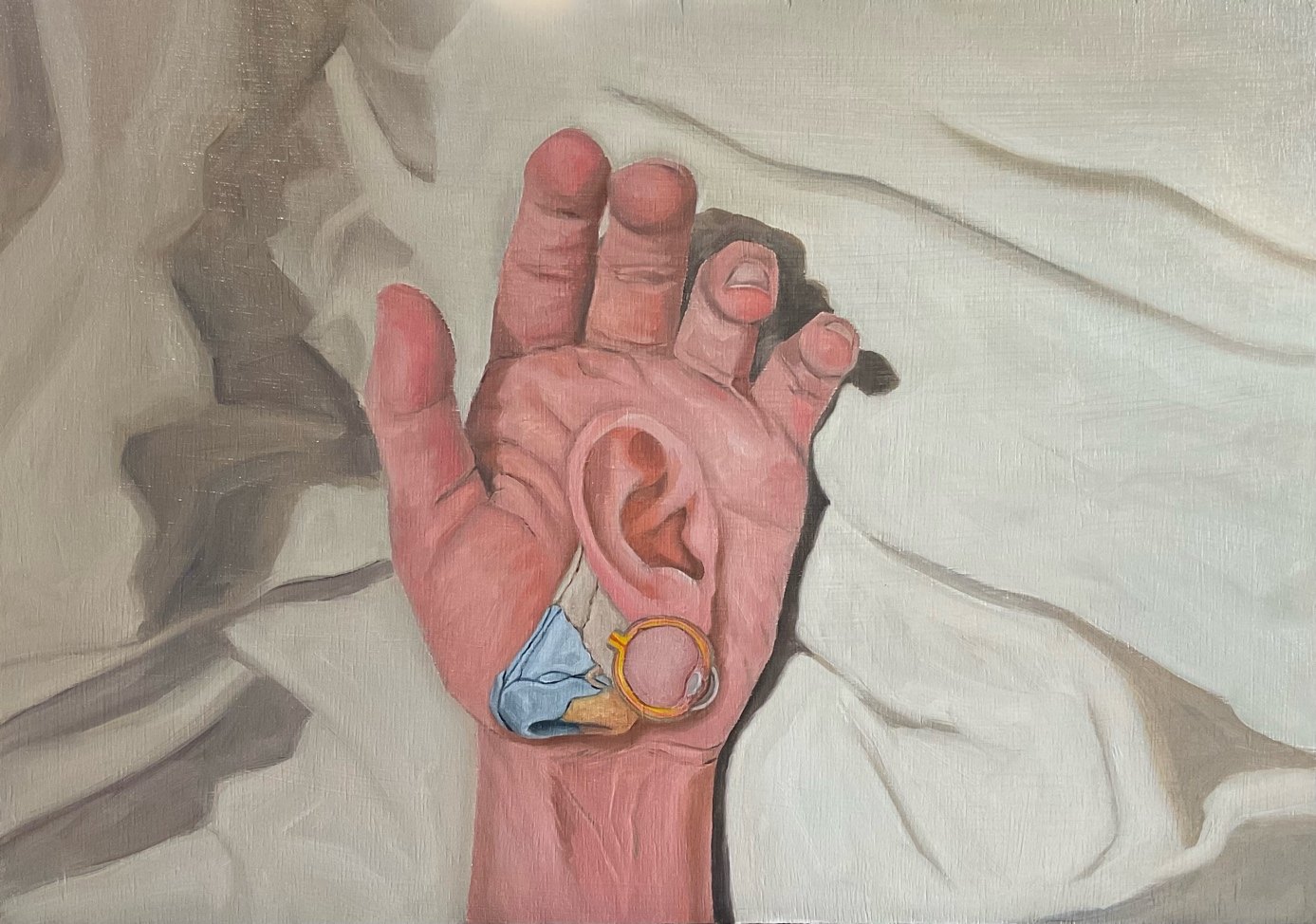
Anatomy of a Palestinian’s Sense Organs (Still Life in a Different Way)
30x42 cm oil on poplar plywood, 2023
AvailableEnquire about this work
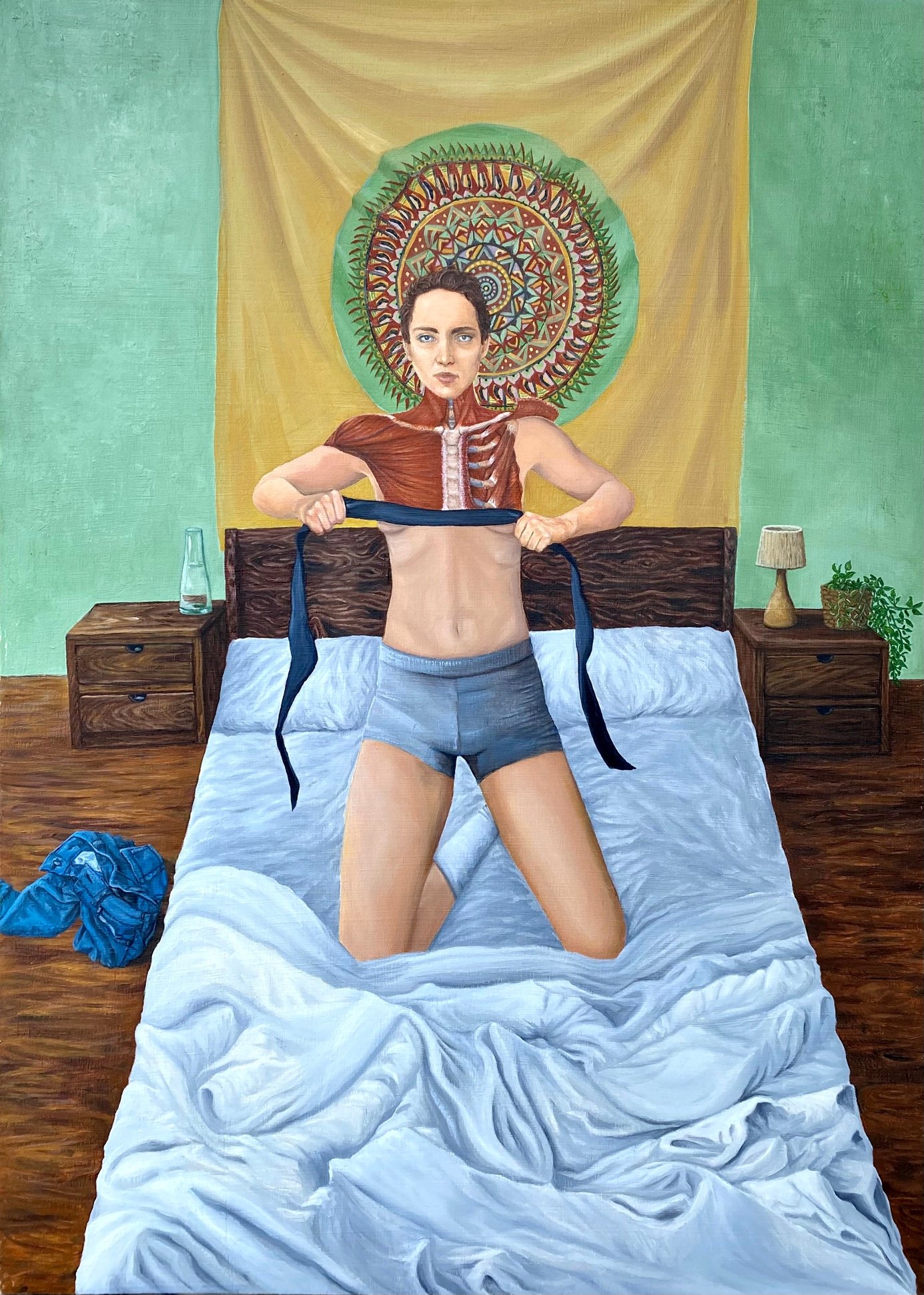
Anatomy of a Gender Bender’s Chest Muscles
50x70 cm oil on poplar plywood, 2022
AvailableEnquire about this work
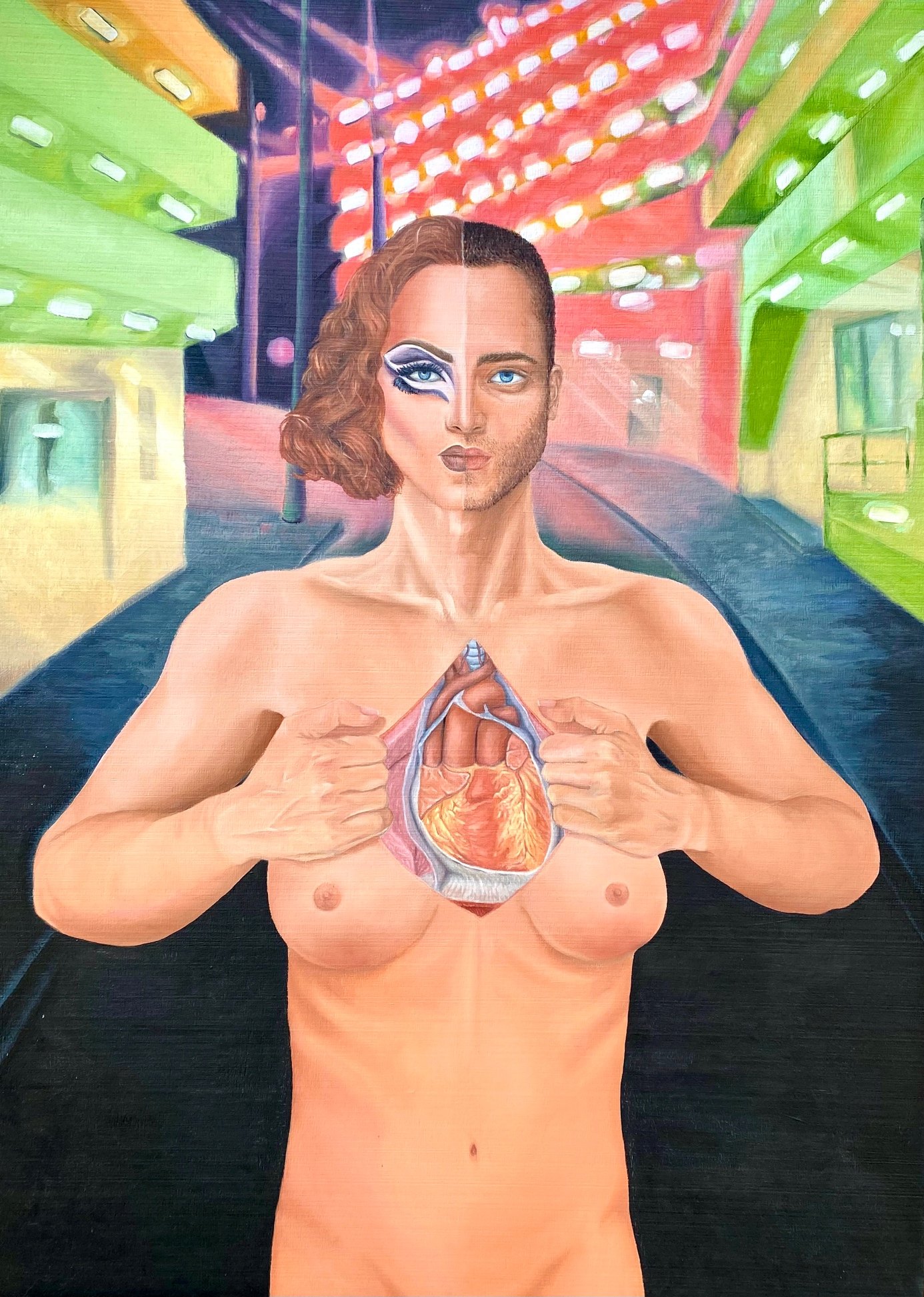
Anatomy of a Trans Woman’s Heart
50x70 cm oil on poplar plywood, 2023
AvailableEnquire about this work
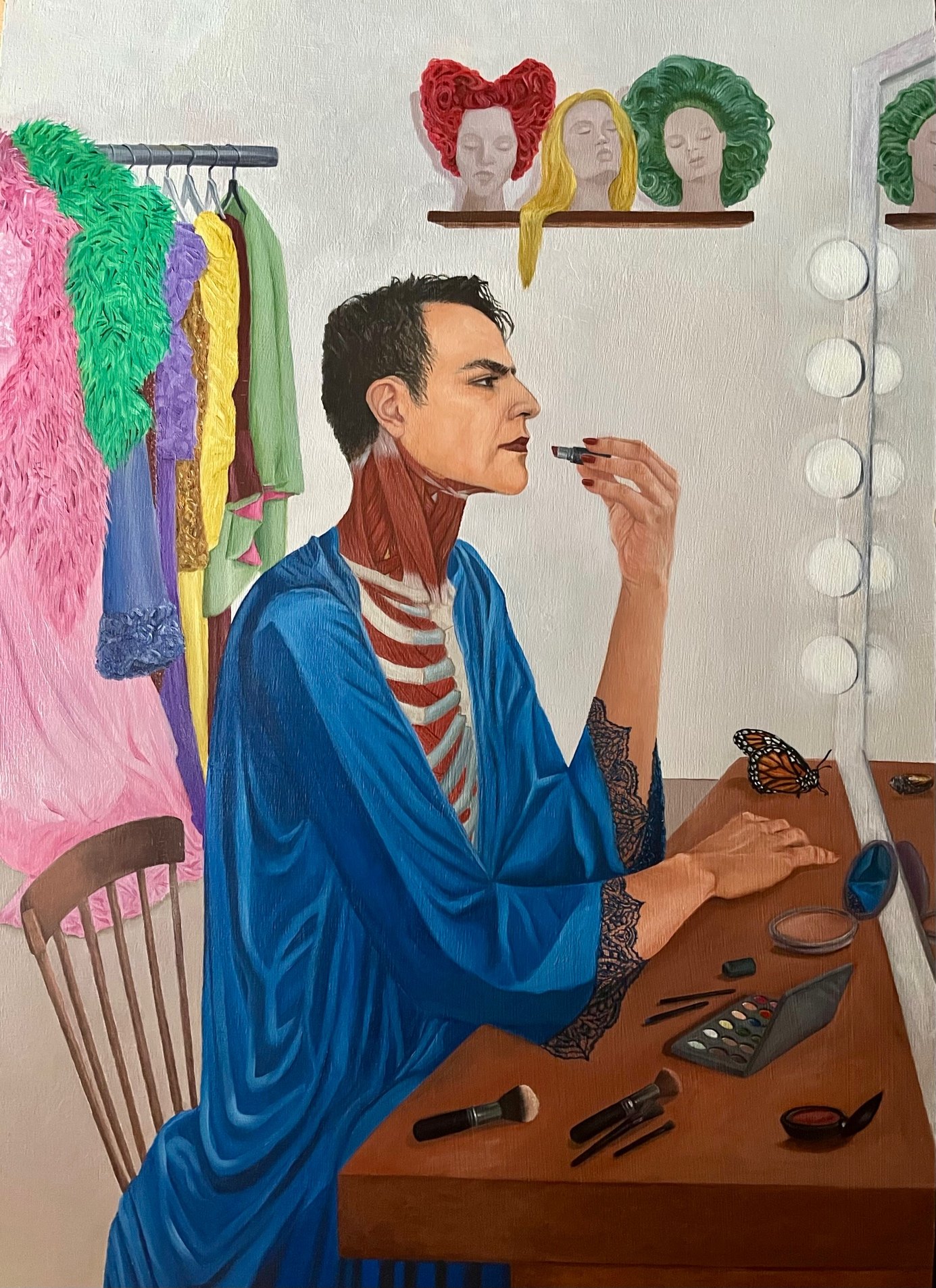
Anatomy of a Drag Queen’s Neck Muscles
50x70 cm oil on poplar plywood, 2023
AvailableEnquire about this work
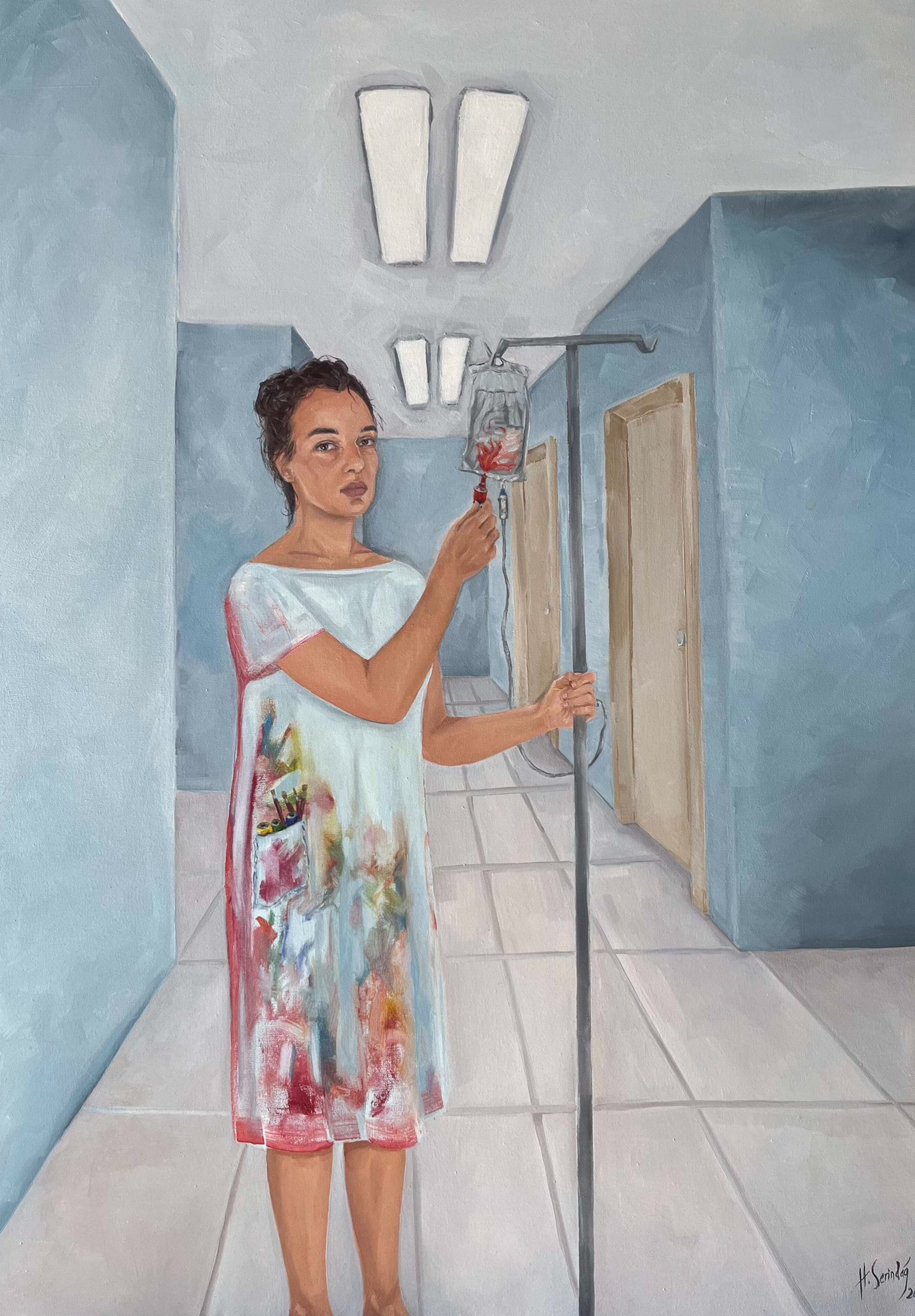
Self Care
50x70 cm oil on canvas
In a private collection
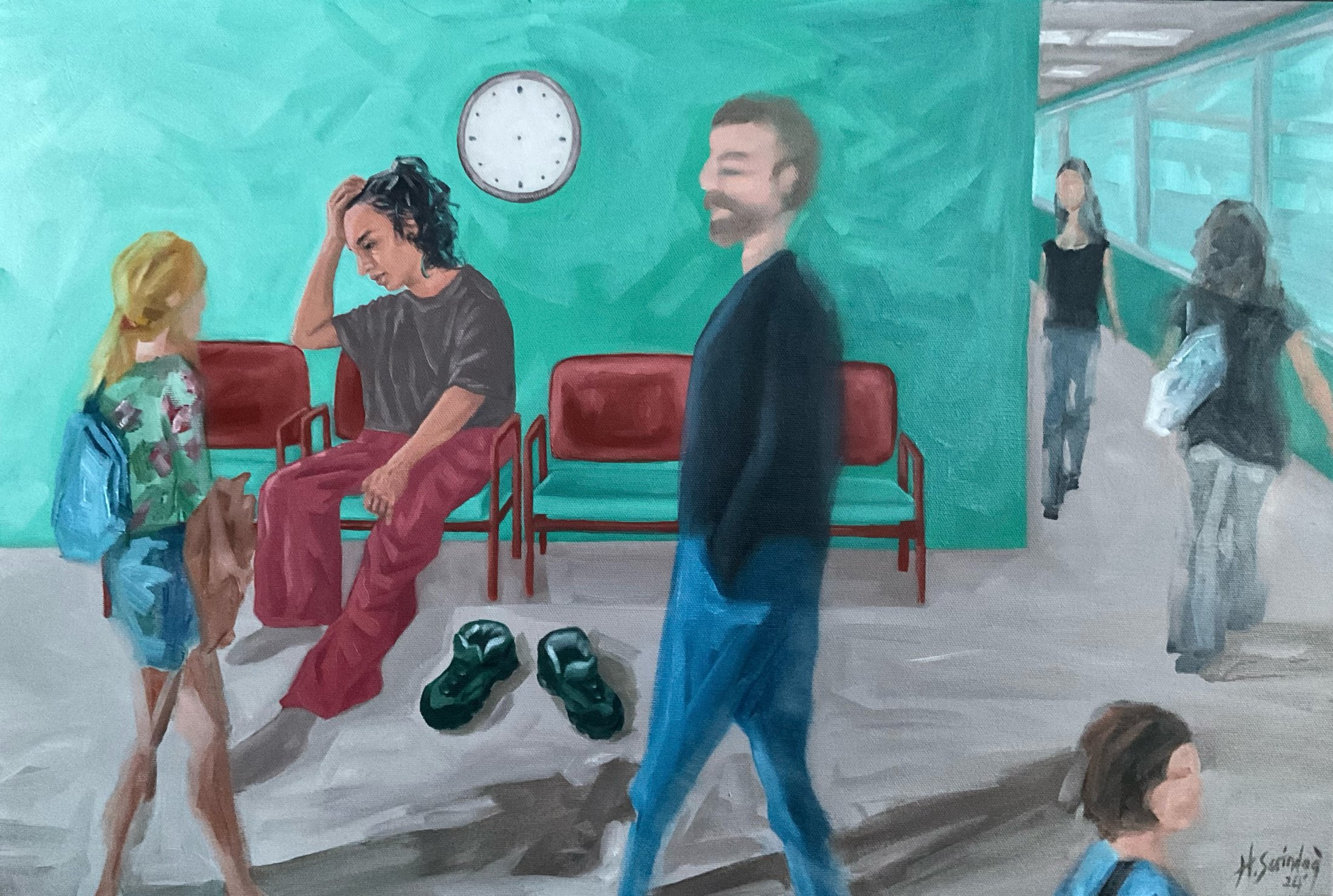
Waiting Room
60x40 cm oil on canvas
AvailableEnquire about this work
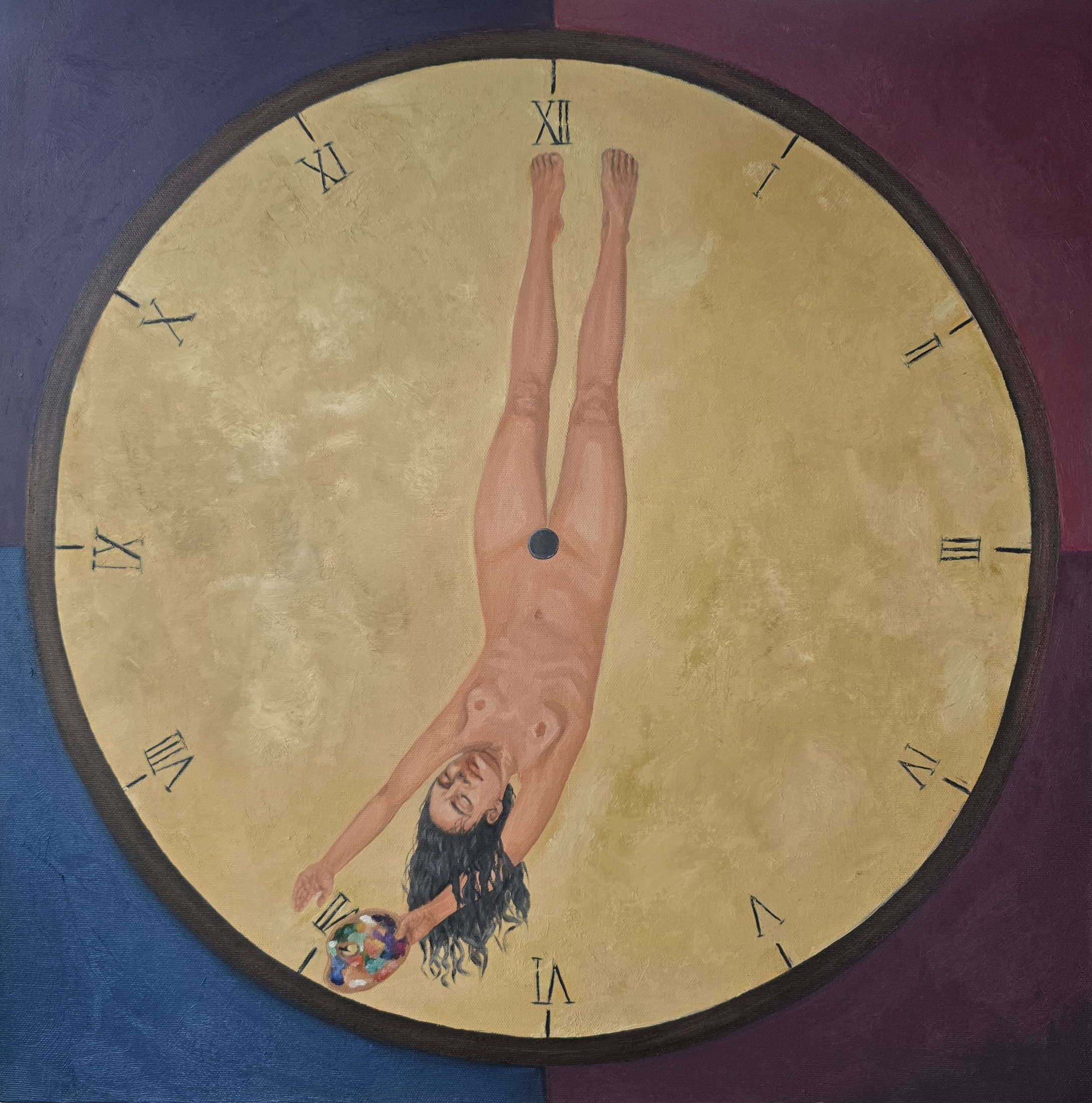
Easier Said Than Done
50x50 cm oil on canvas
AvailableEnquire about this work
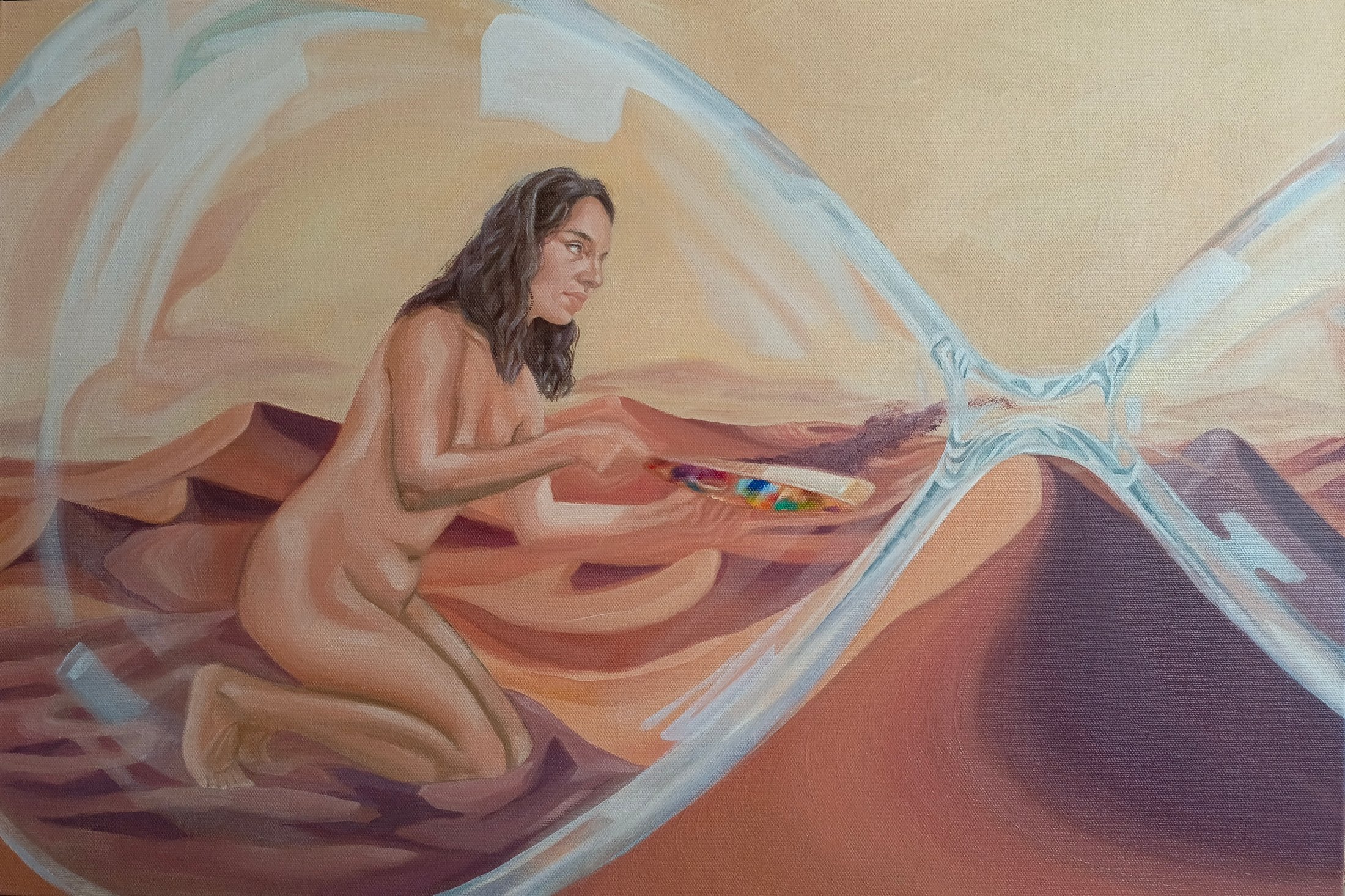
Hourglass
60x40 cm oil on canvas
AvailableEnquire about this work
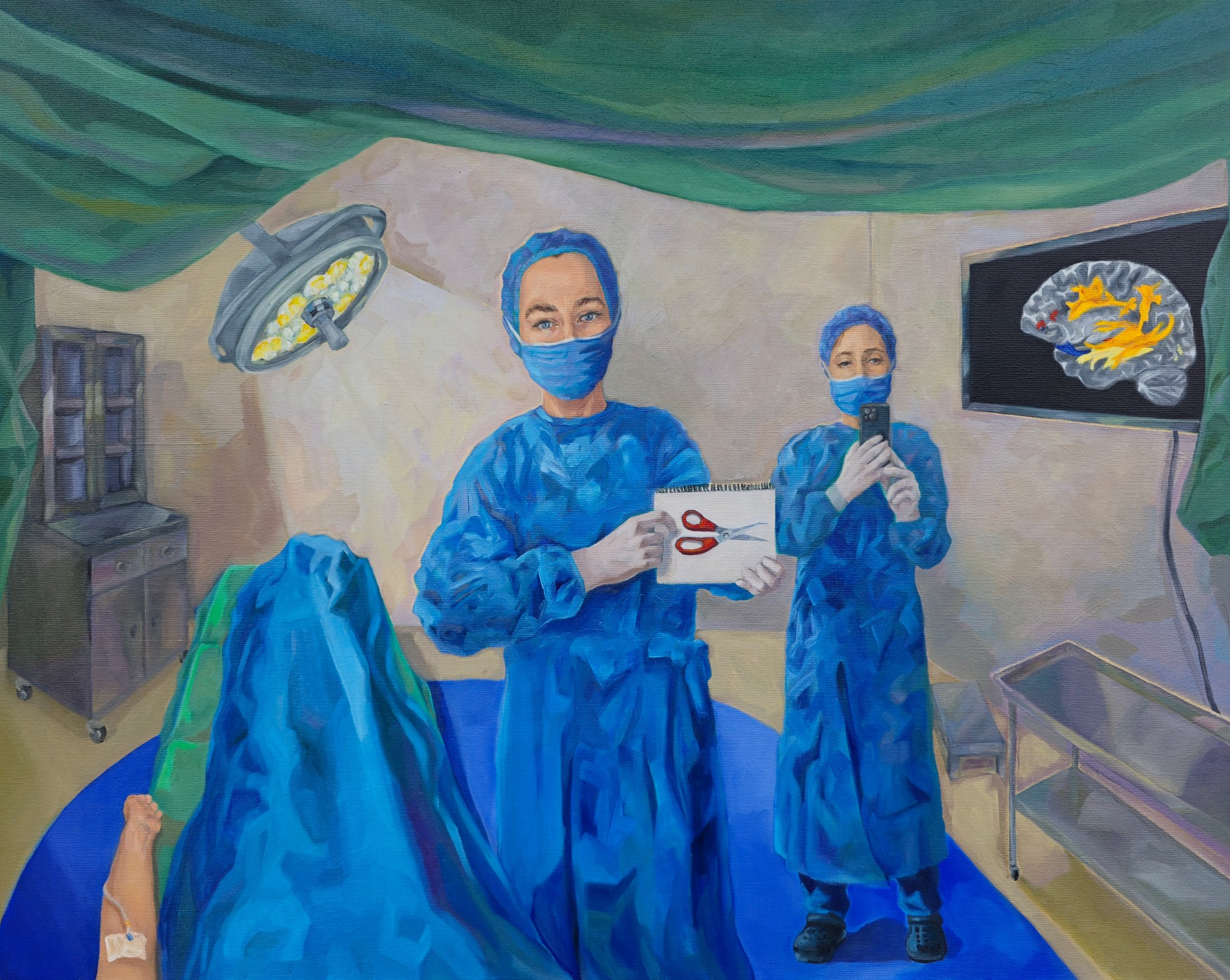
Farewell, My Broca
75x60 cm oil on canvas, 2025
AvailableEnquire about this work
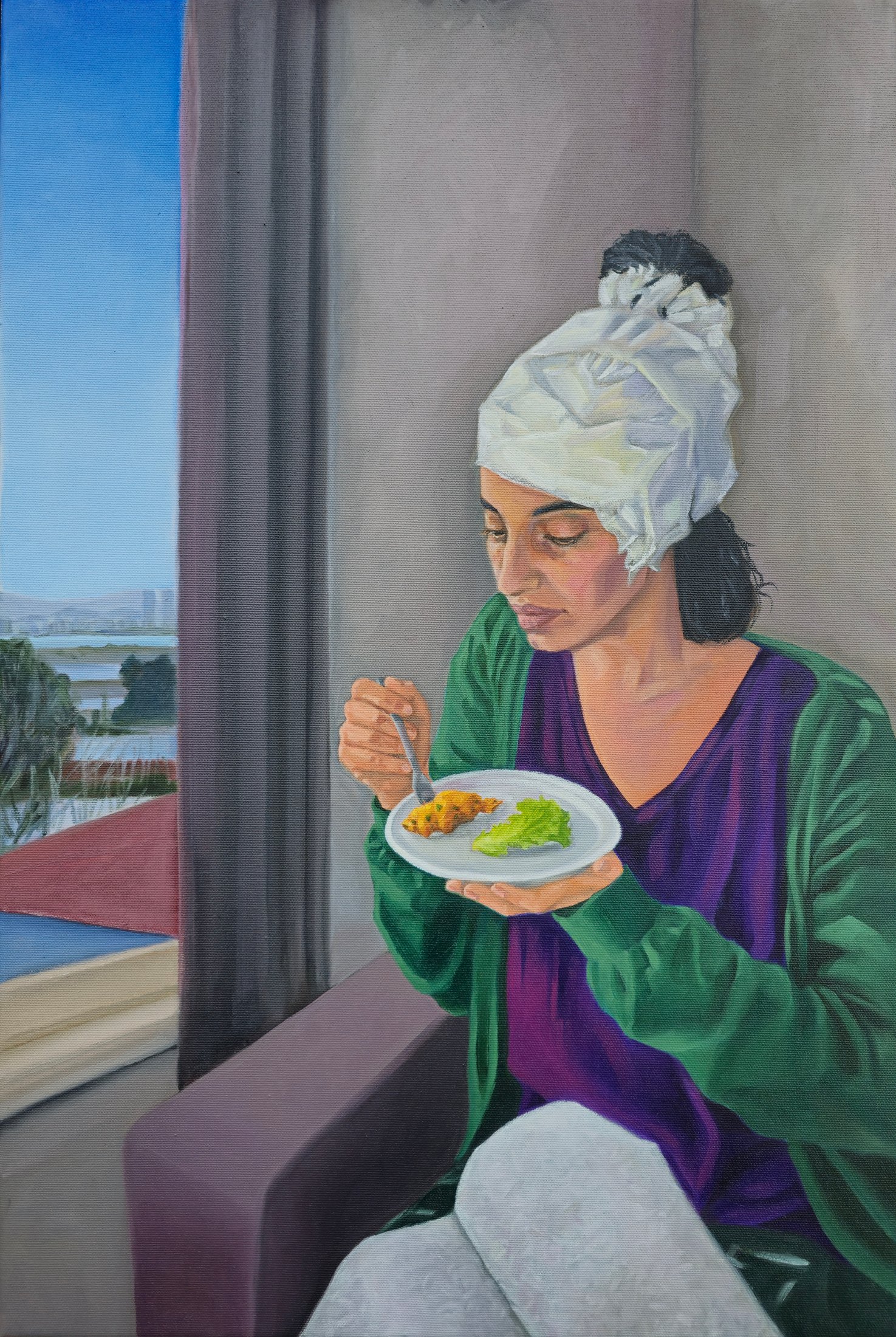
Seconds Before Choking
40x60 cm oil on canvas, 2025
AvailableEnquire about this work
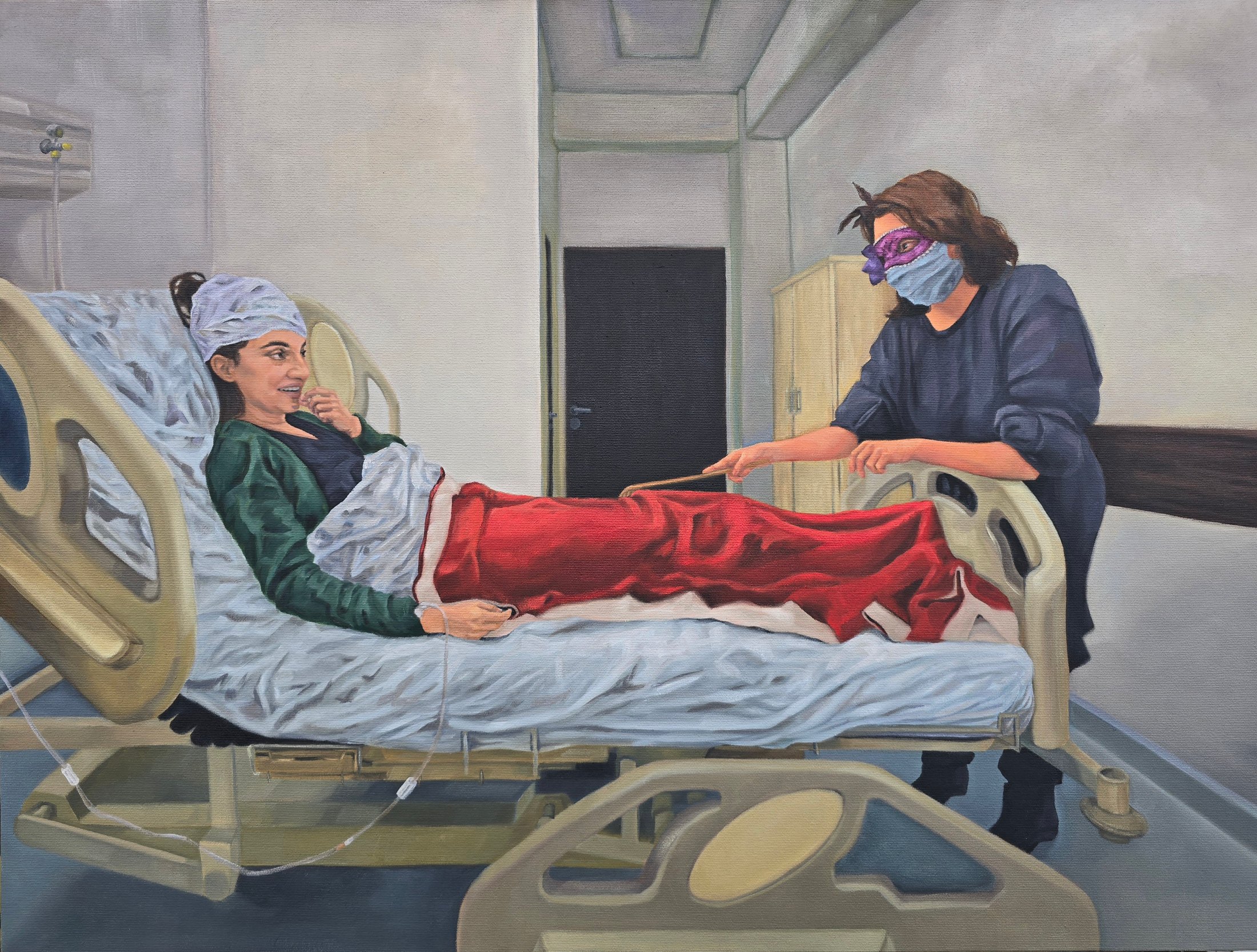
First Smile
80x60 cm oil on canvas, 2025
AvailableEnquire about this work
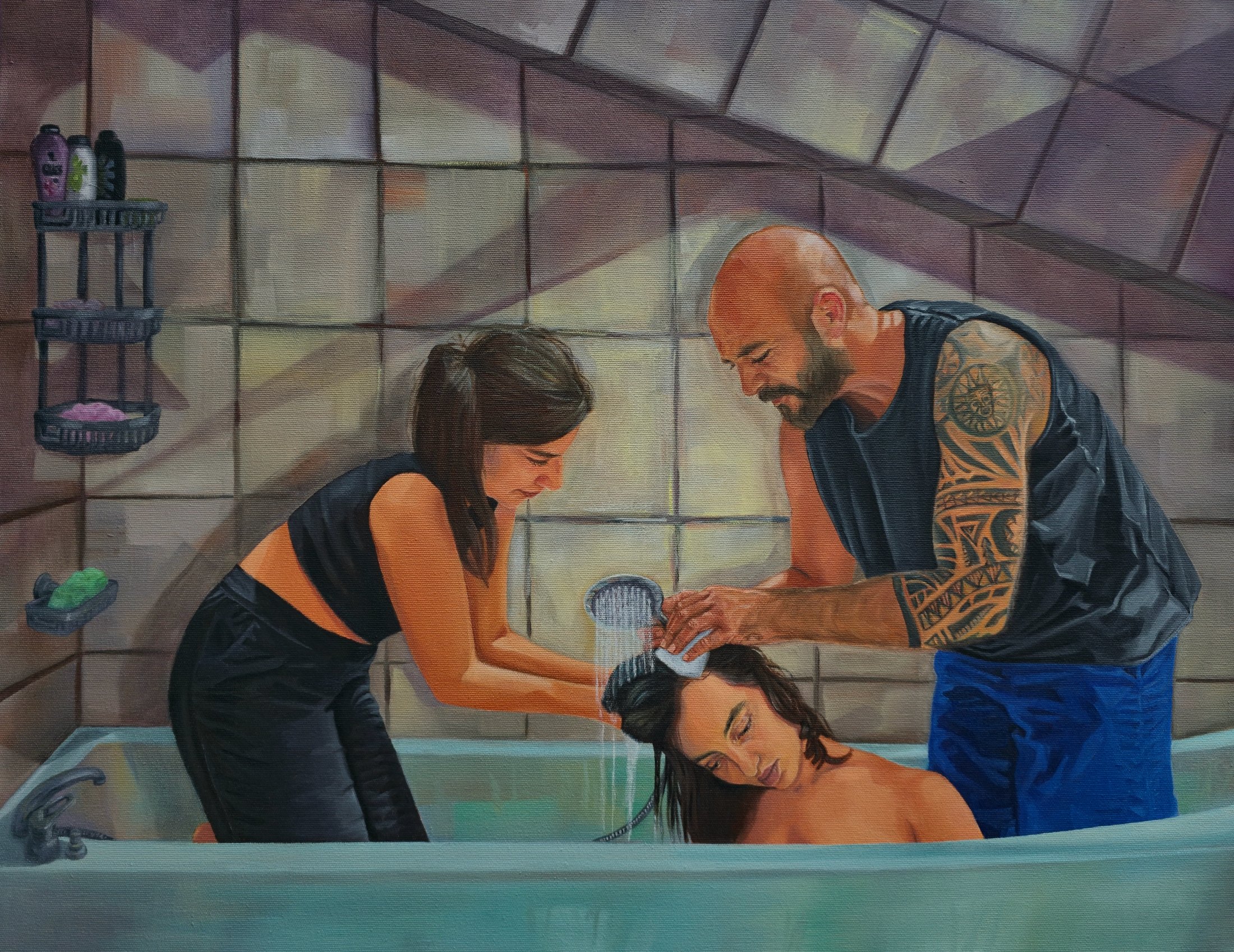
Purification
75x55 cm oil on canvas, 2025
AvailableEnquire about this work
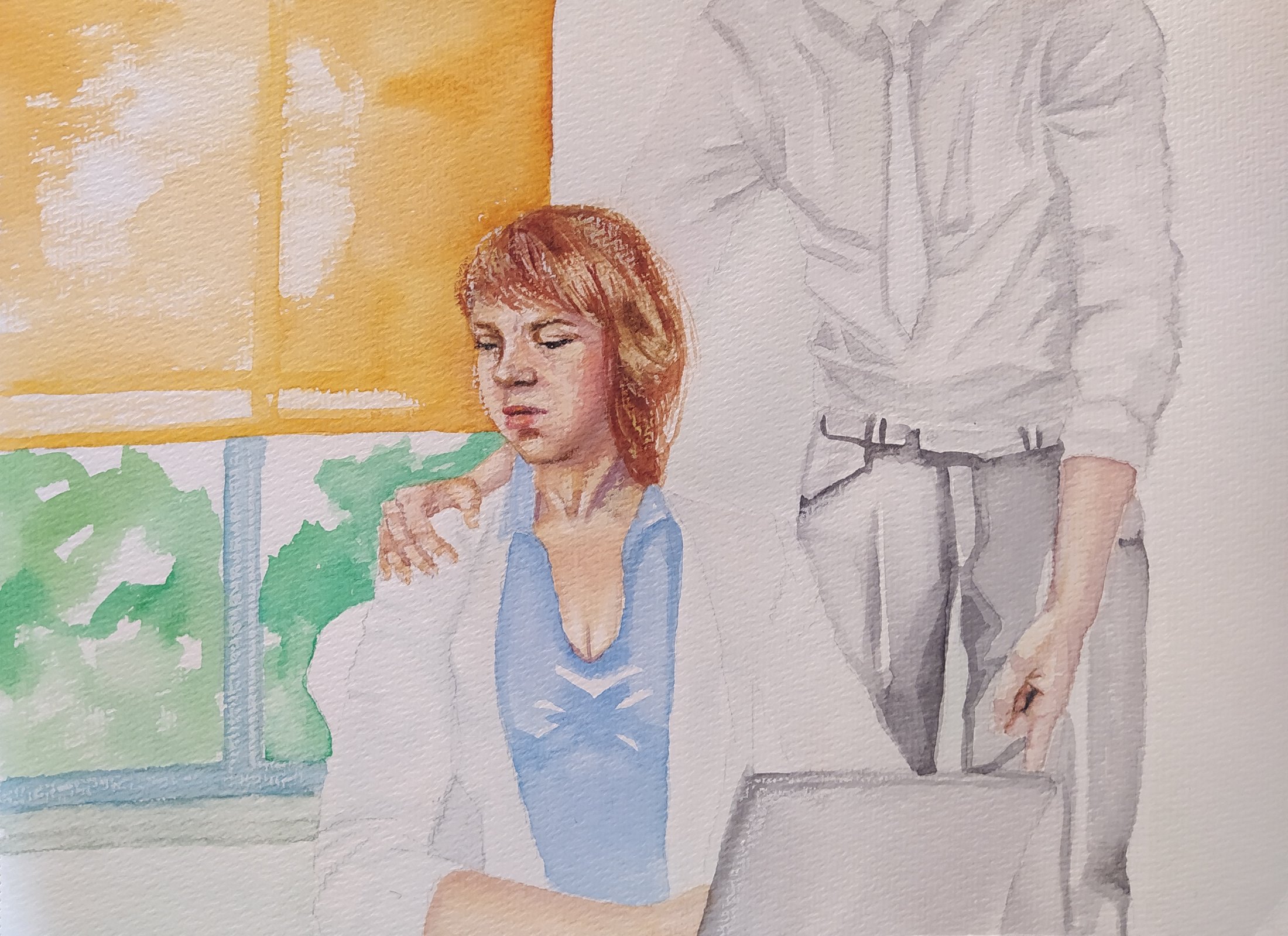
Watercolour on paper, 2024
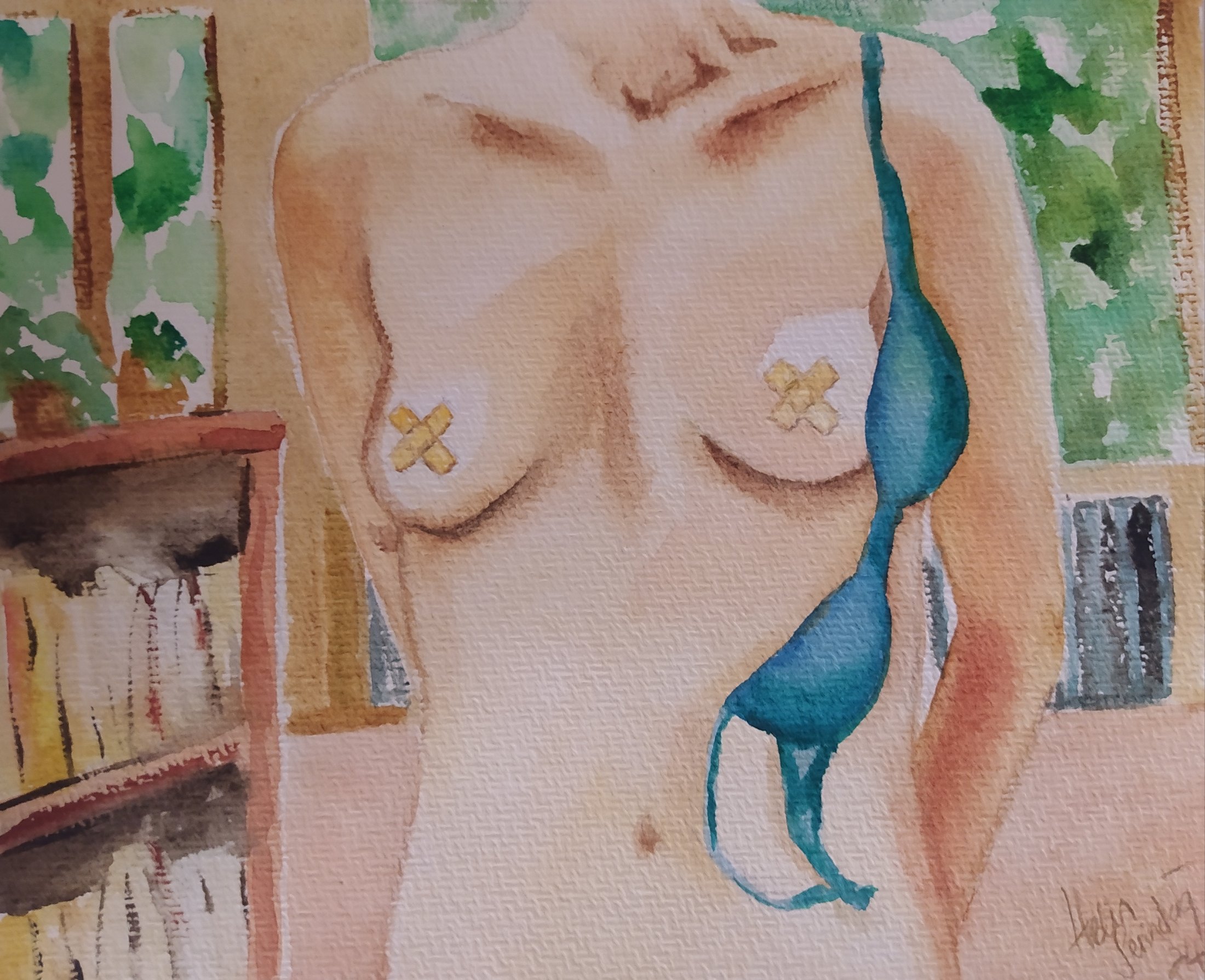
Watercolour on paper, 2024
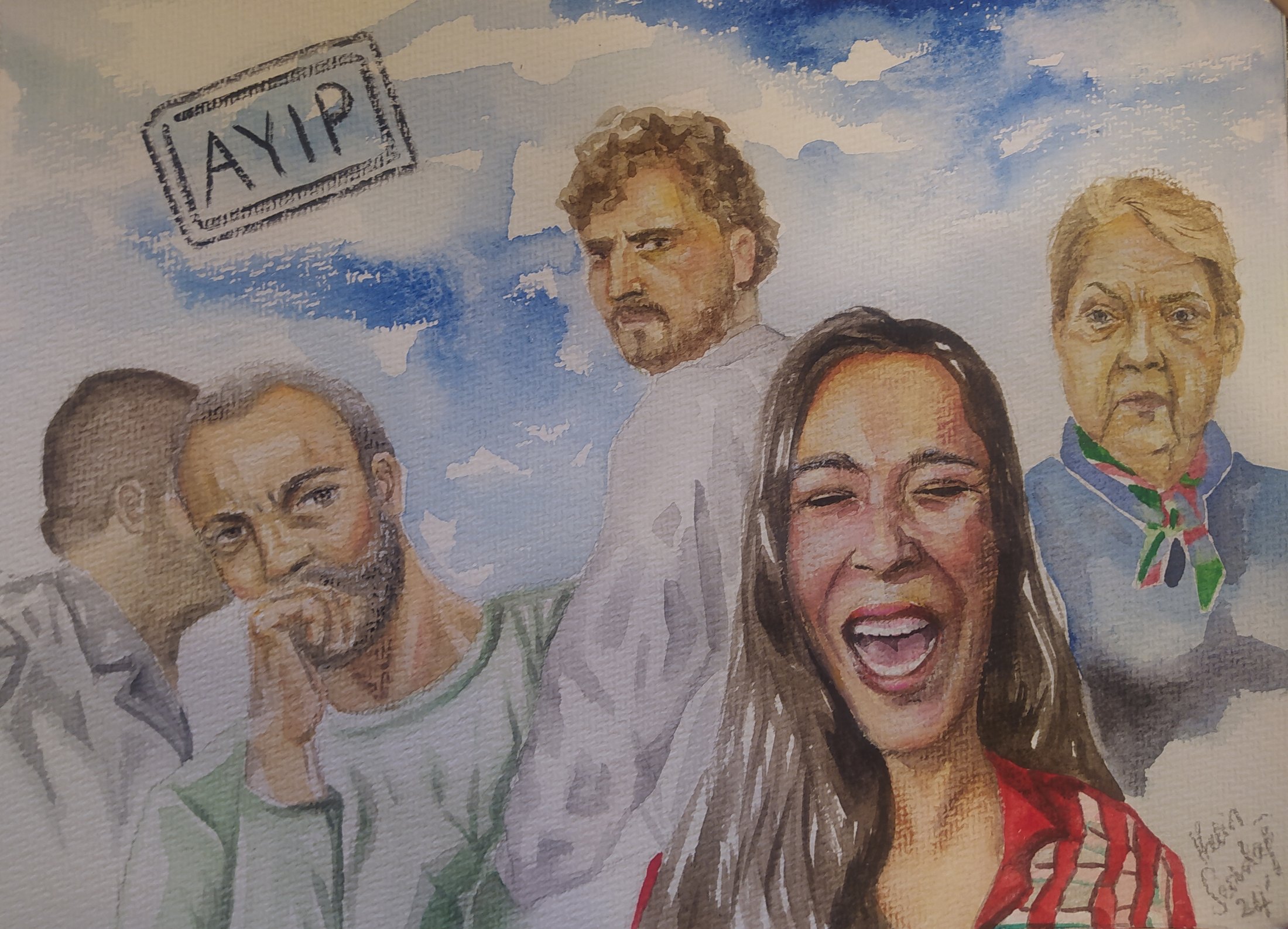
Watercolour on paper, 2024
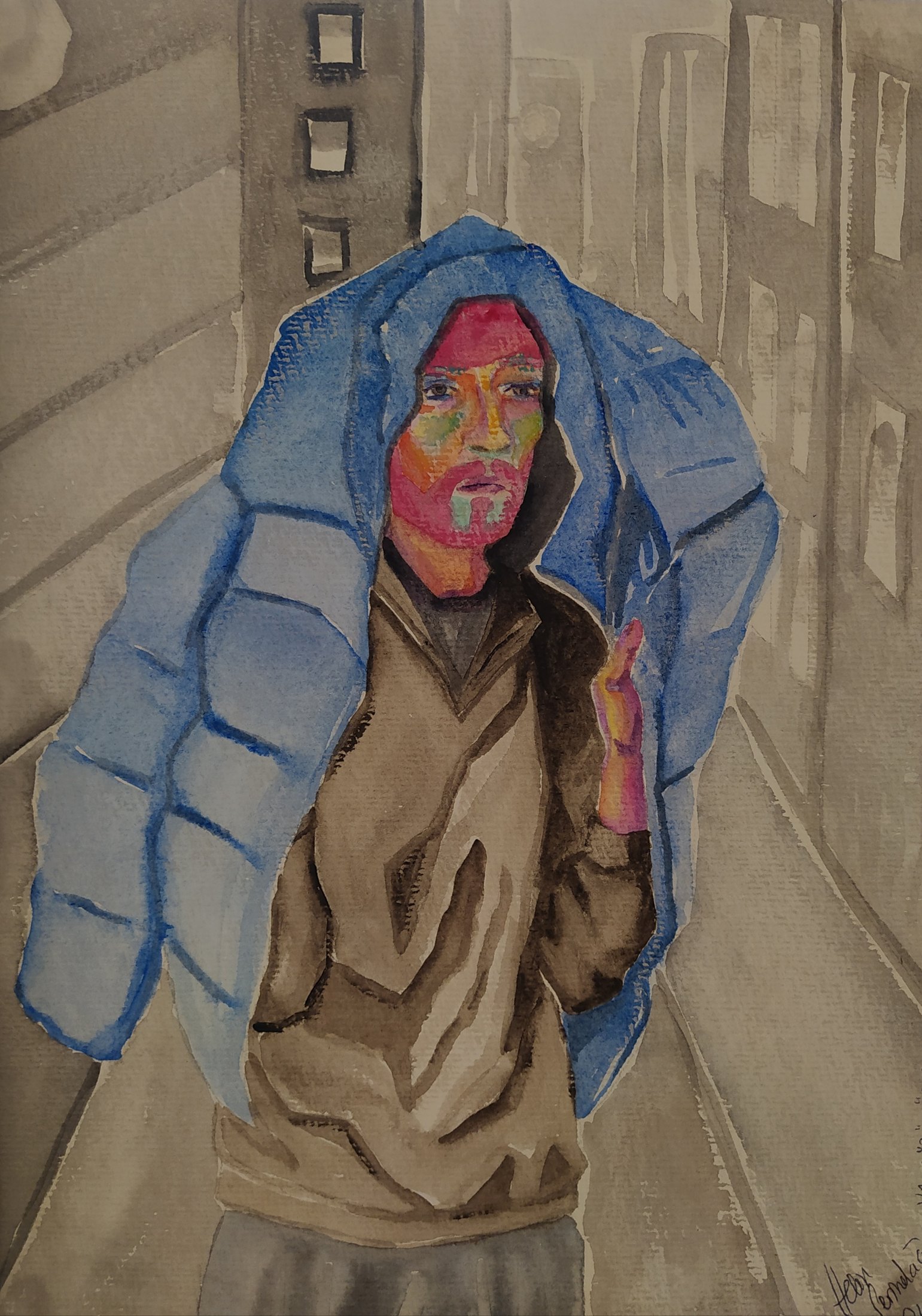
Watercolour on paper, 2024
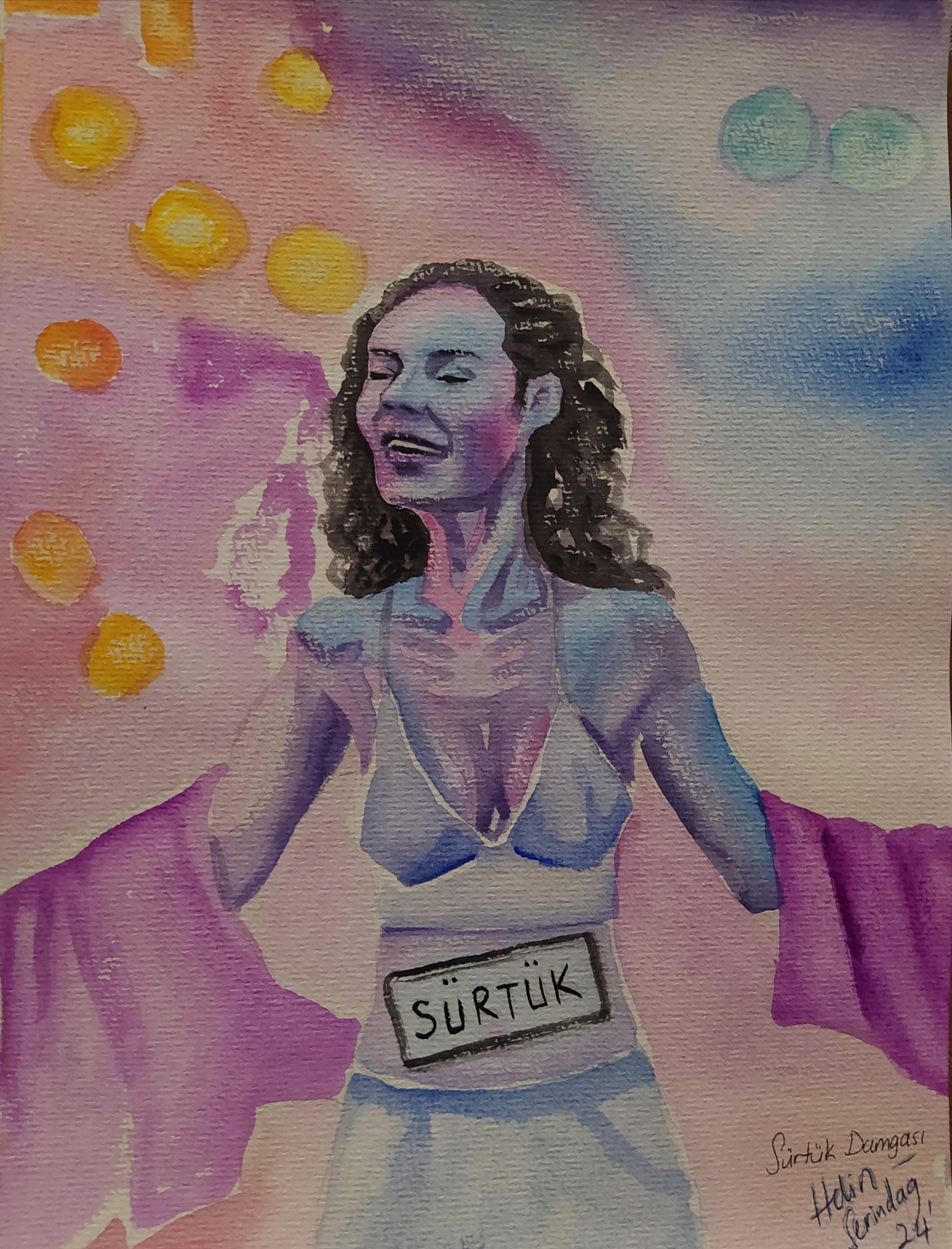
Watercolour on paper, 2024
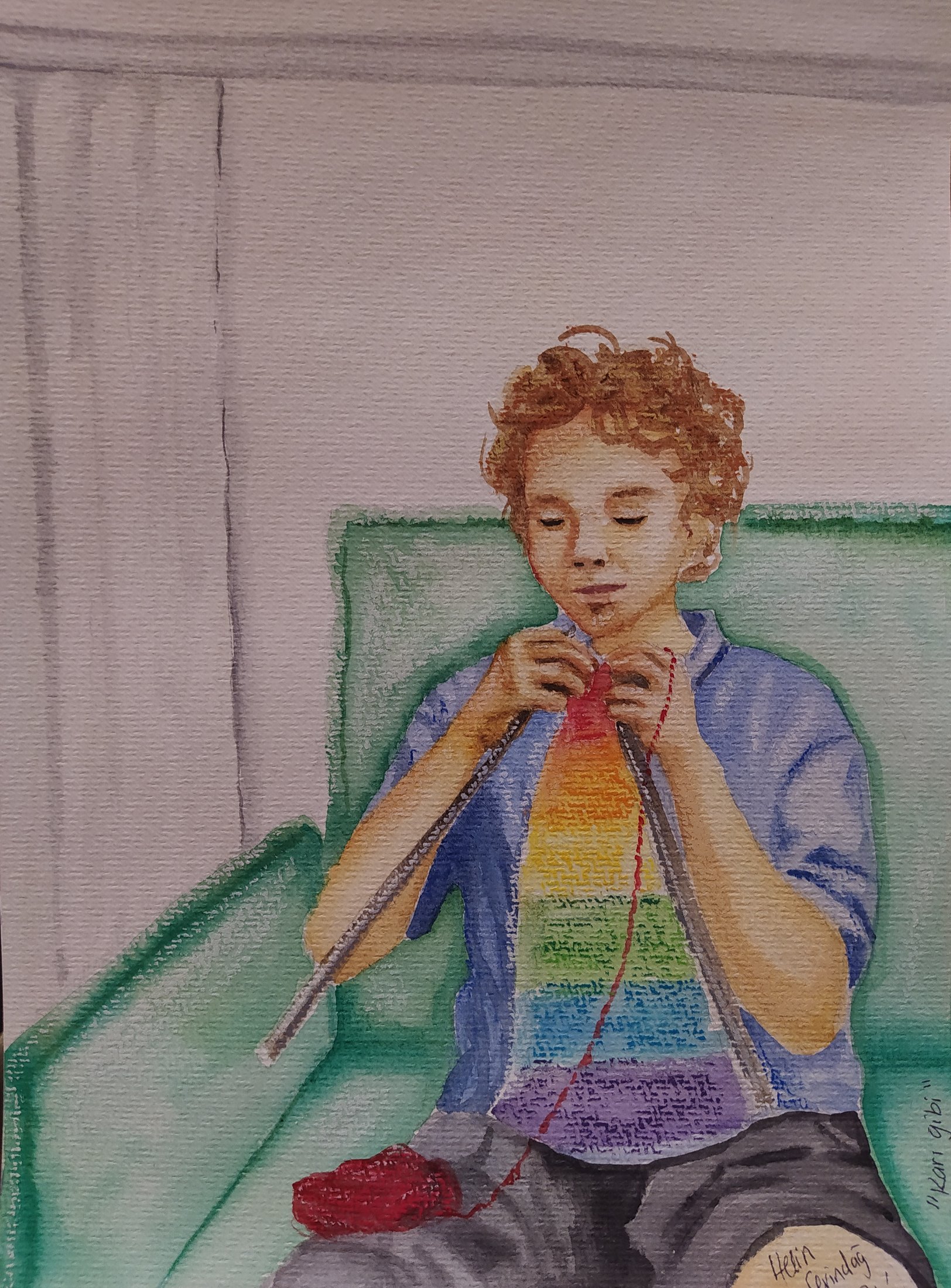
Watercolour on paper, 2024
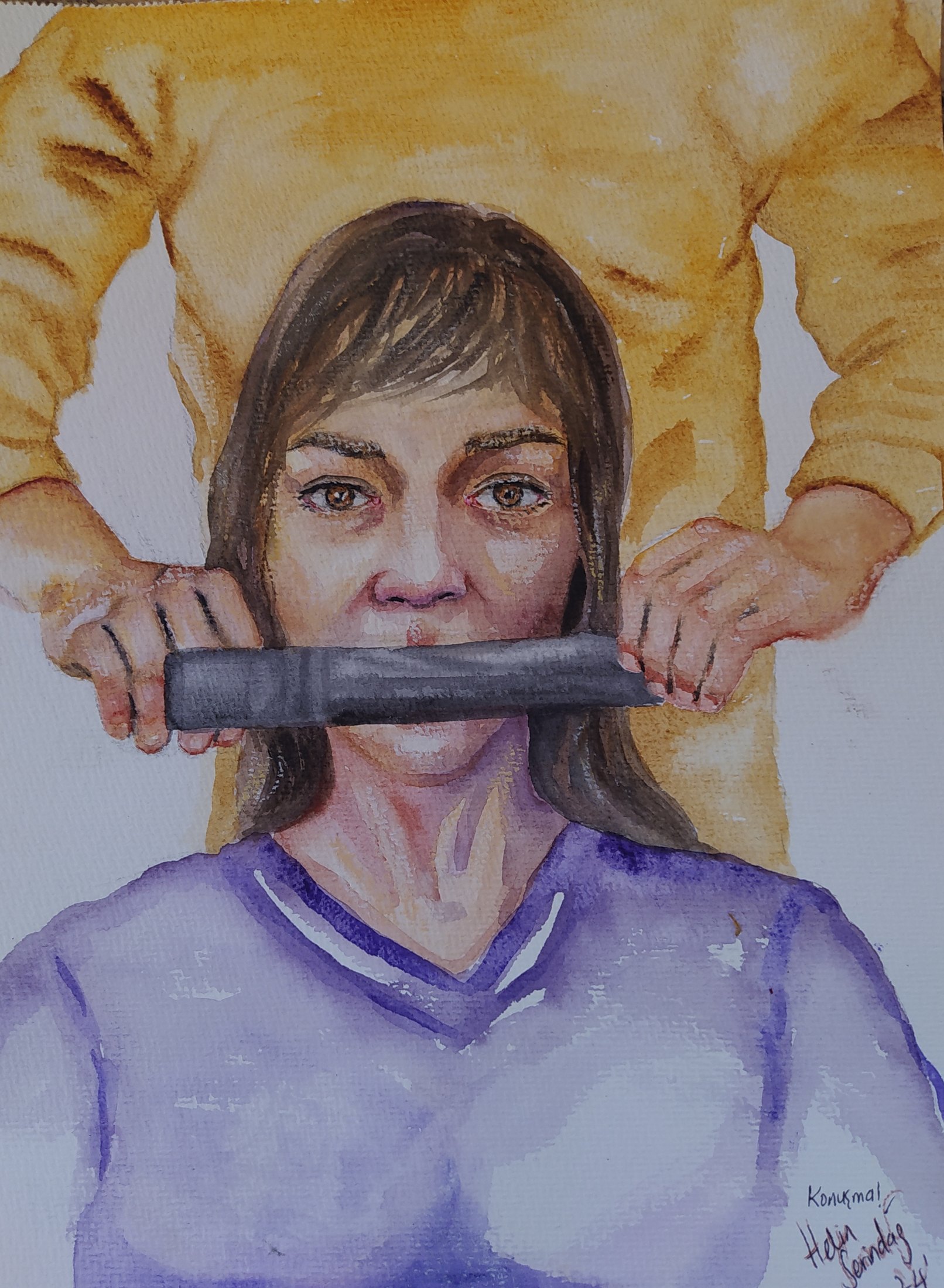
Watercolour on paper, 2024
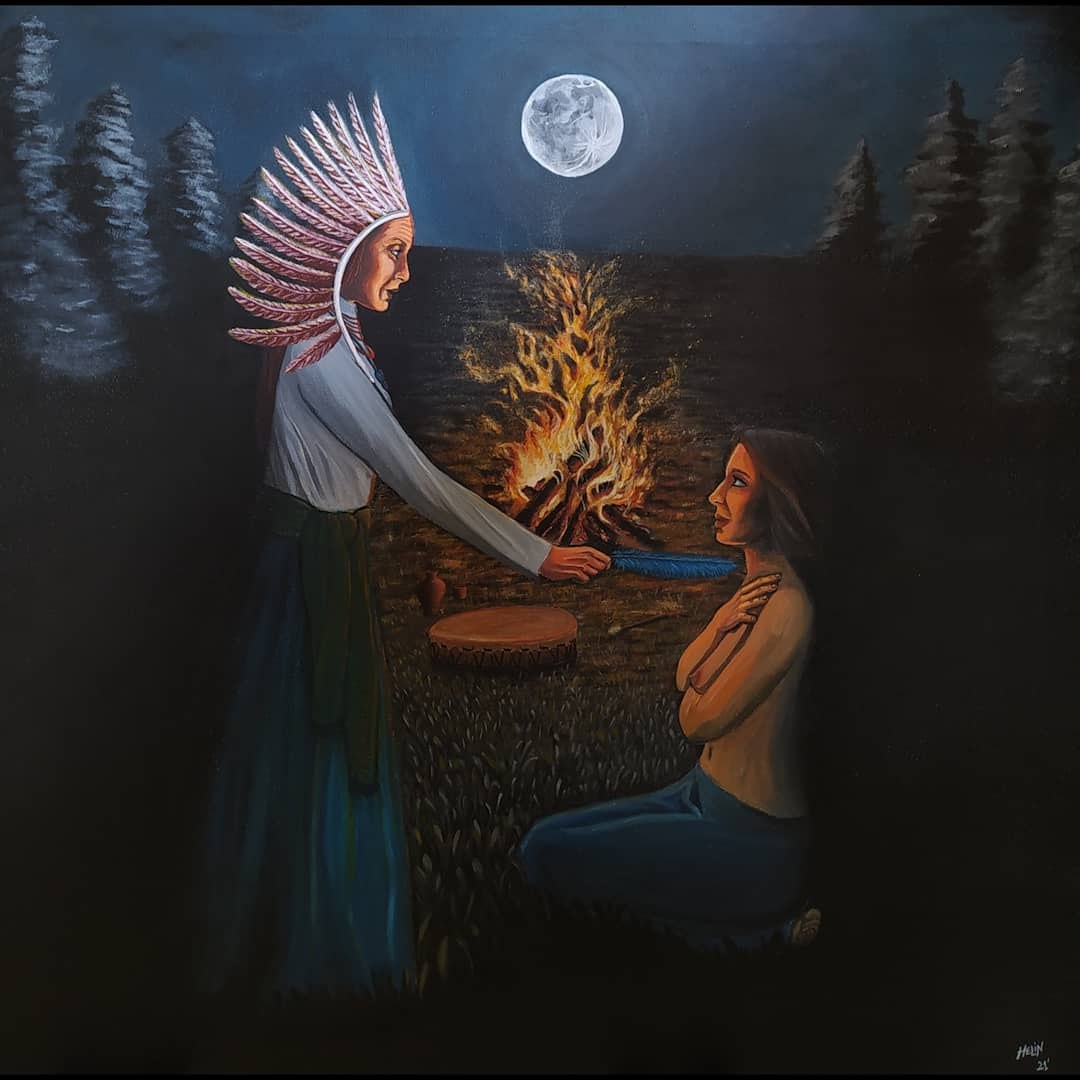
Şaman Ayini
80x80 cm acrylic on canvas, 2022
AvailableEnquire about this work
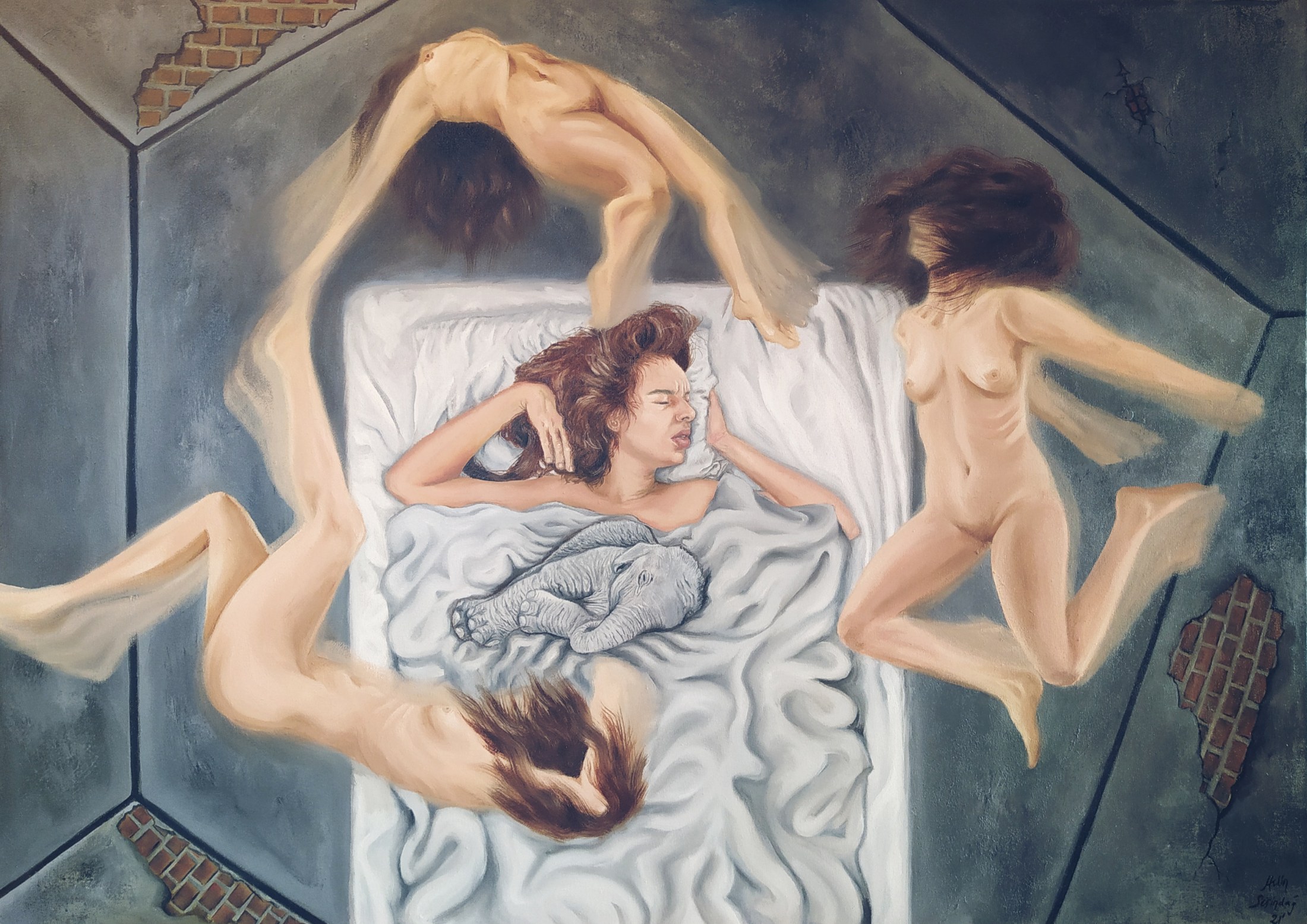
Kabus
50X70 cm oil on canvas, 2022
In a private collection
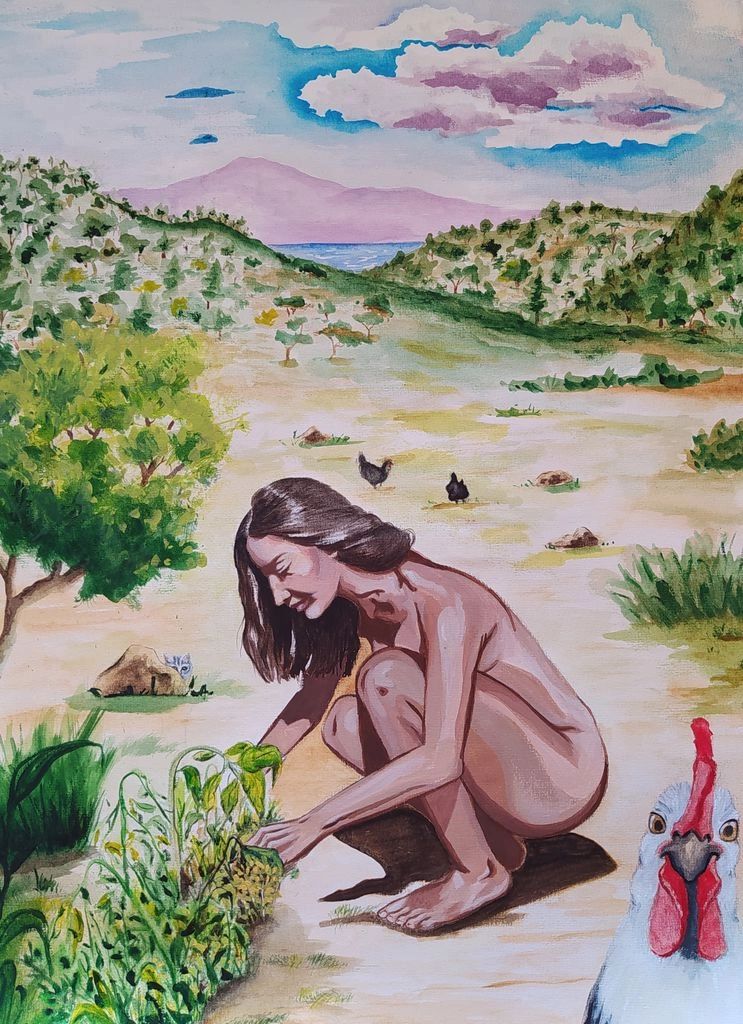
Bahçedeki Kadın (Otoportre)
35x50 cm watercolour on paper
In a private collection
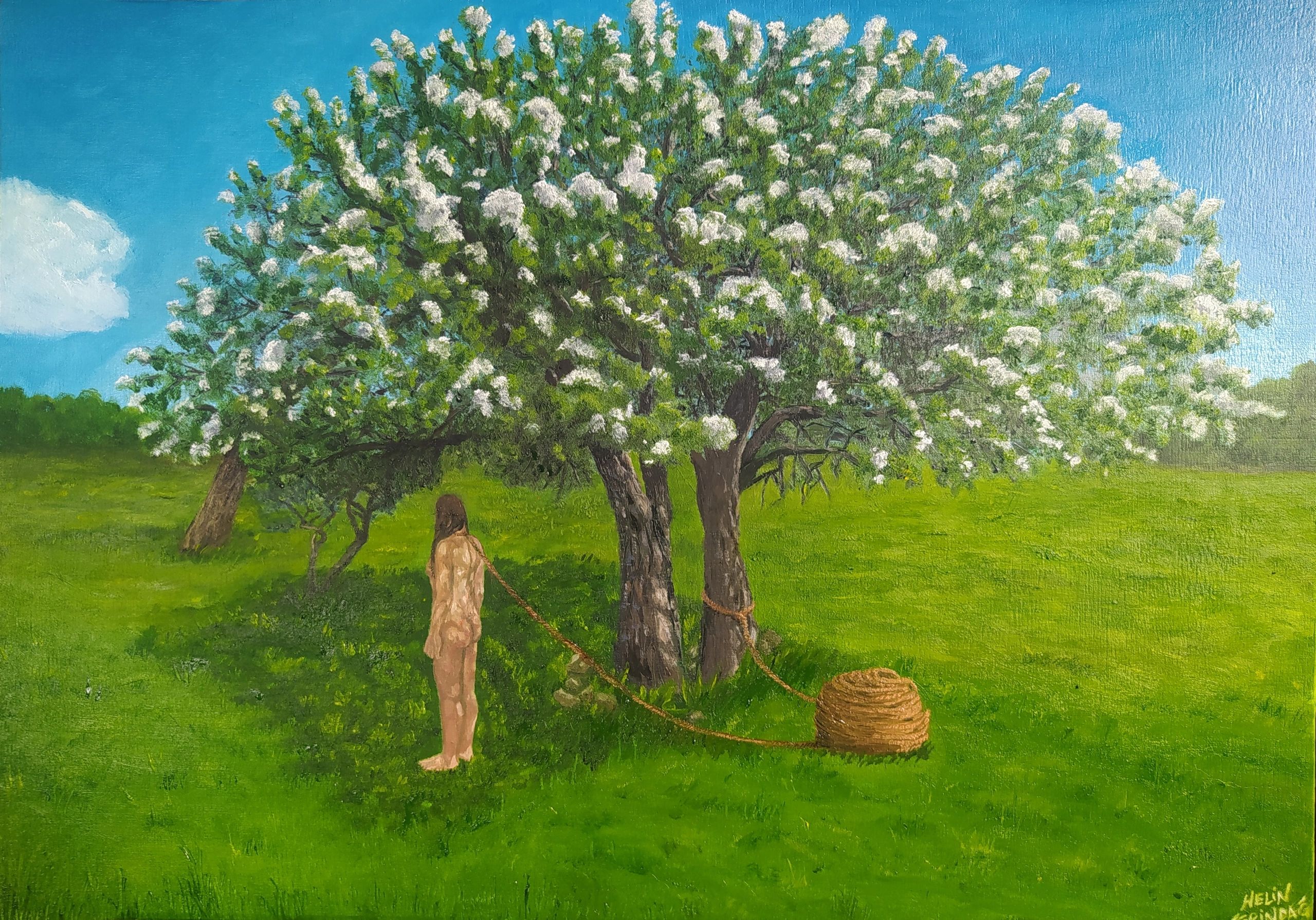
Ahlat
30x42 cm paint on poplar plywood, 2022
In a private collection
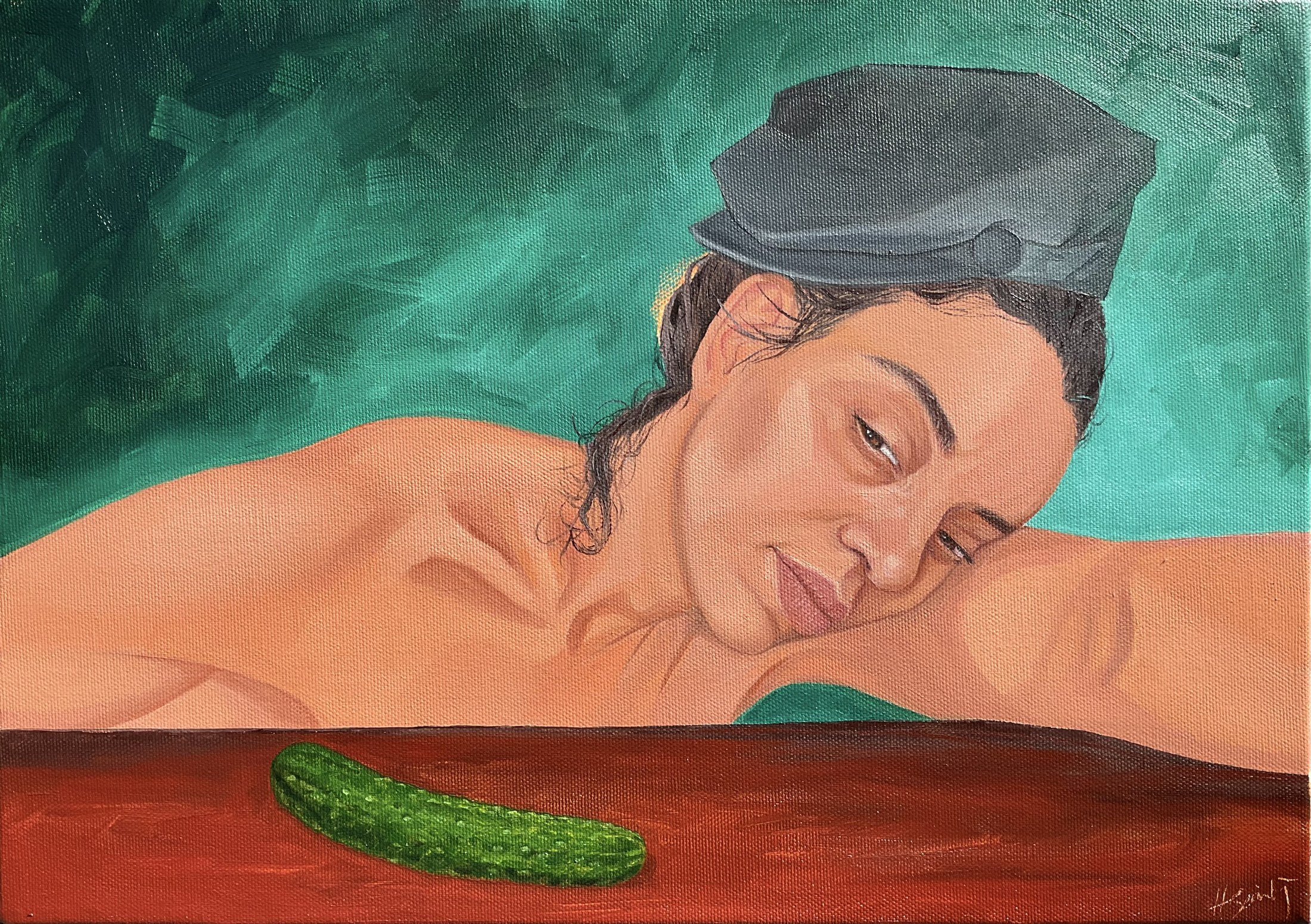
Hıyar Ağası
35x50 cm oil on canvas, 2024
AvailableEnquire about this work
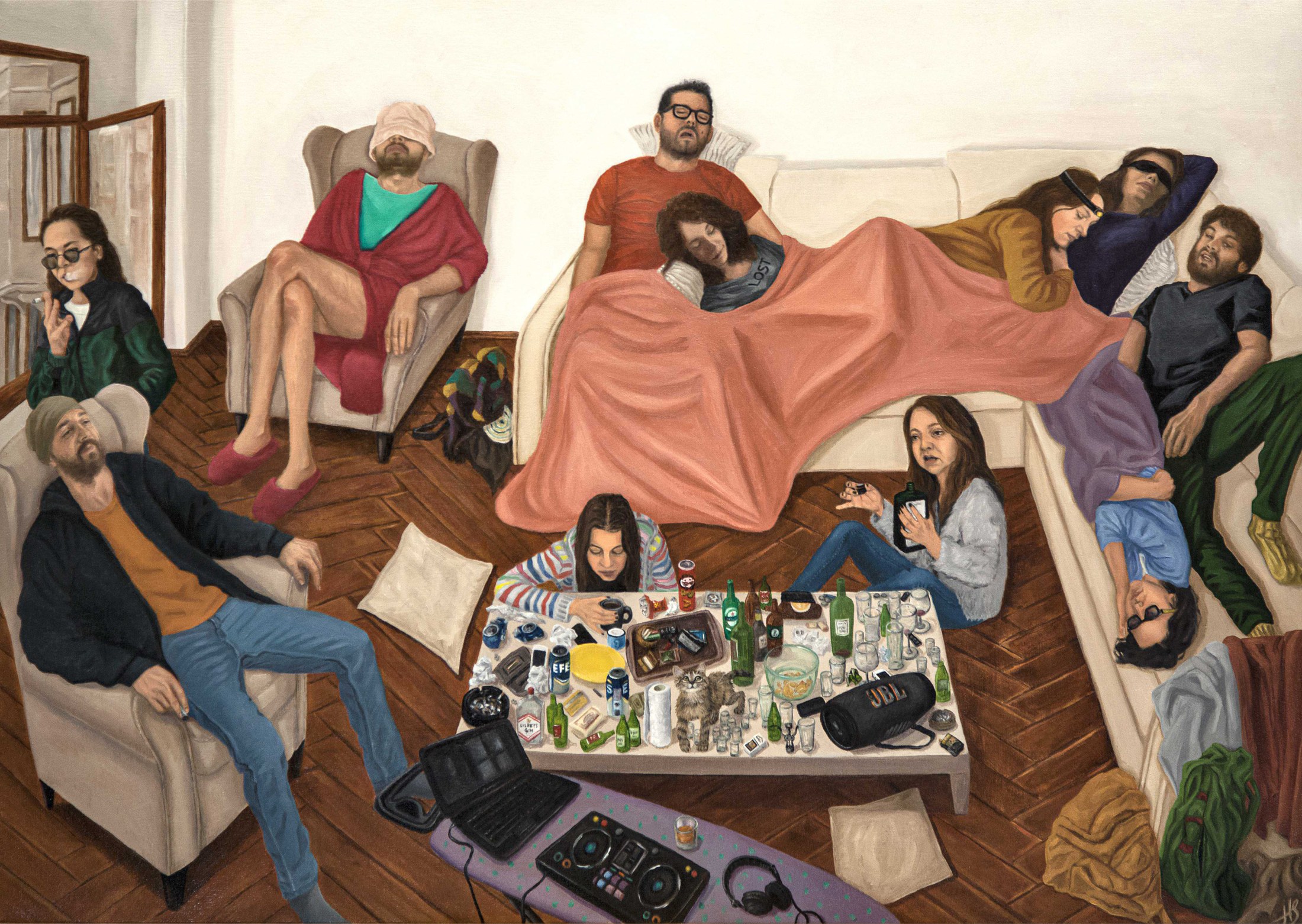
After After Party
50x70 cm oil on canvas, 2024
AvailableEnquire about this work
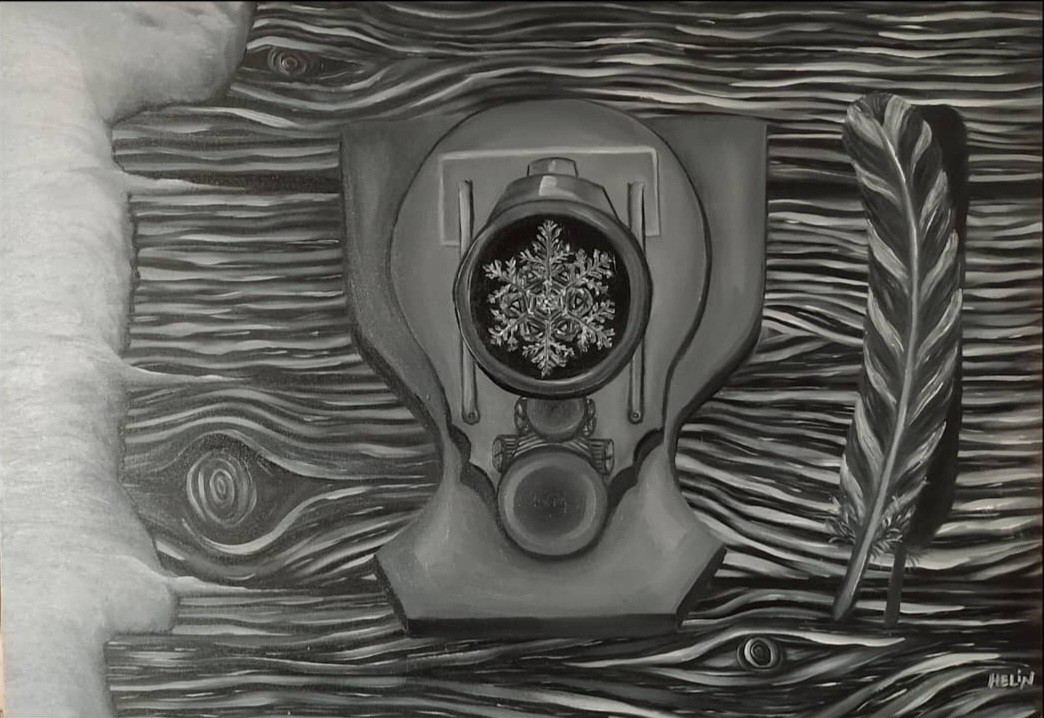
Wilson Bentley'den babama bir kar tanesi
35x50 cm oil on canvas
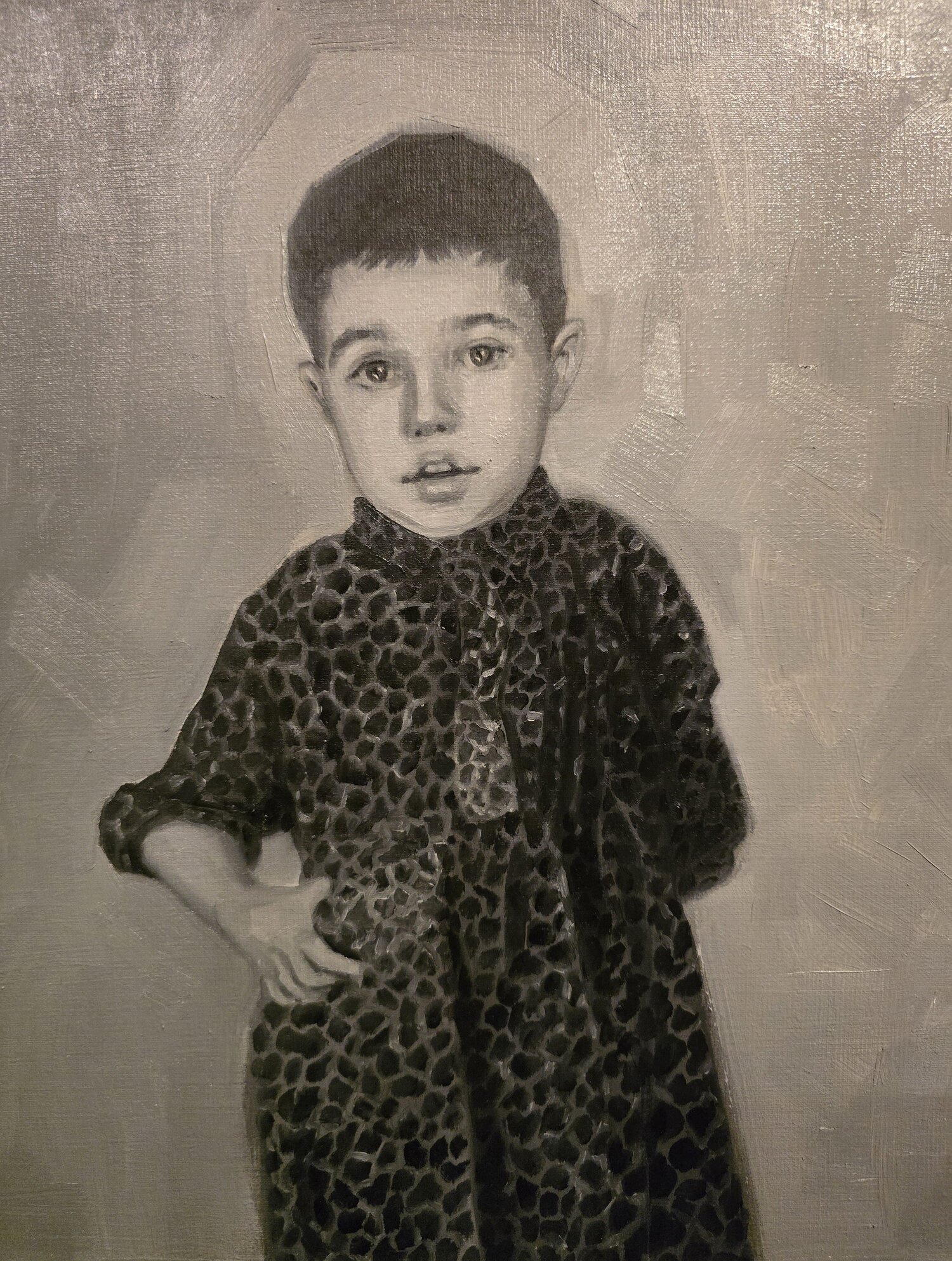
Büyümez Ölü Çocuklar
Oil on canvas
Commissioned work
In a private collection
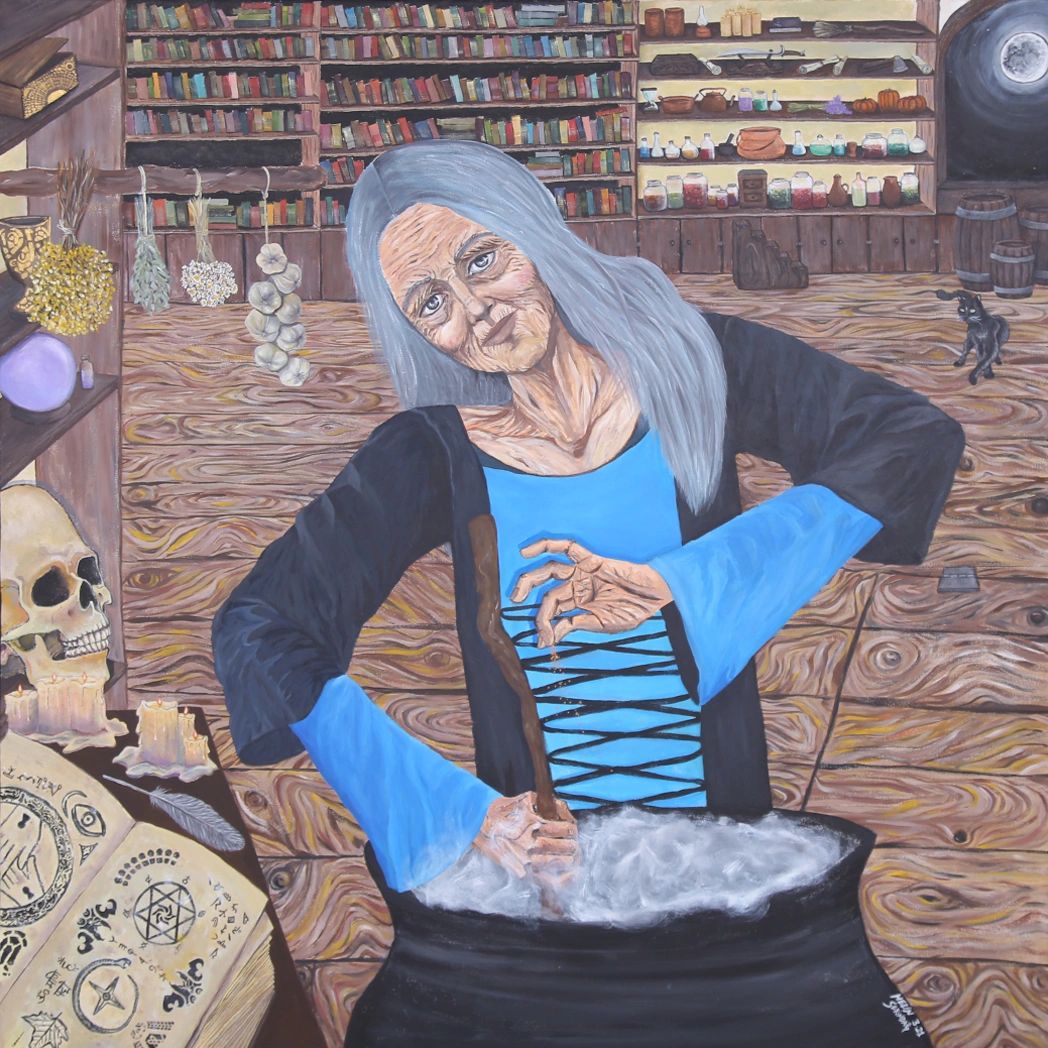
Yakamadığın Cadı
100x100 cm acrylic on canvas
In a private collection
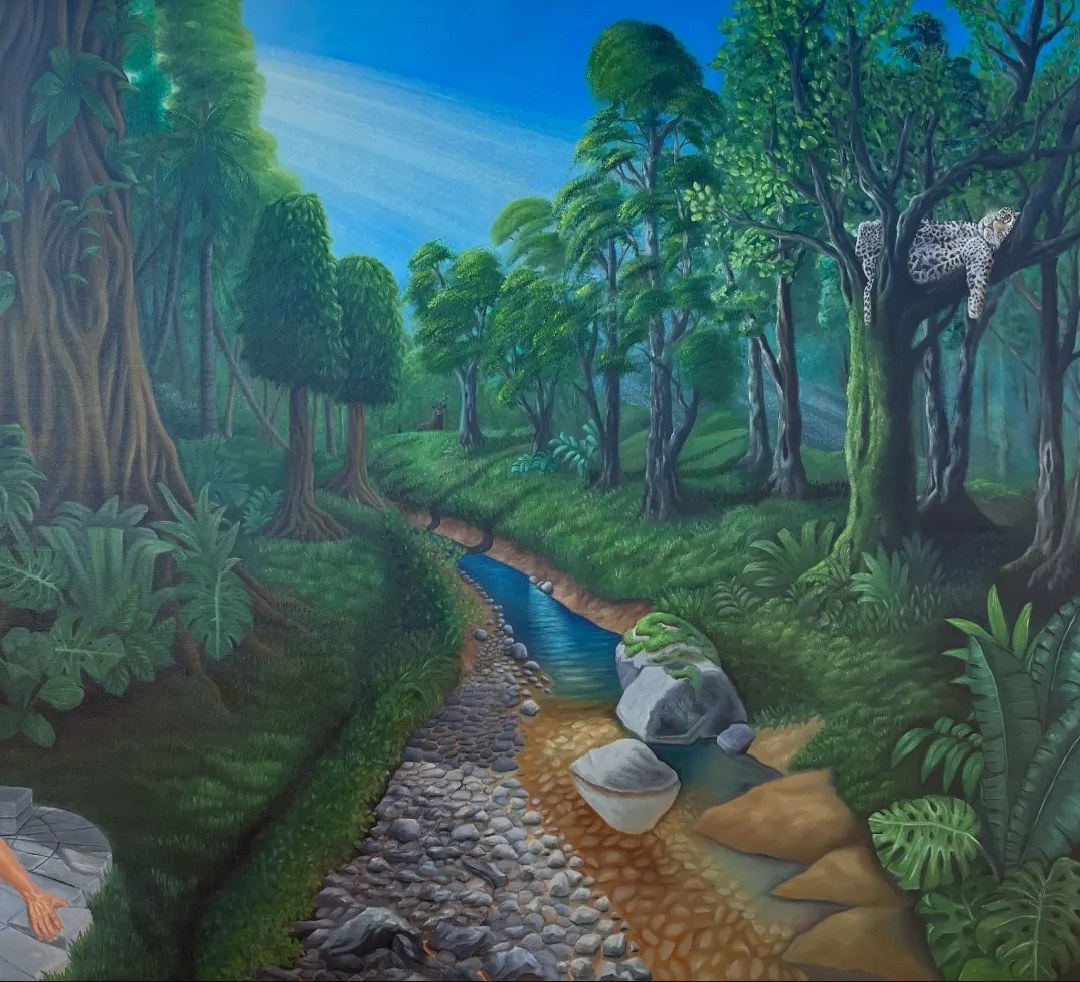
Sessiz İstila
90x100 cm oil on canvas, 2022
AvailableEnquire about this work
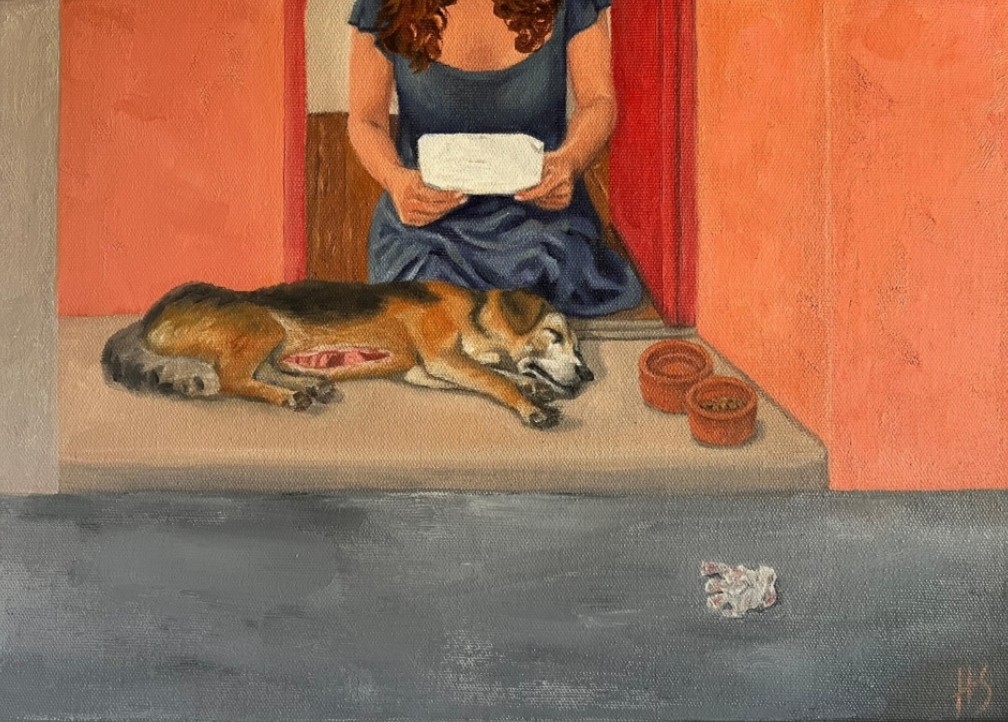
Otopsi Raporu
25x35 cm oil on canvas, 2024
Donated to PACT’s “Yan Yana” (Side by Side) exhibition for the benefit of stray animals.
In a private collection
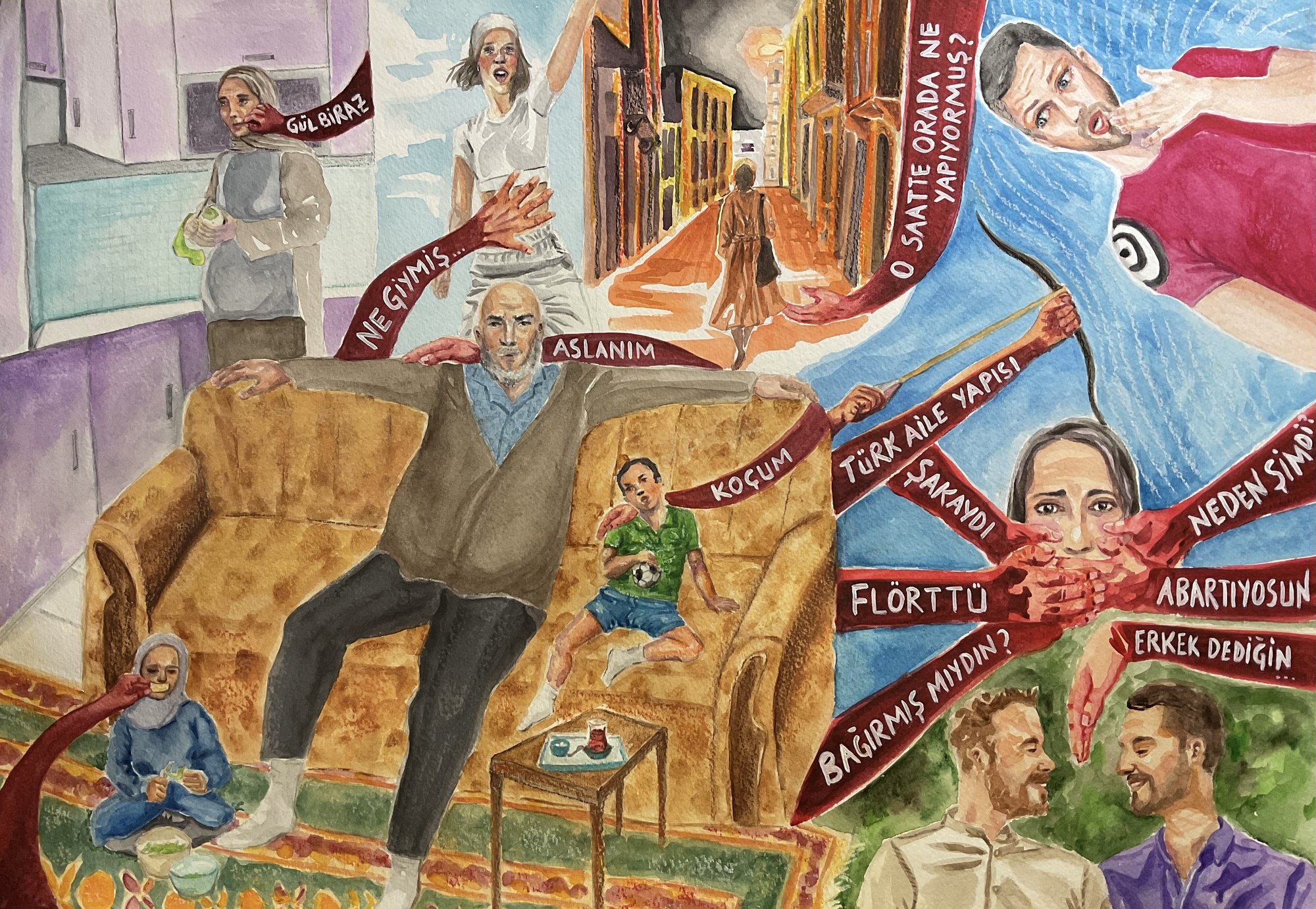
The Hands of Patriarchy
An allegory that exposes the unseen yet pervasive reach of patriarchal control.
The “family,” idealized as the foundation of society, becomes a tool that facilitates control and legitimizes silence and conformity. Women, queers, and children stand as subjects directly exposed to the interventions of this invisible authority.
The piece questions the power structure behind the idea of "protecting the family" and raises a question: What is truly being protected; the family, or authority itself?
Watercolor and soft pastel on paper, 35x50 cm, 2025
AvailableEnquire about this work
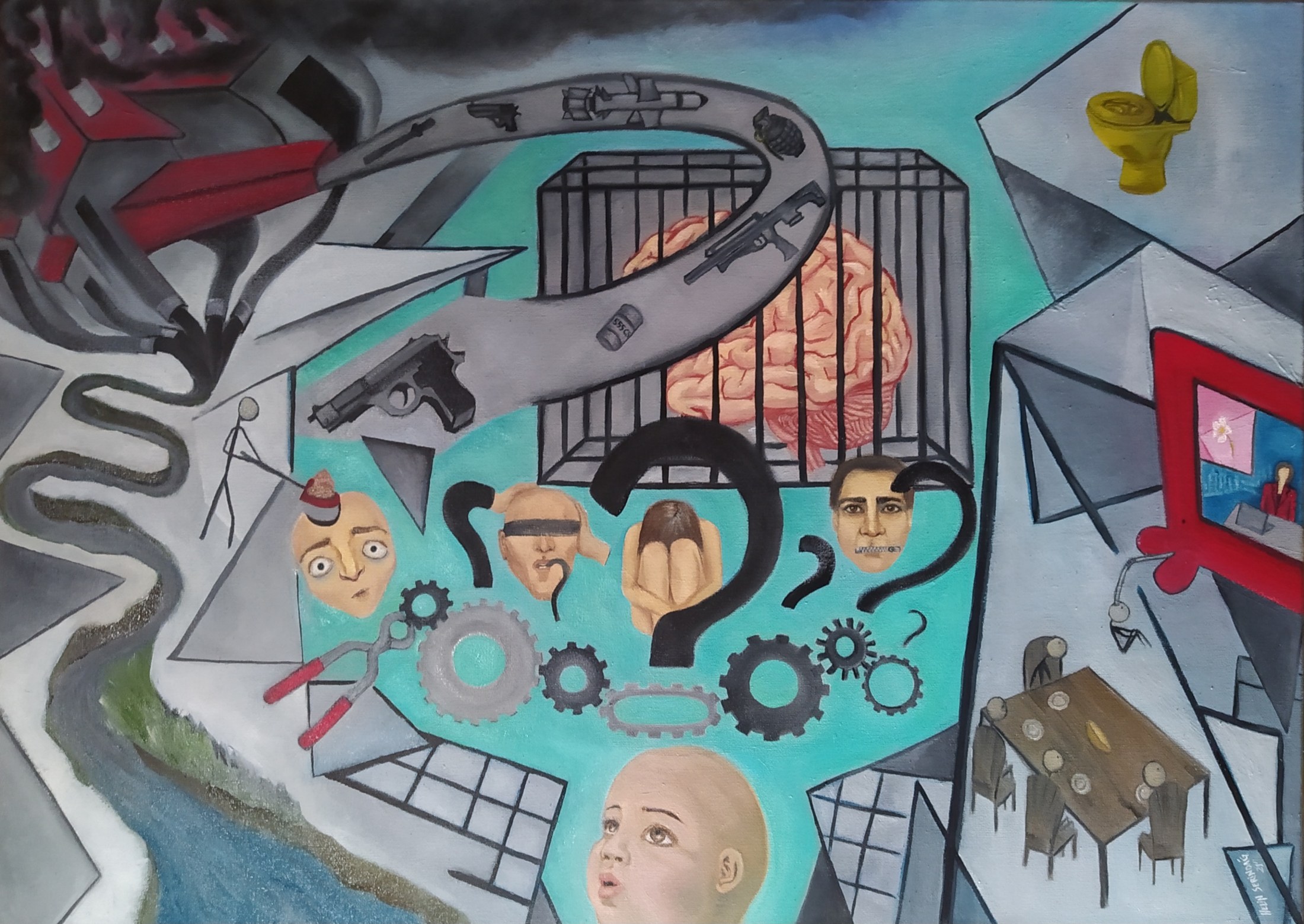
Guernicam: Kör göze parmak
50x70 cm oil on canvas
AvailableEnquire about this work
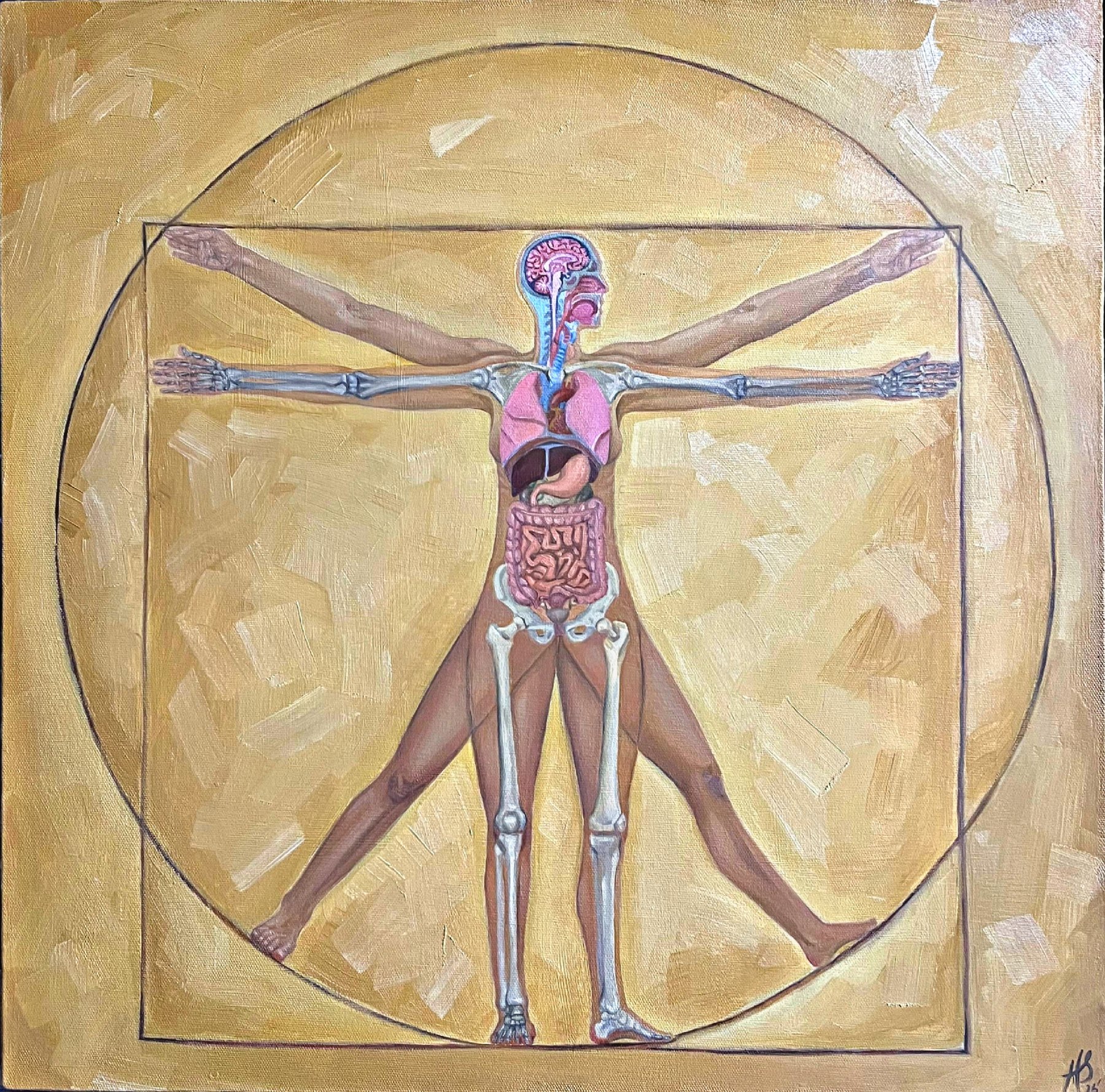
Da Vinci’s Woman
Drawing on Vitruvius’ approach, which proposed that the human figure could fit perfectly within a circle and a square, and taking Leonardo da Vinci’s "Vitruvian Man" as its point of departure, this time the woman stands at the center.
50x50 cm oil on canvas, 2026
Commissioned work
In a private collection
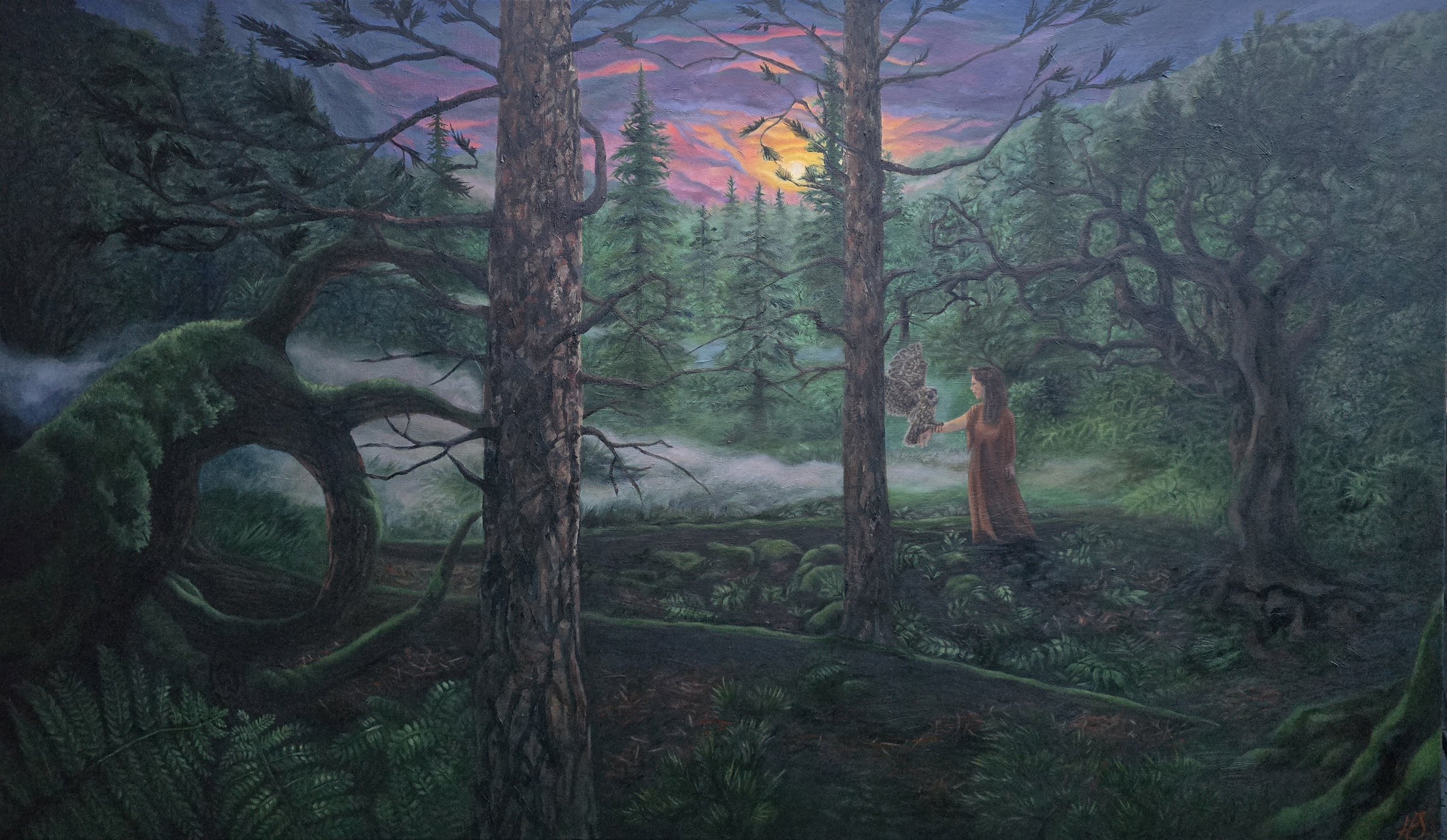
120x70 cm oil on canvas, 2026
Commissioned work
In a private collection
İlanı-aşk
35x50 cm oil on canvas, 2021
In a private collection
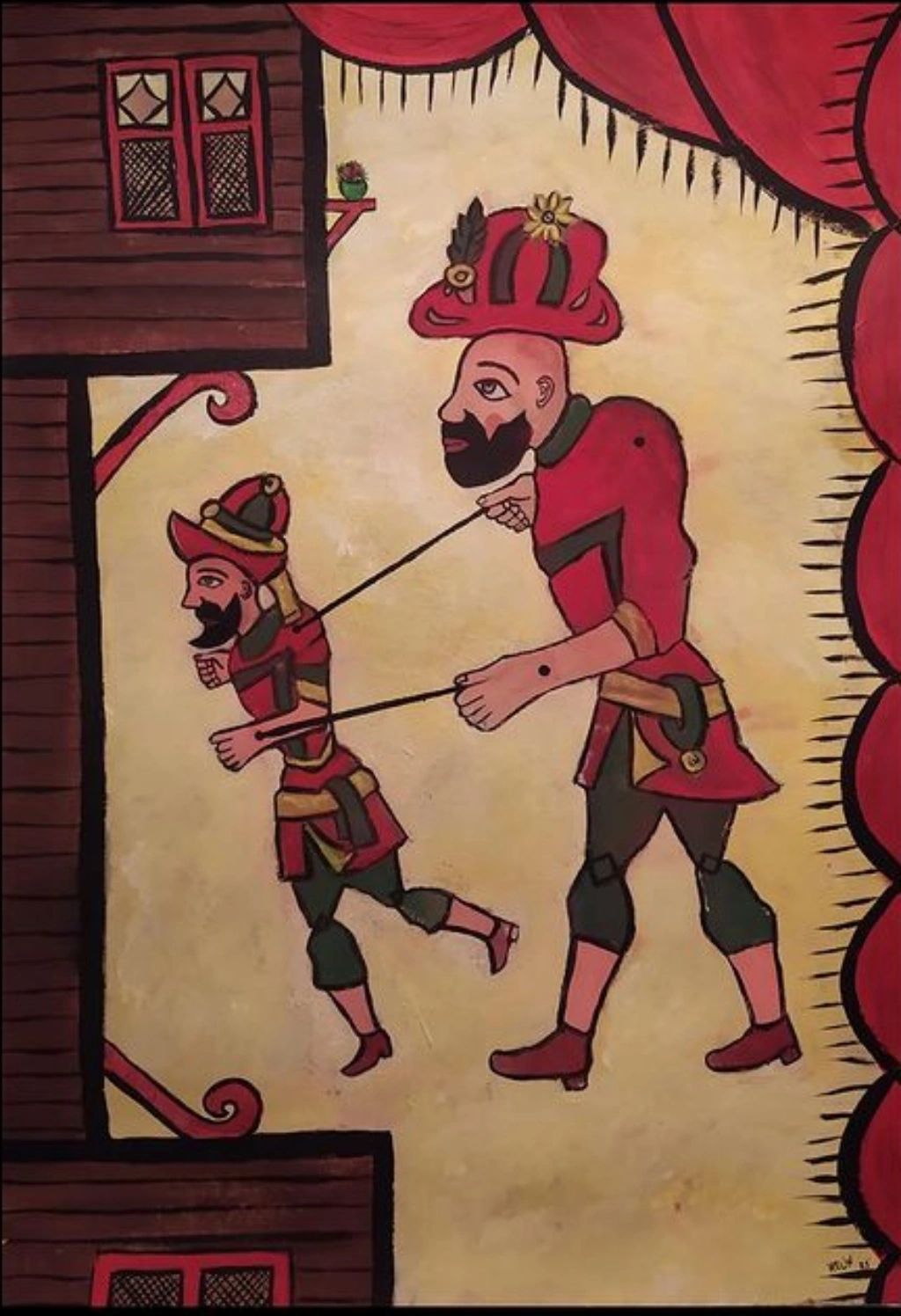
Ulan Karagöz!
35x50 cm acrylic and soft pastel on kraft paper
Commissioned work
In a private collection
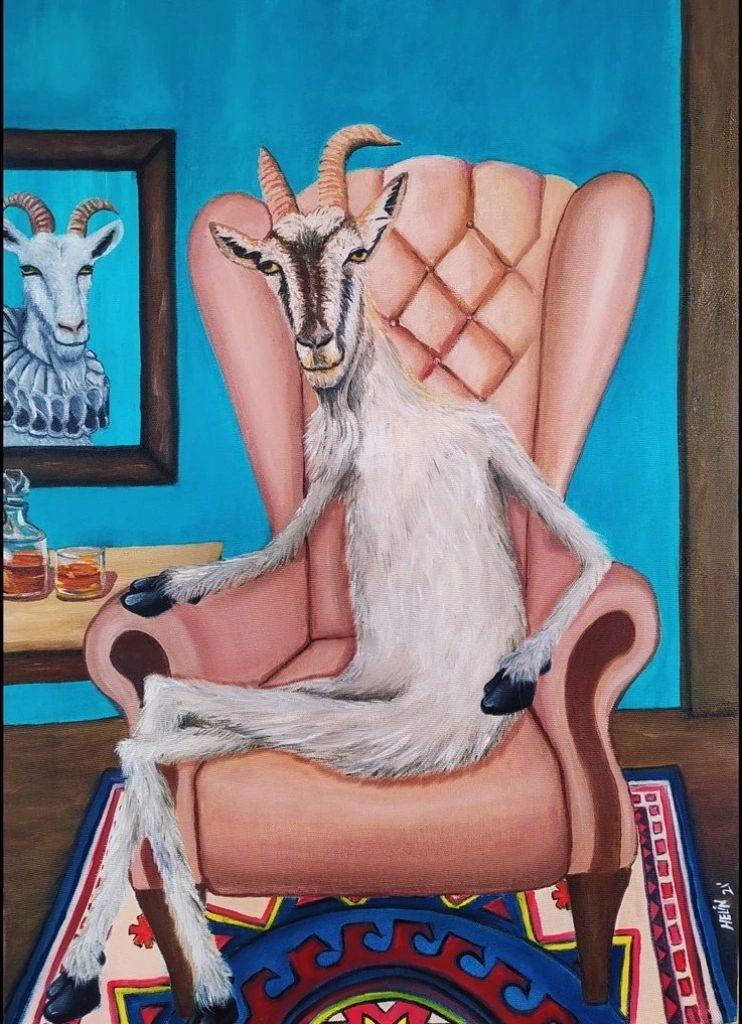
Günah Keçisi
35x50 cm oil on canvas, 2021
In a private collection
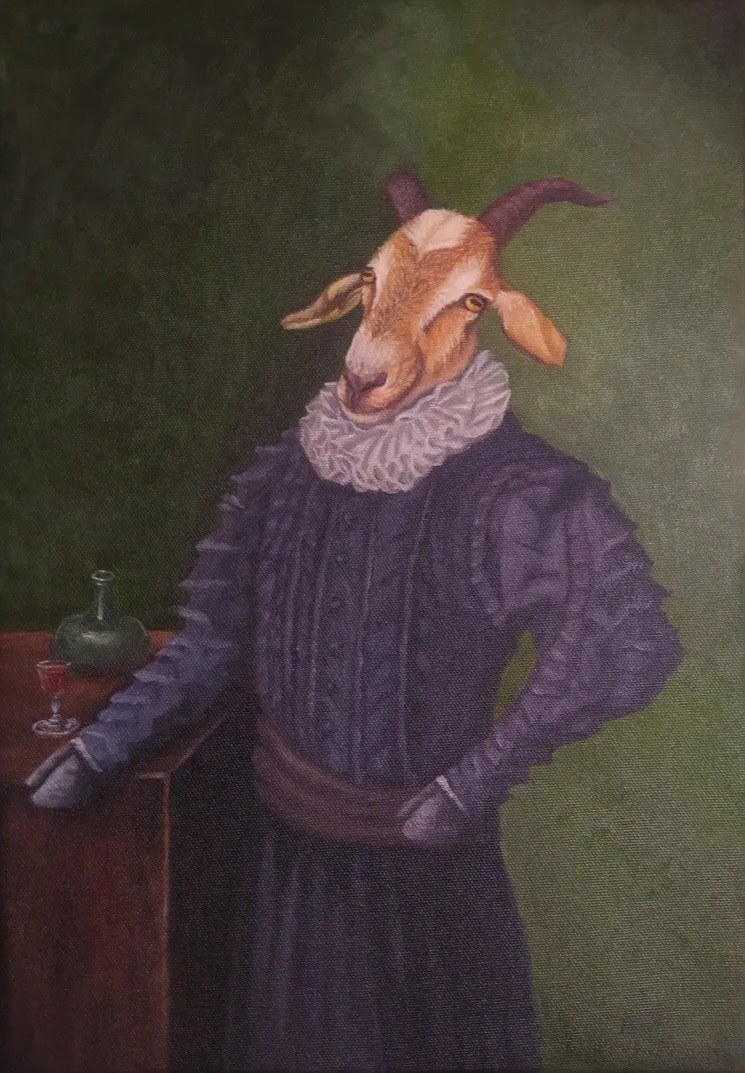
Soylu Günah Keçisi
35x50 cm oil on canvas
Commissioned work
In a private collection
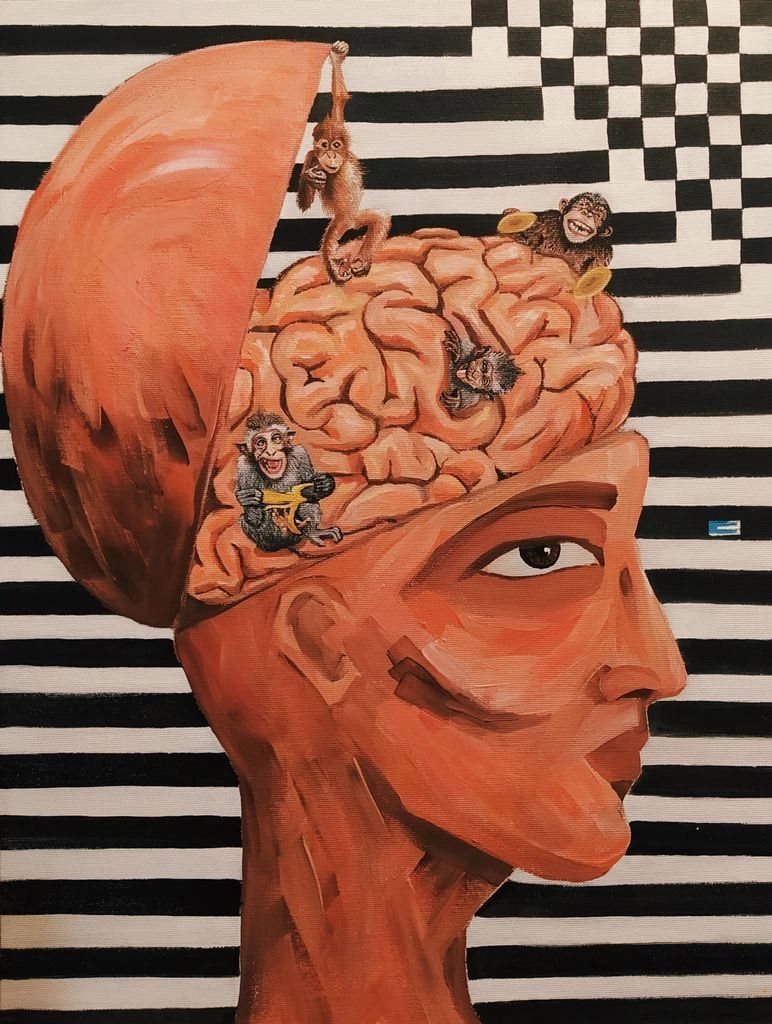
Maymun Zihin
40x50 cm acrylic on canvas, 2021
In a private collection
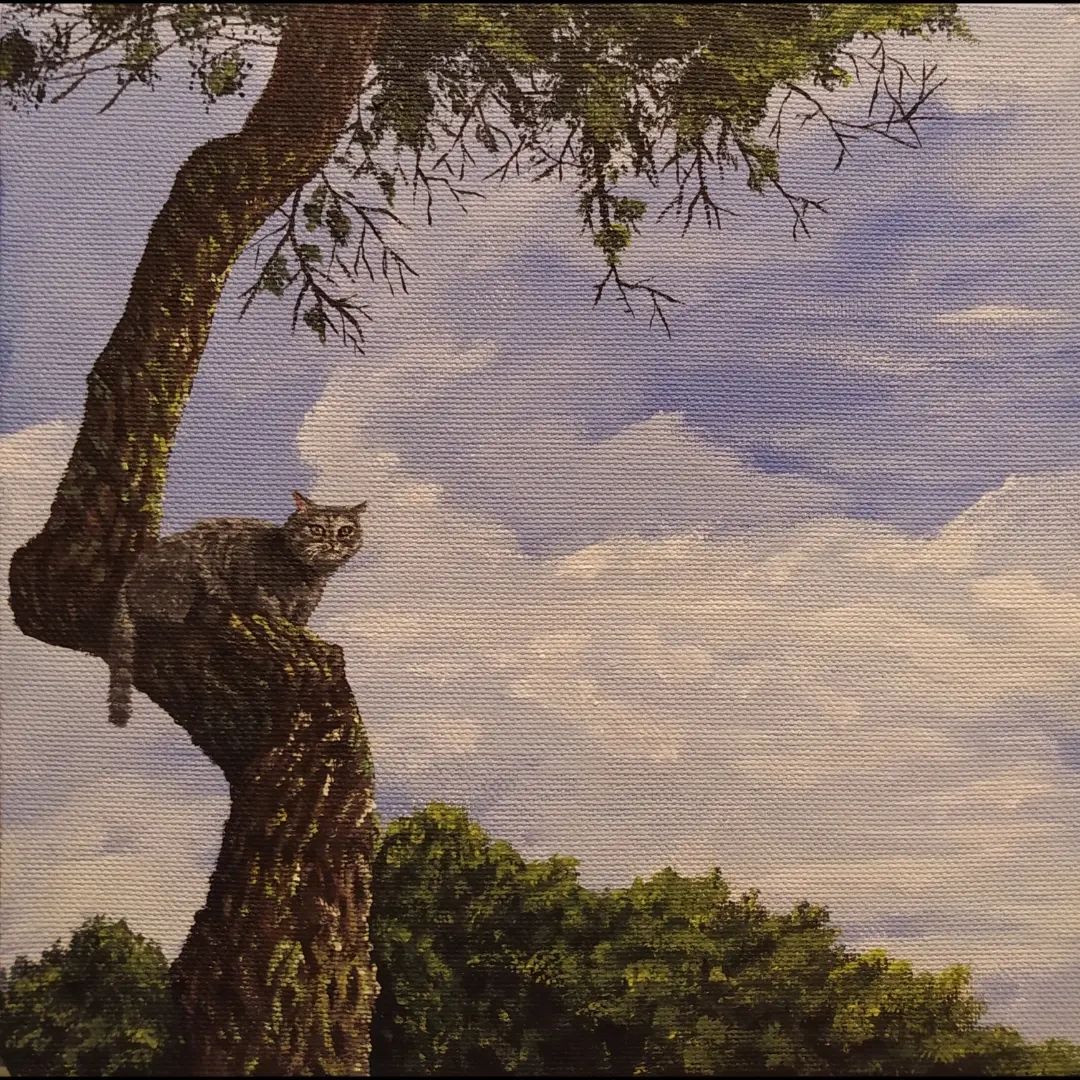
Yamyam
20x20 cm acrylic on canvas
In a private collection
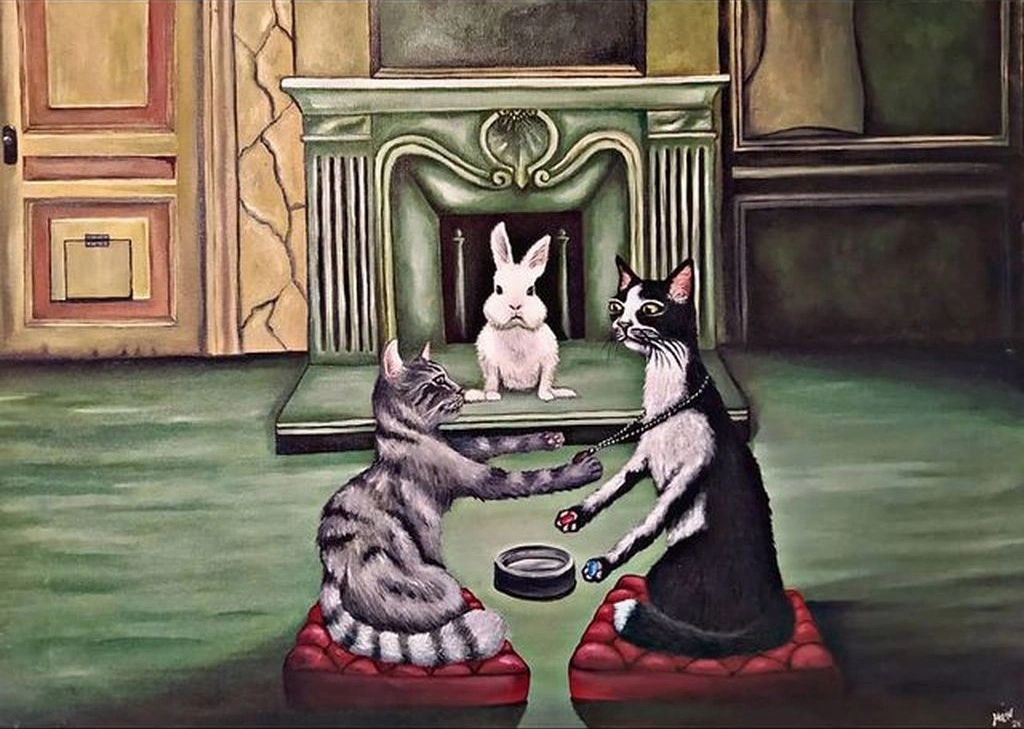
Catrix
50x70 cm oil on canvas
AvailableEnquire about this work
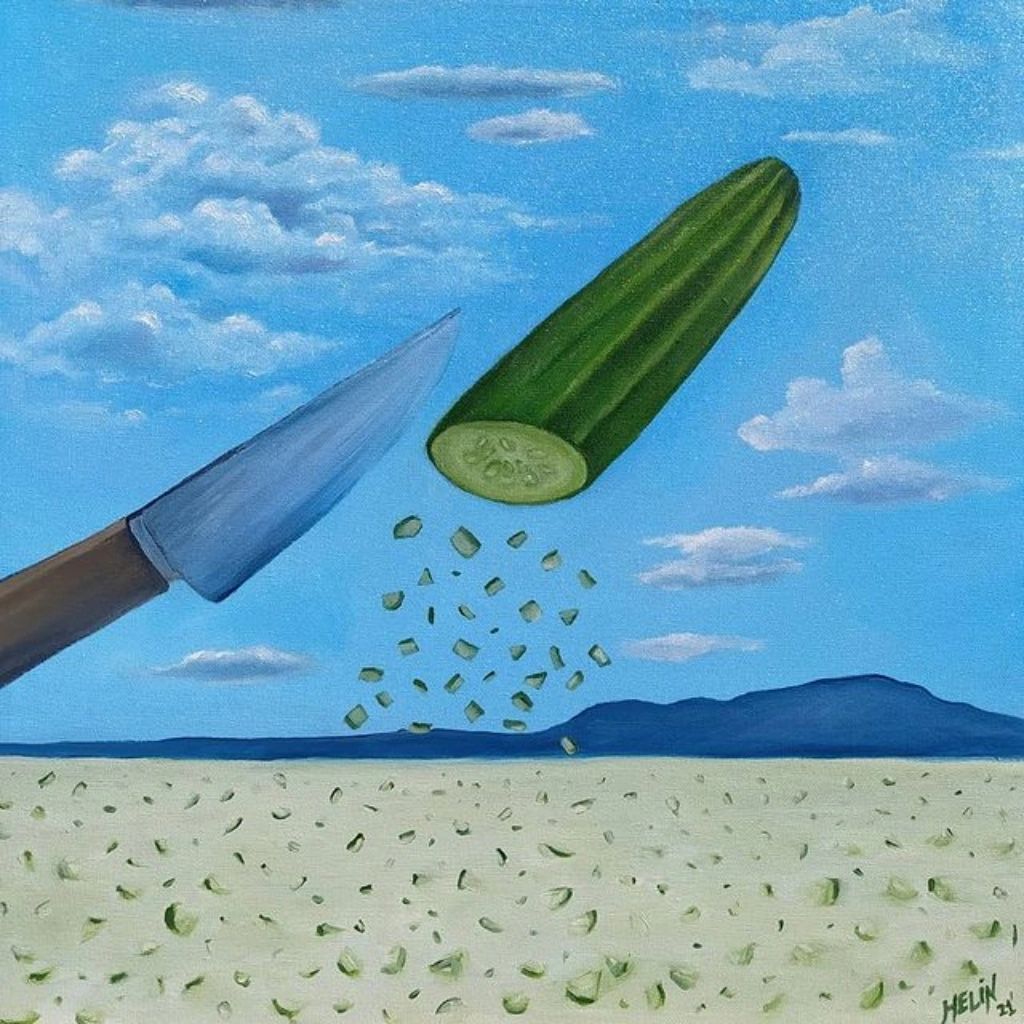
Cacık (Otoportre)
40x40 cm oil on canvas
In a private collection
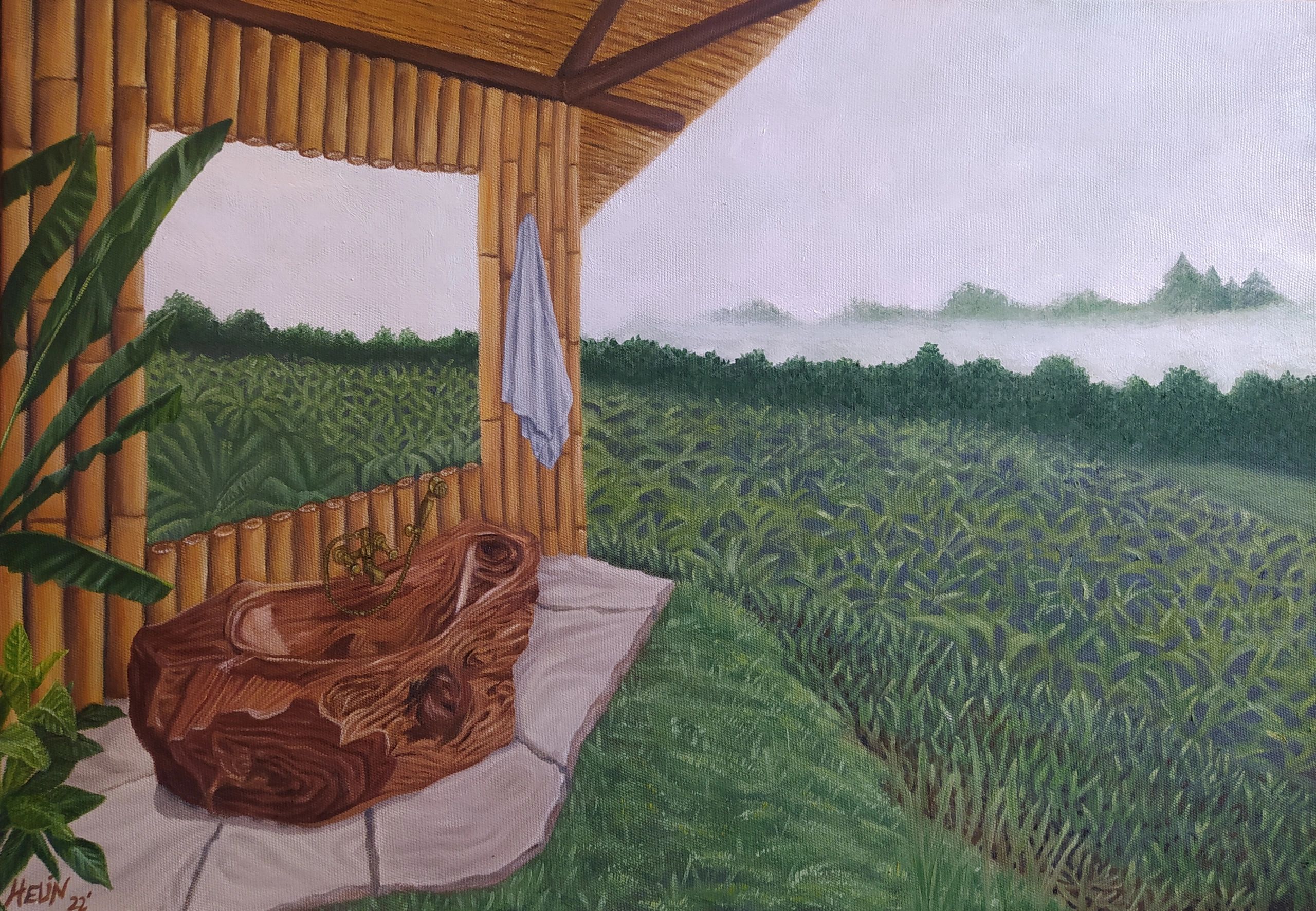
Tanrıça Banyosu
35x50 cm oil on canvas
Commissioned work
In a private collection
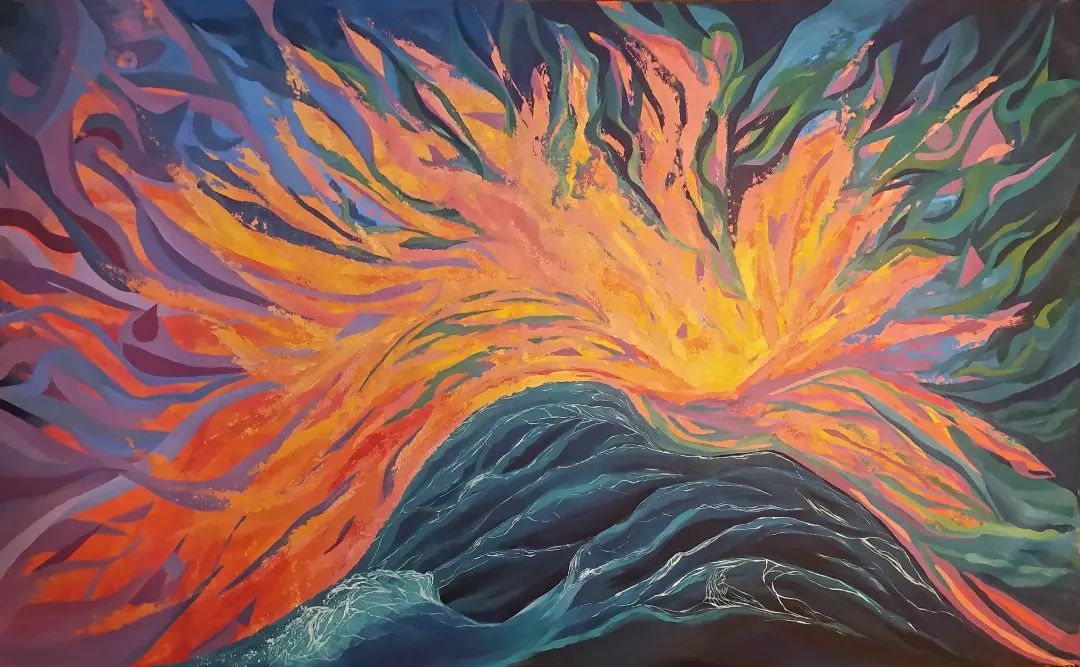
Hep Sen
160x100 cm acrylic on canvas, 2023
Commissioned work
In a private collection
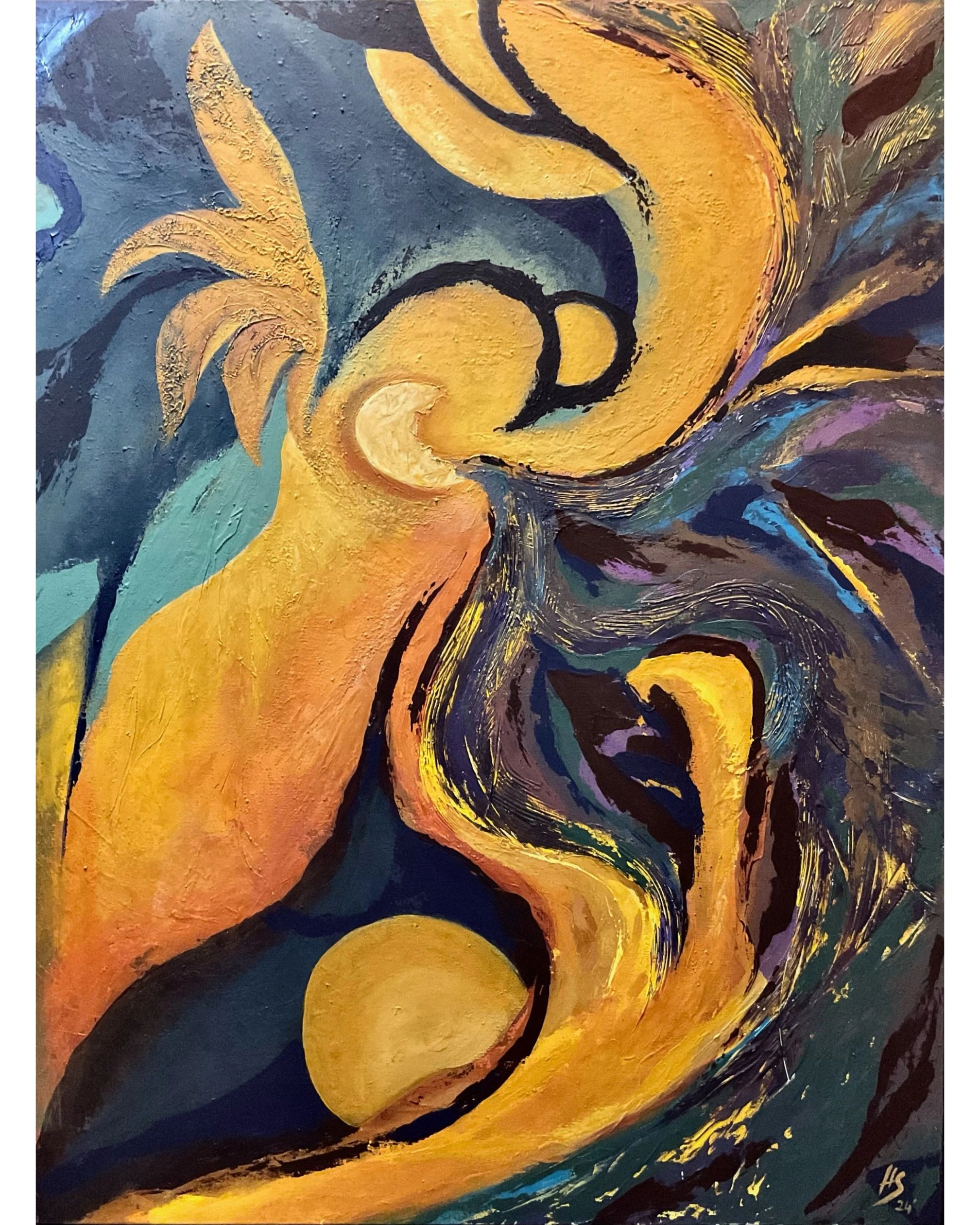
Yin Yang
75x100 cm acrylic on canvas, 2024
Commissioned work
In a private collection
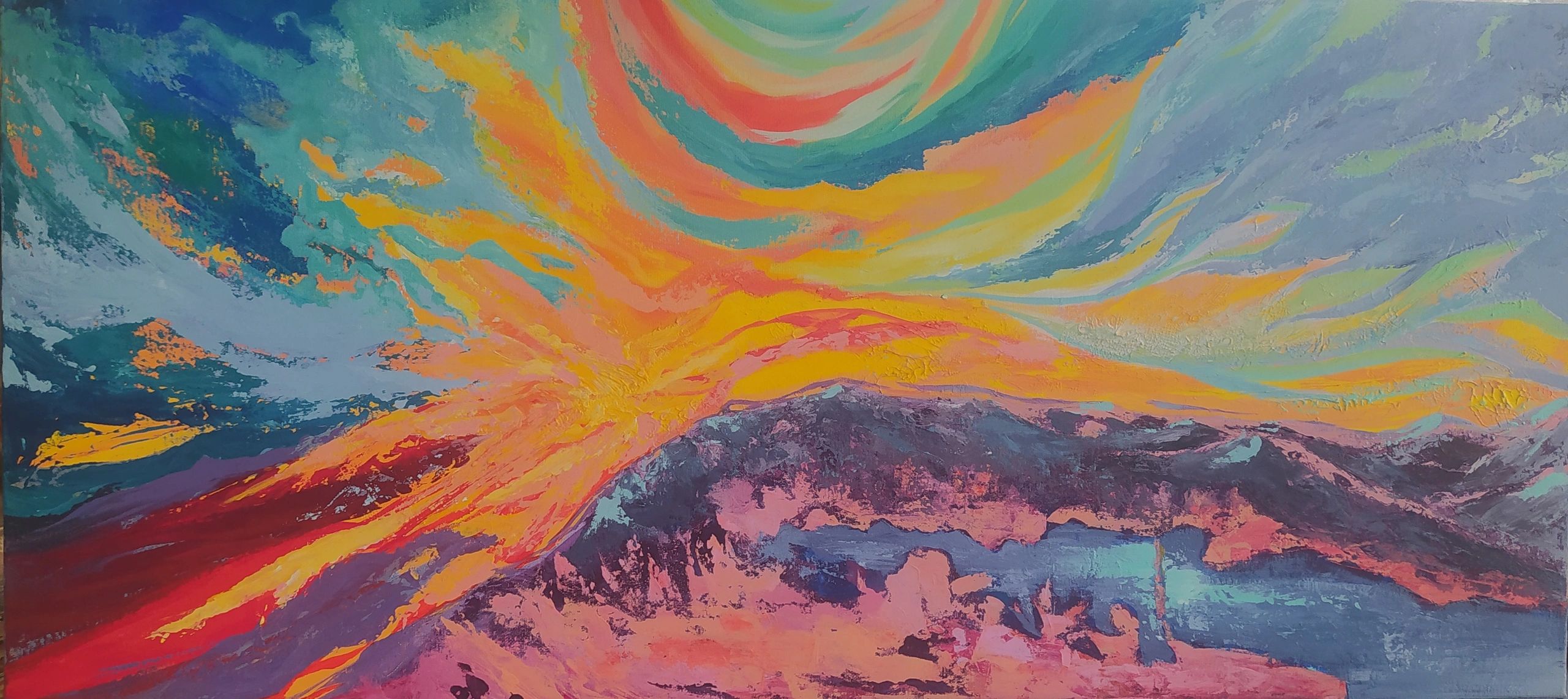
Sungasm
50x110 cm acrylic on canvas, 2023
Commissioned work
In a private collection
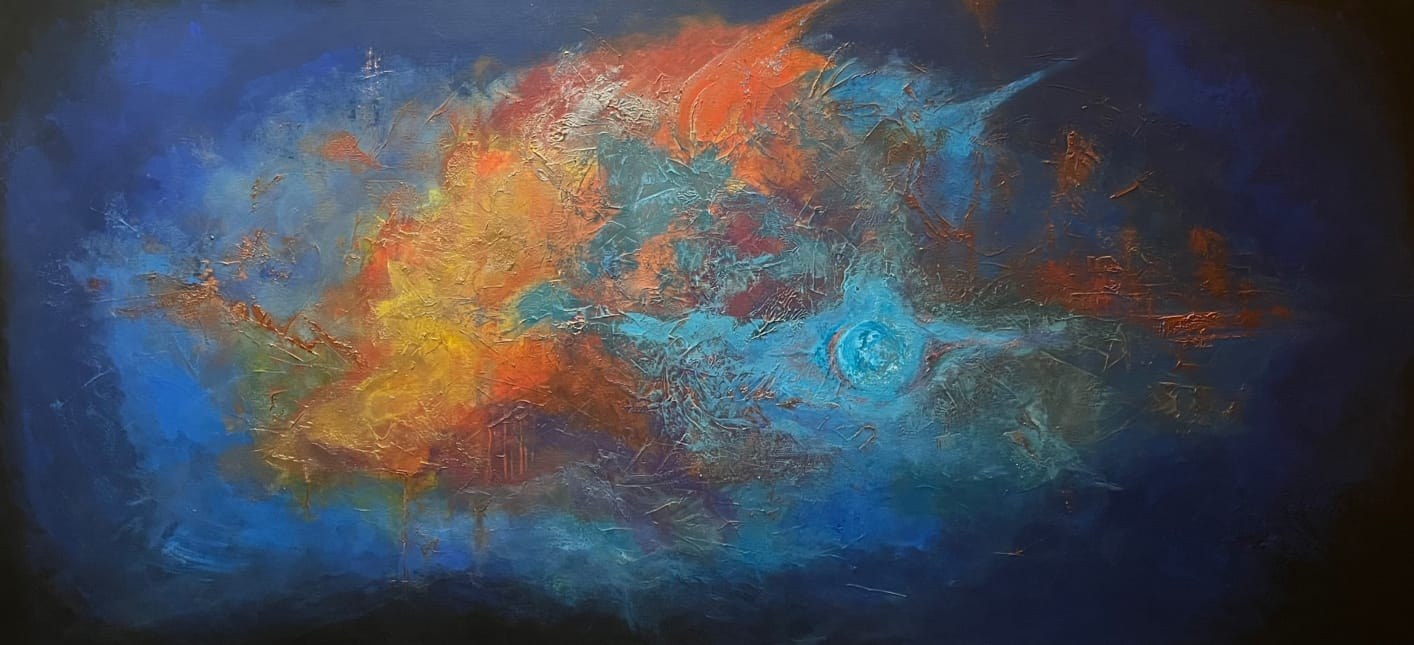
Sinestezi
180x80 cm acrylic on canvas, 2023
Commissioned work
In a private collection